In today’s industrial workplaces, securing critical infrastructure, machinery, and personnel has become increasingly complex. Organizations face a range of threats, including theft, vandalism, sabotage, and cyber-physical attacks. Implementing industrial perimeter security solutions is not only a necessity for operational safety but also a strategic investment in long-term business continuity.
Layered industrial perimeter security solutions combine surveillance cameras, physical barriers, and access control systems to create multiple lines of defense. This ensures that threats are deterred but also quickly detected and effectively addressed before they can escalate.
Why Layered Industrial Perimeter Security Solutions Are Essential
Relying on a single security measure is not enough in high-risk industrial settings, where downtime is not allowed for their critical operations but threats are more pervasive than in many other industries. A multi-layered physical security strategy provides overlapping defenses that strengthen protection across the entire facility while minimizing the impact of an attack if one occurs. Physical barriers and surveillance cameras act as visible deterrents, while access control systems manage entry to restricted areas.
When combined with alarms and remote monitoring, these layers can detect breaches and send real-time alerts to security teams. This enables early intervention, reduces response times, and helps mitigate potential damage. By implementing multiple security measures, industrial facilities can minimize vulnerabilities and establish a more proactive, comprehensive defense against a variety of threats.
Together, these components form a layered, defense-in-depth system that not only strengthens security but also improves operational efficiency. Core elements of multi-layered industrial perimeter security solutions include:
- High-resolution cameras with night vision and AI analytics
- Explosion-proof housings for cameras in hazardous environments
- Physical barriers such as fencing, vehicle parking barriers, and controlled turnstile gates
- Access control systems with card readers, biometric scanning, and visitor management
High-Definition Surveillance Cameras: The Eyes of Your Facility
Surveillance cameras are the cornerstone of modern industrial perimeter security solutions. Many cameras offer high-resolution imaging that identifies vehicles, personnel, and potential threats, even in low-light or no-light conditions using infrared (IR) and night vision capabilities. Panoramic and PTZ cameras are the best choices for large industrial sites since they have a wider angle of view, reducing blind spots while using analytics features to ensure perimeter breaches, loitering, or unauthorized access are detected.
For facilities exposed to harsh environments, explosion-proof or weatherproof housings protect the internal cameras from extreme conditions, ensuring they remain operational. By integrating cameras into a centralized monitoring system, security personnel can track activity across multiple points, respond to alerts in real time, and maintain detailed logs for compliance purposes.
Physical Barriers: Slowing Down and Controlling Access
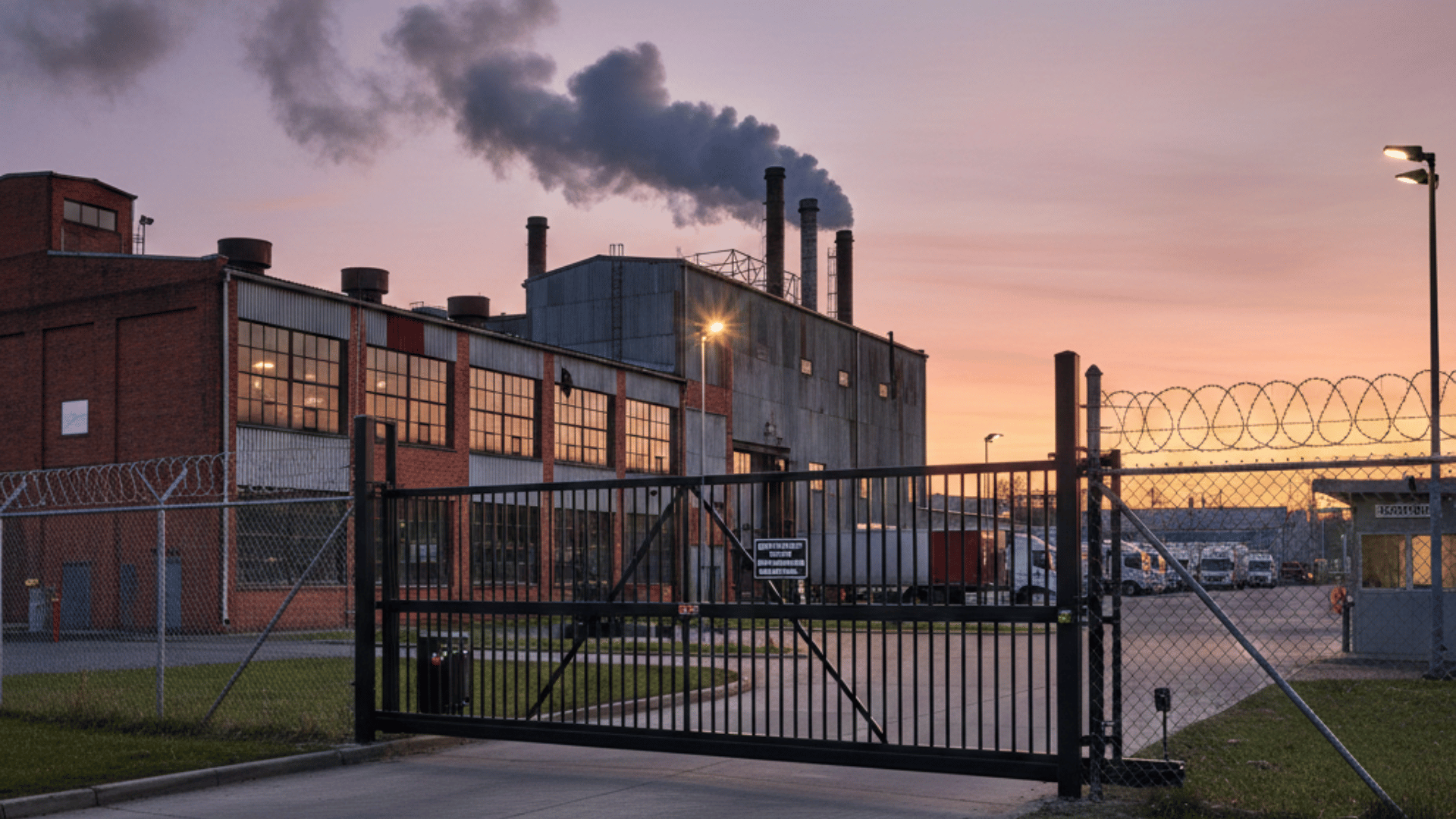
Physical barriers are a critical layer in industrial perimeter security solutions. Well-designed fences, gates, and vehicle barriers not only block unauthorized access but also delay intrusion attempts, giving security teams more time to respond. Chain-link, welded wire, or high-security mesh fencing forms the first line of defense, keeping intruders away from the facility’s inner perimeter. Crash-rated bollards and retractable parking barriers protect against vehicle-based breaches, while turnstiles and optical speed gates regulate pedestrian access.
When integrated with surveillance systems, these barriers create a strong visual deterrent that signals a high level of security while supporting operational safety and compliance with industry standards. Additionally, strategically placed security lighting enhances visibility for both personnel and cameras. Motion-activated lights, in particular, serve a dual purpose: improving monitoring and deterring potential intruders before they approach the perimeter.
Access Control: Managing Who Goes Where
Even the most advanced cameras and physical barriers are insufficient without controlling access to restricted areas. Industrial access control systems let administrators define who can enter specific parts of the facility, using methods like key cards, RFID fobs, or biometric authentication. These systems can also integrate with visitor management platforms to grant temporary access for contractors or visitors while maintaining detailed records of all entries and exits.
When integrated with alarms and surveillance cameras, access control systems can trigger real-time alerts for unauthorized attempts or forced entries, allowing security teams to intercept immediately. By layering access control with barriers and surveillance, industrial facilities can ensure every entry and exit is monitored, documented, and fully auditable.
Centralized Security Management: Bringing It All Together
Modern industrial perimeter security solutions are most effective when all layers are integrated into a centralized management platform. Such platforms allow security teams to remotely monitor camera feeds, edit access permissions, and review entry logs from a single dashboard. Real-time alerts for suspicious activity, unauthorized access, or potential breaches facilitate early intervention, minimizing risk and operational downtime.
A centrally managed system also streamlines regulatory reporting, helping organizations demonstrate compliance with OSHA and other industry standards. By unifying cameras, barriers, and access control under one platform, industrial facilities can ensure all security components work cohesively, reducing risks, enhancing oversight, and improving day-to-day operational efficiency.
Key Considerations When Selecting Industrial Perimeter Security Solutions
Designing an effective perimeter security plan requires careful consideration of site-specific factors. Facility layout, environmental conditions, regulatory requirements, and potential vulnerabilities should all inform decisions about cameras, barriers, and access systems. Scalability is also important, so security solutions should accommodate future expansion and integrate seamlessly with existing technology.
At 2M Technology, we provide customizable industrial perimeter security solutions that combine advanced equipment with expert design. Our solutions are tailored to protect your facility from emerging threats while maintaining operational continuity and compliance with safety standards.
Custom Industrial Perimeter Security Solutions by 2M Technology
Industrial facilities face a wide range of physical and operational threats. Implementing layered industrial perimeter security solutions that incorporate surveillance cameras, physical barriers, and access control systems allows businesses to deter intrusions, detect risks, respond to incidents quickly, and maintain operational continuity.
Investing in a comprehensive, multi-layered security strategy helps protect your assets, personnel, and critical infrastructure while giving you peace of mind and supporting long-term operational excellence. Secure your industrial perimeter today by contacting 2M Technology at +1 (214) 988-4302 or sales@2mtechnology.net
Frequently Asked Questions (FAQs)
1. What are industrial perimeter security solutions?
Industrial perimeter security solutions are layered security systems designed to protect industrial facilities from unauthorized access, theft, vandalism, and sabotage. These solutions typically include surveillance cameras, physical barriers, access control systems, and centralized monitoring platforms.
2. Why are layered industrial perimeter security solutions important?
Layered industrial perimeter security solutions provide multiple lines of defense. If one security measure fails, others remain in place to detect and deter threats. This defense-in-depth approach reduces vulnerabilities and ensures faster response times in critical industrial environments.
3. What industries need industrial perimeter security solutions?
Industries that commonly require industrial perimeter security solutions include oil and gas, chemical manufacturing, power generation, water treatment facilities, logistics centers, and critical infrastructure sites.
4. What types of cameras are best for industrial perimeter security?
High-resolution IP cameras with night vision, infrared (IR), AI analytics, and PTZ functionality are commonly used for industrial perimeter security. In hazardous environments, explosion-proof cameras are recommended to ensure safe and continuous operation.
5. How do physical barriers improve industrial perimeter security?
Physical barriers such as fencing, bollards, vehicle crash barriers, and turnstile gates prevent and delay unauthorized access. By slowing down intrusion attempts, barriers give security teams valuable time to respond before threats escalate.
6. How does access control integrate with industrial perimeter security solutions?
Access control systems regulate who can enter restricted areas using credentials like key cards, RFID fobs, or biometric authentication. When integrated with cameras and alarms, these systems can trigger real-time alerts for unauthorized access attempts.
7. Can industrial perimeter security systems help with regulatory compliance?
Yes. Integrated industrial perimeter security solutions help facilities maintain compliance with OSHA and other industry regulations by providing monitoring, documentation, reporting capabilities, and controlled access to hazardous areas.
8. How can I get an industrial perimeter security solution for my facility?
At 2M Technology, we provide tailored industrial perimeter security solutions that integrate surveillance cameras, physical barriers, access control systems, and centralized management platforms. Our team works with you to design, configure, and implement a solution that protects your assets while maintaining operational continuity.
Contact our sales team to discuss your security needs and receive a customized pricing estimate. You can email sales@2mtechnology.net, call +1 (214) 988-4302, or fill out a quick quote form.