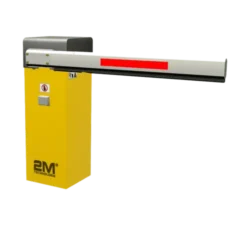
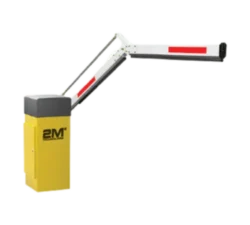
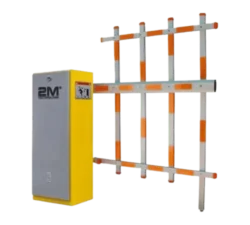
Gate Barriers

Upgrade your parking facility’s access control system with our line of parking gate barriers that accelerate entry while strengthening security. The gates can be integrated with various access control methods such as facial recognition, RFID card scanners, PIN codes, and license plate recognition. This flexibility offers maximum control and a hassle-free experience for both operators and users.

All Products

2MAGB-NSN Intelligent Barrier Gate (Brushless Servo Torque Motor)

2MAGB-HSL High Speed Intelligent Barrier Gate with LED Bar (DC Brushless Servo Torque Motor)

2MAGB-NSN-E Intelligent Parking Lot Barrier Gate (AC Turbine Vortex Pole Motor)

2MAGB-NSL Intelligent Barrier Gate with LED (DC24V Brushless Servo Torque Motor)

2MAGB-NFN2-E High Fence Barrier Gate (AC Turbine Vortex Pole Motor)

2MAGB-NFN-E Intelligent Barrier Gate (AC Turbine Vortex Pole Motor)

2MAGB-NCN-E Normal Speed Intelligent Barrier Gate (AC Turbine Vortex Pole Motor)

2MAGB-HSN-E High Speed Intelligent Barrier Gate (AC Turbine Vortex Pole Motor)

2MAGB-HCN-E High Speed Limited Ceiling Intelligent Barrier Gate (AC Turbine Vortex Pole Motor)

2MAGB-NSN-A Intelligent Barrier Gate (AC Torque Motor)

2MAGB-NSL-A Intelligent Barrier Gate (AC Torque Motor)

2MAGB-NFN2-A Double Fence Intelligent Barrier Gate (AC Torque Motor)

Gate Barrier Types: Which Vehicle Access System Is Right for Your Site?

Gate barriers (also called boom barriers, barrier gates, or parking barriers) are horizontal arm systems that physically block vehicle entry to a parking facility, loading dock, or secured perimeter until a valid credential is presented. The barrier arm lifts to allow one vehicle, then lowers automatically. They are the most widely deployed vehicle access control solution for parking facilities, office campuses, warehouses, and gated communities.

Barrier Type Arm Length Opening Speed Traffic Rating Best Application
Standard boom gate barrier Up to 6 m (20 ft) 2–4 seconds Medium (20–150 cycles/hr) Office parking, facility entry, gated communities
High-speed gate barrier Up to 5 m (16 ft) 0.5–1.5 seconds High (150–600 cycles/hr) High-volume parking garages, toll lanes, transit
Traffic light gate barrier Up to 6 m (20 ft) 2–3 seconds Medium (20–150 cycles/hr) Integrated with traffic light for dual-lane control
Full-closure gate barrier Up to 8 m (26 ft) 3–5 seconds Low to medium Wide lane closures, industrial gates, perimeter security
Portable / mobile gate barrier Up to 4 m (13 ft) 2–4 seconds Low Temporary sites, events, construction access
Anti-ram / bollard barrier N/A (bollard-style) 3–6 seconds Low (security focus) High-security facilities, government, critical infrastructure

Gate Barrier Specifications

  • Arm length — Standard gate barrier arms cover 3–6 meter lane widths. Extended arms and articulated configurations available for wide lanes.
  • Motor types — 2M Technology gate barriers use DC brushless servo motors (lowest maintenance, longest lifespan) or AC turbine vortex pole motors (highest speed for transit applications).
  • LED bar arms — High-visibility LED-illuminated gate barrier arms improve driver awareness and reduce arm strikes by 40% in low-light environments.
  • Backup power — All gate barrier models include a 24V battery backup that provides 500+ cycles during a power outage — keeping access lanes operational during emergencies.

Contact 2M Technology for a gate barrier site survey, lane count recommendation, and turnkey installation quote including the gate barrier, loop detectors, reader integration, and cabinet wiring.

For parking facility gate barrier standards and traffic engineering guidance, refer to the Institute of Transportation Engineers (ITE).

Credential Options for Gate Barrier Access Control

A gate barrier is a mechanical device — it needs an access control system to determine who is authorized to enter. The credential type controls the user experience and security level:

  • LPR (License Plate Recognition): Camera reads license plates and compares against an authorized vehicle database. Hands-free, no card or remote needed. Best for corporate campuses and HOA communities with a known vehicle roster.
  • RFID transponder: A windshield tag or visor-mount device communicates with a reader at the gate. Very fast and hands-free for regular users. Used in parking facilities and large employer campuses.
  • Proximity / smart card: Employee taps a card at the reader. Reliable, easy to manage remotely, but requires the user to stop and present the card.
  • Mobile credential: Phone app opens the gate via Bluetooth LE. Increasingly common in new installations — eliminates card management.
  • Keypad / PIN: Simple but low-security — codes are shared and hard to revoke. Use only for low-security or backup access.
  • Push button / call box: Visitor presses a button or calls an intercom — an operator or automated system releases the gate. Standard for visitor lanes and delivery access.

2M Technology integrates gate barrier systems with access control systems and tripod turnstile gates for complete vehicle and pedestrian access control — contact us for a multi-lane quote.

Related: Commercial Gate Operators Dallas TX | Access Control Systems Dallas TX

Gate Barrier Anti-Crash Specifications: ASTM F2656

Standard gate barriers are not designed to stop vehicles — they are deterrents, not barriers. A vehicle driven deliberately through a standard boom gate will break the arm and enter the facility. For applications requiring vehicle crash resistance (government facilities, critical infrastructure, high-security perimeters), ASTM F2656-certified anti-ram systems are required.

ASTM F2656 ratings for vehicle crash barriers:

  • M30 (P1): Stops a 15,000 lb vehicle at 30 mph with less than 1 meter penetration
  • M40 (P2): Stops a 15,000 lb vehicle at 40 mph
  • M50 (P3): Stops a 15,000 lb vehicle at 50 mph

Anti-ram certification requires independent third-party crash testing. 2M Technology can supply ASTM F2656-rated crash beam barriers for high-security installations. Reference: DHS Vehicle Barriers Guide

Real Project: Gate Barrier System, DFW Office Campus (2023)

A multi-tenant office campus in the DFW metro area managing 4 parking garages across three buildings contacted 2M Technology to replace a failing legacy barrier system that required a full-time parking attendant during business hours. The existing barriers were 2007-era systems with outdated RFID readers that could not integrate with the new mobile credential platform the campus had deployed for building access control.

2M Technology replaced 8 barrier gates across the three garages with high-speed barriers (0.8-second open time) integrated with a cloud-based LPR system. The LPR cameras at each lane entry point read license plates of authorized tenants and guests, opening the gate without any card or interaction. Visitor vehicles were handled via an intercom-to-guard-station fallback. The campus eliminated the parking attendant position within the first month of operation while improving throughput — previous average wait time at the gate was 25-35 seconds per vehicle; LPR reduced it to under 5 seconds for recognized plates.

Frequently Asked Questions: Gate Barriers

A gate barrier (boom barrier) uses a horizontal arm that lifts and lowers to control vehicle access. A security gate uses a full-panel swinging or sliding gate that physically closes off the entire lane width. Gate barriers are faster (sub-2-second open), lighter, and less expensive. Security gates provide a more complete physical closure — appropriate for overnight or weekend closure of a full vehicle entry. Many facilities use gate barriers for day-to-day access control and a separate security gate or bollard system for after-hours physical closure.

Modern gate barriers use Wiegand or OSDP protocol readers and relay outputs that connect to access control panels and parking management systems. Standard integrations include Gallagher, Genetec, HONK, ParkPlus, T2 Systems, and most ONVIF-compatible camera platforms for LPR. For pay-to-park garages, barrier gates typically integrate with a ticket dispenser (entry) and a payment kiosk (exit) that triggers the exit gate upon validated payment.

Yes. Commercial gate barriers are rated for outdoor use with operating temperature ranges of -20 to +60 degrees C and IP54 or higher enclosure protection against rain and dust. In extreme weather climates (snow/ice), heater options are available for the motor housing. All 2M Technology gate barrier systems are specified for outdoor deployment in the Texas climate.

Get a Quote for Gate Barrier Systems in DFW

2M Technology supplies and installs gate barrier systems for office campuses, parking facilities, warehouses, and secured perimeters across Dallas-Fort Worth and Texas. We hold Texas Security License B15309. Contact us at (214) 988-4302 or via our quote form for barrier specifications, credential options, and site assessment.