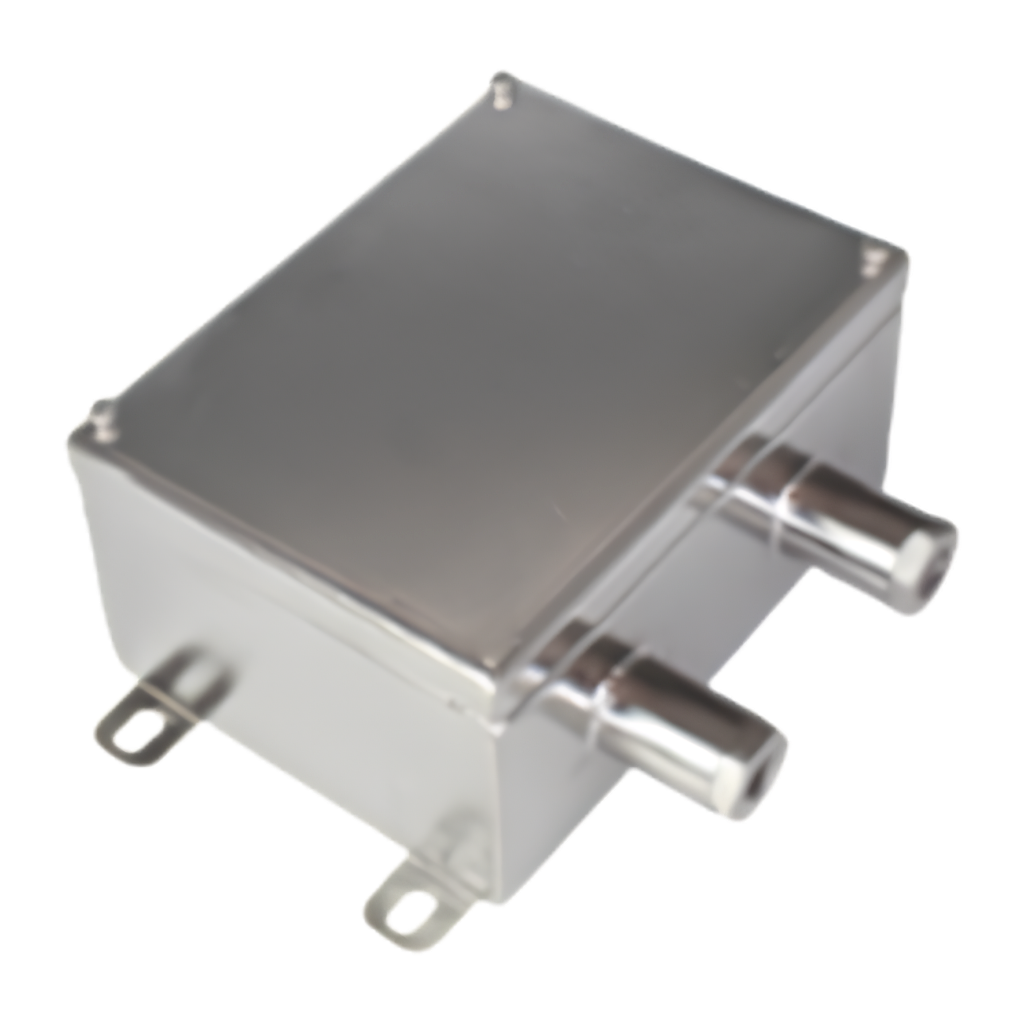
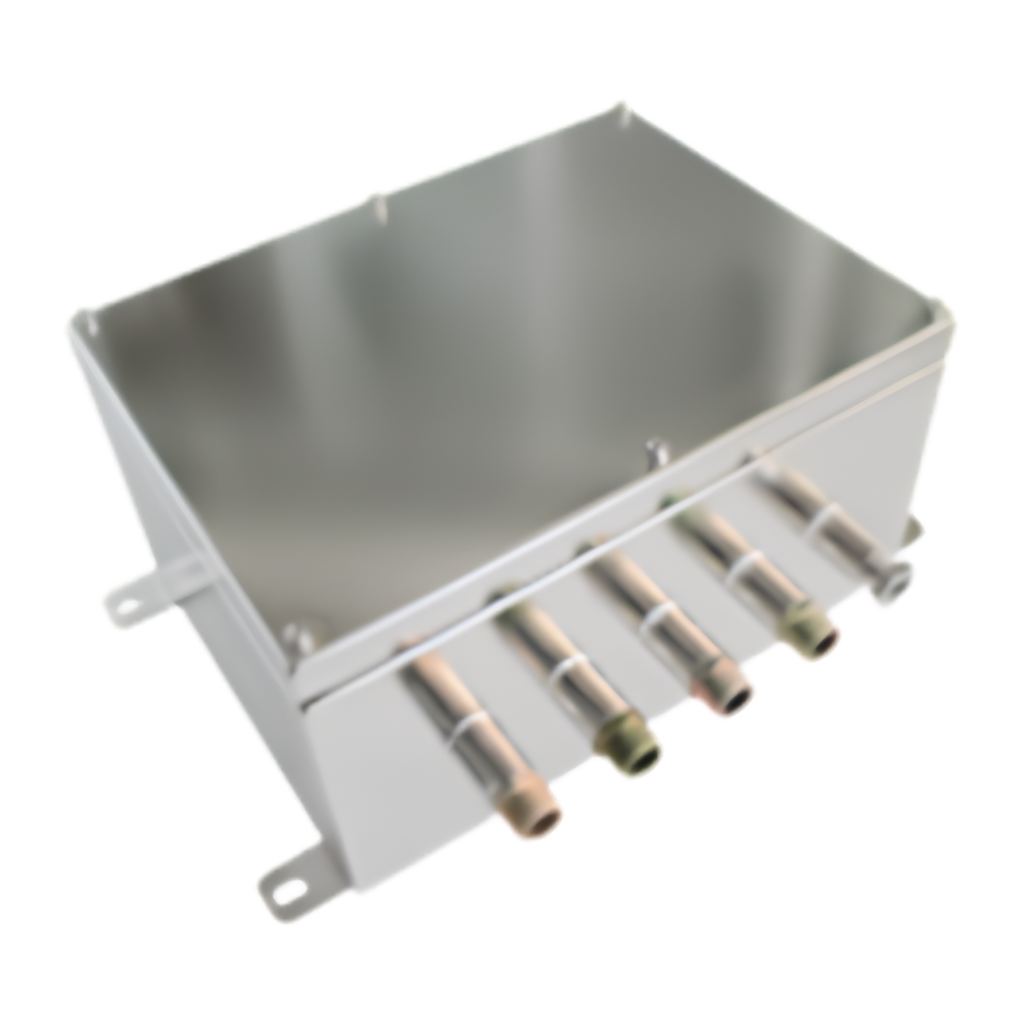
Explosion proof junction boxes provide safe, certified enclosures for wiring connections, terminal blocks, and cable entries in hazardous locations where flammable gases, vapors, or combustible dusts may be present. 2M Technology supplies 6 ATEX and IECEx certified models in 304 and 316L stainless steel — rated for Class I Division 1 and Division 2 environments including oil refineries, petrochemical plants, offshore platforms, grain mills, mining operations, and wastewater treatment facilities.
Both grades are explosion proof and certified. The choice depends on the corrosive environment:
All 2M junction boxes carry dual ATEX (European directive 2014/34/EU) and IECEx (international standard) certification — the two globally recognized standards for equipment used in explosive atmospheres. ATEX Zone 1 & 2 / IECEx Group IIB ratings cover the most common industrial gases including hydrogen, methane, propane, and ethylene. Each unit includes a certificate number and stamped markings for compliance documentation.
Key selection criteria: number of cable entries required (4-entry vs 8-entry models available), terminal block count for your circuit connections, IP66 or IP67 ingress protection needed, and stainless grade based on corrosive exposure. All 2M explosion proof junction boxes ship with blanking plugs for unused cable entries and are field-wirable without internal modifications.
All explosion proof junction boxes in this catalog are sourced from manufacturers certified under IECEx Equipment Certification — the international scheme recognized across 50+ member countries including the US, UK, EU, Australia, and the Gulf region. Each unit ships with the full certificate of conformity and marking documentation required by site HSE departments. For site-specific installation guidance or compliance questions about explosion proof junction boxes for your project, contact 2M Technology at (214) 988-4302.
Explosion proof junction boxes are manufactured in three primary enclosure materials, each suited to different installation environments:
| Material | Corrosion Resistance | Weight | Best For | Limitation |
|---|---|---|---|---|
| 304 Stainless Steel | Good — resists atmospheric corrosion | Medium | Indoor Class I Div 1, food processing, pharmaceutical | Not suitable for high-chloride environments |
| 316L Stainless Steel | Excellent — resists chlorides and acids | Medium-heavy | Offshore, coastal, chemical plants, wastewater | Higher cost than 304 |
| Cast Aluminum (GRP) | Moderate — anodized surface required offshore | Light | Onshore oil & gas, grain facilities, indoor mining | Not recommended for direct marine/acid exposure |
2M Technology’s explosion proof junction boxes are available in both 304 and 316L stainless steel configurations. For offshore drilling platforms, coastal chemical plants, and wastewater treatment facilities with high chloride exposure, the 316L specification is strongly recommended.
An explosion proof junction box must maintain its hazardous area rating at every conduit and cable entry point. Improper conduit sealing is one of the most common causes of certification non-compliance in field installations. The entry options available depend on the junction box model and the conduit type used in the facility:
A petrochemical processing facility in the Texas Gulf Coast region expanded its Class I Division 1 process area as part of a capacity upgrade. The expansion added 14 new instrumentation junction points in a Zone 1 classified area where hydrogen sulfide (H2S) and hydrocarbon vapors were present. The facility electrical team specified 316L stainless steel explosion proof junction boxes throughout — rejecting the original aluminum specification after evaluating the corrosive H2S exposure levels in the process area.
2M Technology supplied 14 ATEX/IECEx Zone 1 rated 316L stainless explosion proof junction boxes with M25 metric entries and stainless cable glands. Factory acceptance testing was completed prior to shipment. All boxes arrived with documentation packages including ATEX certificates, IECEx certificates, and dimensional drawings for field installation planning. Installation was completed over a single scheduled turnaround, keeping the total certified junction count within the Zone 1 perimeter compliant with the facility’s electrical area classification drawings.
A Class I Division 1 explosion proof junction box is rated for areas where flammable gases or vapors exist under normal operating conditions — such as inside process areas near open vents or pump seals. Division 2 covers areas where flammable atmospheres are present only in abnormal conditions (equipment failure, accident). Division 1 boxes have stricter construction requirements and are required when the hazardous atmosphere is continuous or intermittent under normal operation. Most explosion proof junction boxes in 2M Technology’s catalog are dual-rated for both Division 1 and Division 2.
Yes. Explosion proof junction boxes with an IP66 or IP67 rating (or NEMA 4X equivalent) are suitable for outdoor installations. The enclosure protects against rain, dust, hose-directed water, and corrosion. For coastal or offshore outdoor locations, 316L stainless steel construction with IP66 rating is the correct specification. Most 2M Technology explosion proof junction boxes carry both the hazardous area rating (ATEX/IECEx/NEC) and the ingress protection rating for outdoor use.
Explosion proof junction box terminal capacity varies by model size — from 6-terminal compact units for single instrument junction points to 24-terminal boxes for multi-drop wiring. For installations requiring more than 24 terminals in a single certified enclosure, a larger ATEX/IECEx rated control panel enclosure is typically specified instead. 2M Technology carries 6 explosion proof junction box models covering the most common terminal configurations. Contact us for large-format junction panel solutions.


Texas Security License B15309
Texas Security License B15309
2M TECHNOLOGY Inc. © 2026 | Company based in TEXAS USA – All Rights Reserved