Intrinsically Safe Camera & Explosion-Proof Camera Housings

2M Technology supplies intrinsically safe cameras and explosion-proof camera enclosures for hazardous area surveillance at oil refineries, petrochemical plants, chemical processing facilities, grain elevators, and other Class I and Class II Division 1 locations throughout Texas and the Gulf Coast region. Our hazardous area camera solutions include both factory-built intrinsically safe cameras and custom explosion-proof housings for commercial IP cameras. Texas Alarm Systems Contractor License B15309.
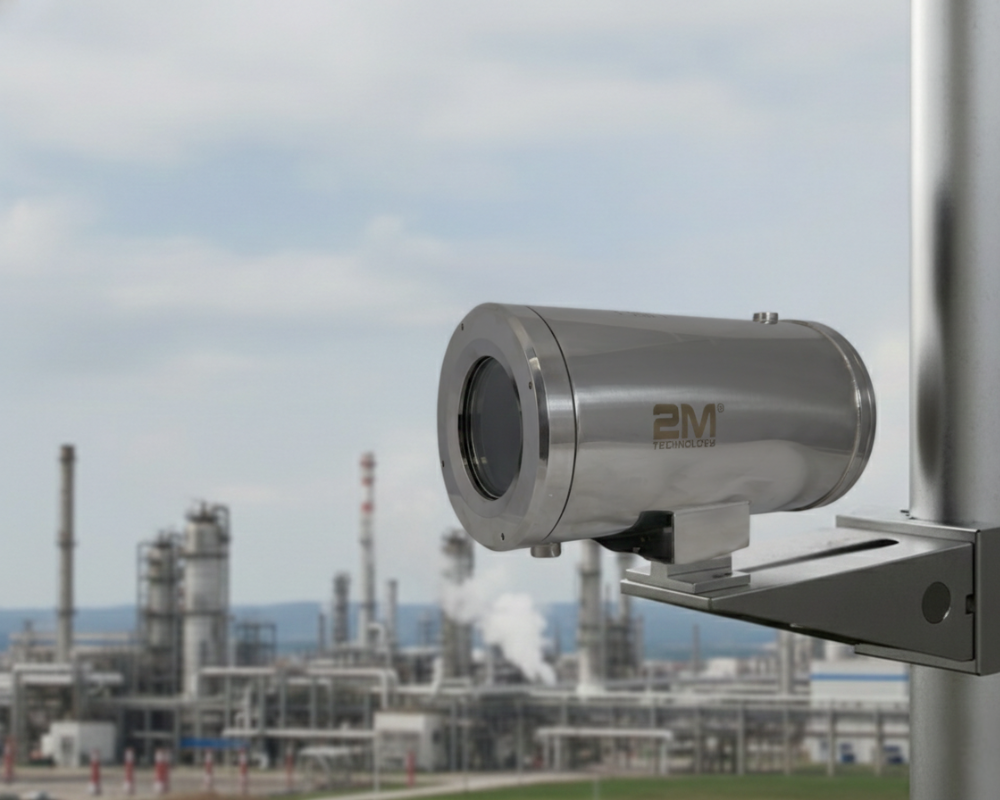
Ruggedized explosion-proof security camera mounted on pipe at petrochemical refinery with industrial facility in background

Intrinsically Safe Camera & Explosion-Proof Camera Housings

These two terms are often confused but represent fundamentally different design approaches to camera deployment in hazardous locations:

Feature Intrinsically Safe (IS) Explosion-Proof (XP)
Protection method Limits energy to prevent ignition Contains explosion if it occurs
Circuit design Low-power circuits — insufficient energy to ignite Standard circuits inside sealed enclosure
Camera type Purpose-built IS-rated camera required Standard commercial camera inside XP housing
Housing weight Light — minimal enclosure needed Heavy — thick-walled steel or aluminum
Classification Class I Div 1, Class II Div 1 (most hazardous) Class I Div 1 & Div 2, Class II Div 1 & Div 2
Certification UL, FM, ATEX, IECEx UL, FM, ATEX, IECEx
Best for Locations where even a small spark is unacceptable Cameras requiring full commercial feature sets

Hazardous Location Classifications

flammable gases vapors icon

Class I — Flammable Gases and Vapors

Class I locations contain flammable gases or vapors in sufficient quantities to be ignitable. Division 1 means the hazardous atmosphere is present under normal operating conditions — the most demanding classification. Division 2 means the hazardous atmosphere is only present during equipment failure or abnormal conditions. Oil refineries, fuel storage facilities, chemical plants, paint booths, and natural gas processing facilities are typically Class I locations. An intrinsically safe camera in a Class I Division 1 location must be certified to ensure its electrical circuits cannot produce a spark or heat sufficient to ignite the surrounding atmosphere.

combustible dust icon

Class II — Combustible Dust

Class II locations contain combustible dust — grain elevators, flour mills, woodworking facilities, coal handling, and certain pharmaceutical plants. Combustible dust can ignite from electrical sparks or hot surfaces. Cameras and enclosures for Class II locations must be dust-tight and prevent internal heat from reaching the surface in concentrations that could ignite surrounding dust. 2M supplies Class II Division 1 and Division 2 certified camera solutions for agricultural and industrial facilities across Texas.
Intrinsically Safe Camera Solutions We Supply

2M Technology explosion-proof camera installed on a pole mount in front of an industrial site

Factory-Built Intrinsically Safe IP Cameras

Factory-built intrinsically safe cameras are purpose-designed with low-energy circuits and certified IS components throughout. These cameras are available in fixed and PTZ configurations, with IR illumination, wide dynamic range, and PoE or barrier-isolated power inputs. We source IS-certified IP cameras from manufacturers with UL/FM and ATEX/IECEx certifications to match your specific Division and Group requirements. Typical resolution: 2MP–8MP. Typical IP rating: IP66/IP68.
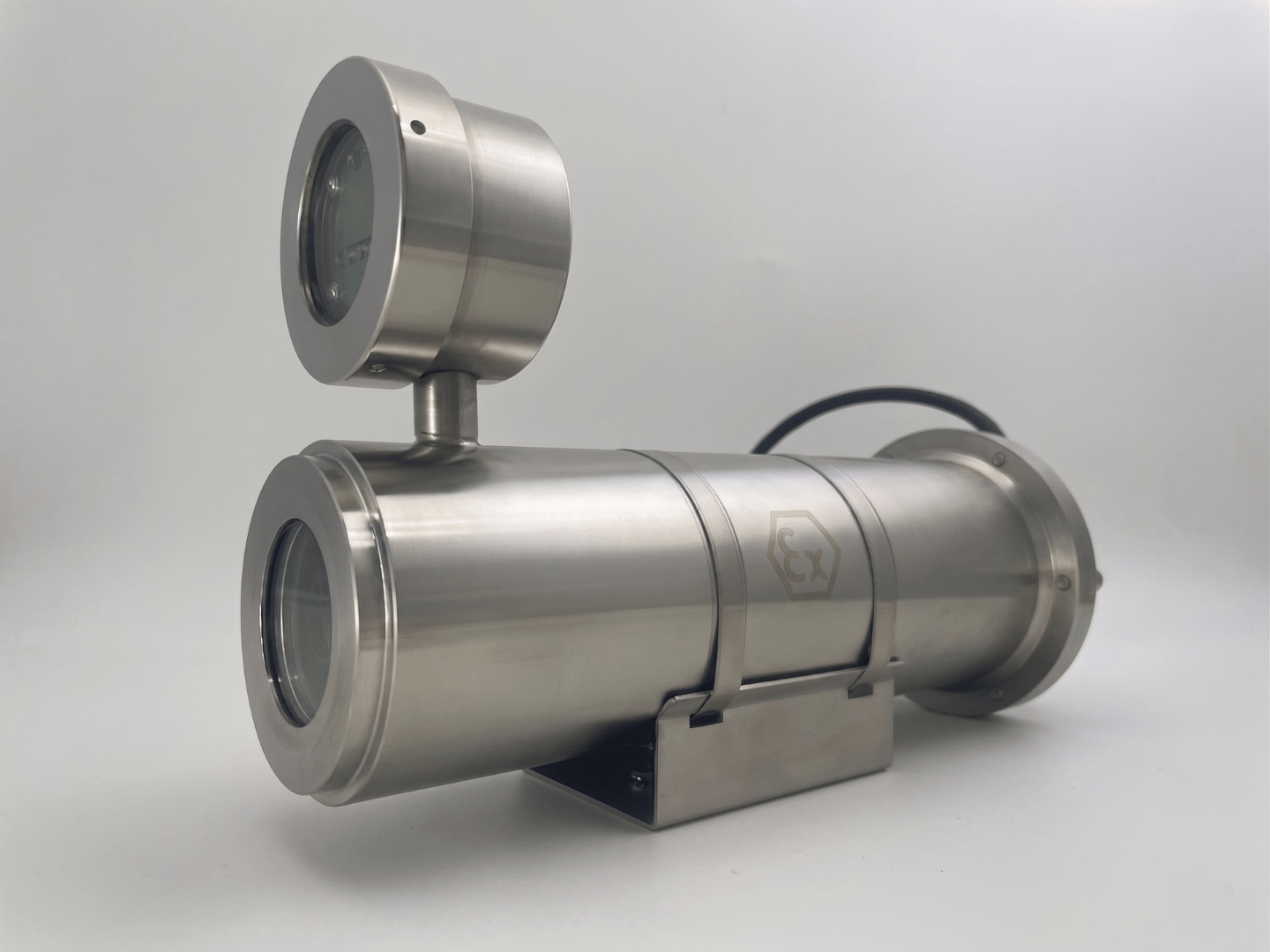
Custom explosion-proof housing with IR designed by 2M Technology for Verkada CB62-E bullet camera

Custom Explosion-Proof Camera Housings

2M Technology fabricates custom explosion-proof housings that allow standard commercial IP cameras — Verkada, Ubiquiti UniFi, Axis, Hanwha, and others — to be deployed in Class I Division 1 and Division 2 locations. Our housings use thick-walled aluminum or stainless steel construction with flame-path joints, conduit entries with explosion-proof fittings, and internal wiring rated for hazardous locations. This approach provides full access to the camera manufacturer’s feature set (analytics, cloud management, PTZ) while meeting NEC Article 501 requirements for explosion-proof equipment. Each housing is custom-designed for the specific camera model and location requirements.

explosion proof ptz camera inside industrial site

Intrinsically Safe PTZ Cameras

Pan-tilt-zoom cameras in hazardous locations require IS or XP-rated PTZ mechanisms in addition to IS-rated electronics. We supply IS PTZ cameras for perimeter monitoring at refineries, terminals, and large industrial facilities where a single camera must cover a wide area. PTZ cameras in hazardous locations are typically powered via IS barriers or Zener barriers that limit fault energy to safe levels.

Intrinsically Safe Camera Applications

Frequently Asked Questions

In the United States, hazardous location cameras must be certified to NEC Article 500 requirements by a Nationally Recognized Testing Laboratory (NRTL) — typically UL or FM Global. The certification mark confirms the camera meets the Class, Division, Group, and Temperature Class for your specific location. For installations in Texas refineries and chemical plants, UL and FM certifications are universally accepted. ATEX and IECEx certifications (European standards) are also recognized for offshore installations. We verify the correct certification for your specific location hazard classification before recommending equipment.

Not directly — standard commercial cameras are not rated for hazardous locations. However, 2M Technology’s custom explosion-proof housings allow you to use a standard Verkada, Axis, Hanwha, or UniFi camera inside a certified XP enclosure. The housing is what carries the hazardous location rating — the camera inside operates exactly as it would in any other environment. This is the most common approach for facilities that want cloud-managed cameras with analytics in hazardous areas without the limitations of purpose-built IS cameras.

Intrinsically safe and explosion-proof camera installations cost significantly more than standard commercial installations — typically $3,500–$8,000 per camera point installed, depending on the hazardous location classification, conduit requirements, and camera type. Factory-built IS cameras run $800–$2,500 per unit; custom explosion-proof housings for commercial cameras run $1,200–$3,500 per housing. Conduit and wiring in hazardous locations requires explosion-proof fittings, RGS rigid metal conduit, and sealing fittings at every conduit entry — this adds $1,500–$4,000 per camera point in labor and materials. Contact us for a site-specific assessment.

Class I Division 1 means a flammable gas or vapor atmosphere is present continuously, intermittently, or periodically under normal operating conditions. This is the most stringent classification — it requires the strictest equipment ratings. Class I Division 2 means the hazardous atmosphere is only present during equipment failure, container rupture, or abnormal conditions — it is not normally present during routine operations. Division 2 permits some equipment rated only for Division 2 use. Most operating areas of oil refineries and chemical plants are classified Division 1 or Division 2 depending on the specific location — we work with your safety team to confirm the correct classification before specifying equipment.

Get a Quote for Intrinsically Safe Camera & Explosion-Proof Camera Housings

Get a quote within 24 hours for intrinsically safe camera and explosion-proof camera housings.