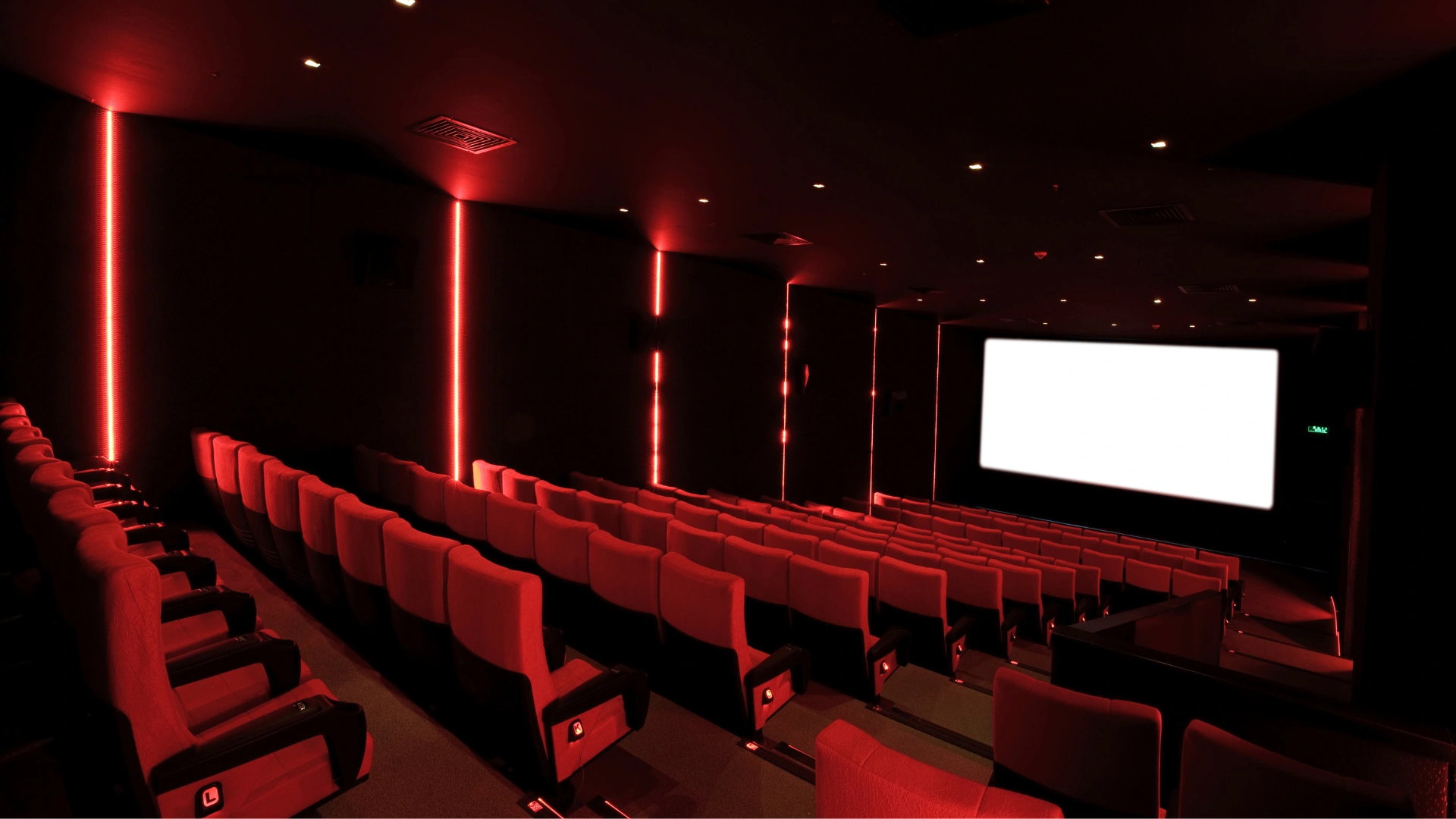
Movie theater security cameras provide multi-zone surveillance for lobbies, concession stands, auditoriums, and parking lots — giving cinema operators 24/7 visibility and the ability to respond to incidents in real time.
📅 Updated May 2026 — reflects current AI camera deployments and cinema security practices.
Yes, most modern movie theater security cameras are installed throughout facilities. Cameras are installed in lobbies, hallways, concession areas, box offices, restroom entrances, parking lots, and increasingly inside screening auditoriums. What cameras can and cannot legally record — and where they are positioned — varies by theater chain, local regulations, and the specific security goals of each location.
- Movie theater security cameras are standard at every major chain — AMC, Regal, Cinemark, and Alamo Drafthouse all operate enterprise-grade surveillance.
- Movie theater security camera coverage spans lobbies, concessions, corridors, parking, restroom entrances, and increasingly inside screening auditoriums.
- Modern movie theater security cameras include AI analytics for real-time occupancy, queue, and threat detection — replacing passive recording with active alerting.
- 2M Technology installs commercial movie theater security camera systems across DFW and nationwide — request a free site assessment.
This guide covers every aspect of movie theater security camera systems in 2026: where cameras are placed, which camera types cinemas use, how AI analytics has changed theater surveillance, and what security teams can actually see on their monitors.
Do Movie Theaters Have Cameras Inside the Screening Room?
This is the question most people are actually asking. The answer is: increasingly yes, but with important restrictions.
Cameras inside auditoriums are primarily used for anti-piracy enforcement under the Family Entertainment and Copyright Act (FECA), which authorizes theater operators to use infrared and night-vision cameras to detect recording devices during screenings. Major chains including AMC, Regal, and Cinemark have deployed auditorium cameras for this purpose.
These in-auditorium cameras are typically:
- Positioned at the front of the room facing the audience (not the screen)
- Using infrared or low-light imaging to detect phone screens and recording devices in darkness
- Monitored by loss prevention staff during high-demand releases
- Not typically recorded continuously — monitoring is often event-triggered
General-purpose surveillance cameras (recording audience behavior, not recording devices) are increasingly deployed at auditorium entrances and exits for crowd management, capacity monitoring, and emergency response — but not positioned to monitor individual audience members during the film.
Where Are Security Cameras Installed in Movie Theaters?
Lobby and Main Entrance
The lobby is the most heavily covered area in any cinema security deployment. Typical coverage includes wide-angle dome cameras at each entrance door, PTZ cameras capable of scanning the full lobby, and overhead fisheye cameras for complete 360-degree coverage of high-traffic areas. Ticket scanning stations and self-service kiosks receive dedicated camera coverage for fraud detection.
Concession Areas
Concessions generate a significant portion of theater revenue and are a primary target for employee theft and customer disputes. Multiple dome cameras cover the service counter from above, with additional cameras covering the cash handling and point-of-sale systems. AI analytics on these cameras can detect transaction anomalies and flag suspicious patterns in real time.
Hallways and Corridors
Theater corridors connecting auditoriums are covered with corridor-format cameras (rotated 90 degrees for tall, narrow coverage) or standard dome cameras positioned to capture foot traffic flow. These cameras support emergency evacuation monitoring and after-hours intrusion detection.
Box Office and Ticket Windows
Ticket sales areas use dedicated high-resolution cameras focused on transaction points, capturing both staff and customer interactions. These recordings are valuable for dispute resolution and fraud investigations.
Parking Lots and Exterior
Theater parking lots use PTZ cameras for wide-area coverage, bullet cameras on building exteriors, and increasingly license plate recognition (LPR) cameras at entry and exit points. LPR integration with platforms like PLACA.AI creates a complete vehicle entry/exit log that supports incident investigation and can flag flagged vehicles in real time.
Restroom Areas (Entrances Only)
Cameras are positioned outside restroom entrances — never inside — to monitor queue lengths, flag incidents near these locations, and support emergency response. This is standard practice across all major chains.
Back of House and Employee Areas
Projection booths, storage rooms, employee break rooms (in public areas), and loading docks receive camera coverage for loss prevention and access control verification. These areas are often integrated with commercial access control systems that log badge activity alongside camera footage.
What Types of Security Cameras Do Movie Theaters Use?
Theater chains select camera systems based on Motion Picture Association content protection requirements and venue-specific risk profiles. The most common movie theater security cameras fall into four categories:
Dome Cameras
The most common camera type in cinema environments. Vandal-resistant dome cameras handle the hallways, lobbies, and concession areas where the housing needs to withstand potential contact. Modern dome cameras from manufacturers like Axis Communications, Hanwha Vision, Avigilon, and Verkada deliver 4K resolution with wide dynamic range (WDR) to handle the challenging lighting contrast between bright signage and darker transition areas.
PTZ Cameras (Pan-Tilt-Zoom)
Large lobbies, atrium-style entries, and parking lots use PTZ cameras for their ability to zoom in on incidents, track moving subjects, and cover large areas from a single mounting point. Modern PTZ cameras include AI auto-tracking that follows detected persons automatically without operator intervention — particularly useful for understaffed overnight security monitoring.
Fisheye and Panoramic Cameras
A single fisheye camera can replace 3–4 conventional cameras in open lobby areas by capturing a full 360-degree view with dewarped virtual PTZ capability in the VMS. Theaters increasingly use fisheye cameras above concession queues and in main lobby spaces to reduce camera count while increasing coverage density.
Low-Light and Starlight Cameras
Screening room monitoring and parking lot coverage after dark require cameras capable of producing usable color footage in near-darkness. Starlight-rated cameras from Hanwha, Axis, and Dahua use larger image sensors and advanced processing to capture color detail at light levels as low as 0.001 lux — far below what standard cameras require. This eliminates the washed-out IR black-and-white footage that plagued older cinema security systems.
Infrared (IR) Cameras for Auditoriums
Anti-piracy auditorium monitoring uses dedicated IR cameras that are invisible to the human eye during a screening. These cameras detect the infrared light emitted by phone screens and recording devices even in complete darkness. Major theater chains partner with security technology providers and studios to deploy these systems during major releases.
AI Analytics Cameras
The fastest-growing segment of movie theater security cameras in 2026 use edge AI — units that process video analytics onboard the camera without sending raw footage to a server. Capabilities available on current commercial AI cameras include:
- Occupancy counting — real-time headcount per zone for capacity management and fire code compliance
- Queue length detection — automatic alerts when concession queues exceed defined thresholds
- Loitering detection — flags individuals who remain in a defined area longer than a set threshold
- Abandoned object detection — alerts security when a bag or item is left unattended
- Behavior detection — identifies running, fighting, and other anomalous movement patterns
- Face recognition integration — optional integration with access control for employee verification
How AI Surveillance Is Changing Cinema Security in 2026
The shift from passive recording to active AI-driven detection is the defining change in movie theater security cameras since 2020. Older cinema security systems recorded continuously and required staff to review footage after incidents. Modern movie theater security camera deployments — particularly those using cloud-managed platforms like Verkada, Cisco Meraki, and Milestone VMS — deliver real-time alerts that allow a small security team to respond before incidents escalate.
Practical applications in use in movie theater security camera systems today:
- Automated crowd analytics — tracking peak attendance patterns to optimize staffing and predict security resource needs by show time
- After-hours intrusion detection — AI perimeter monitoring that distinguishes between cleaning staff and unauthorized entry without requiring continuous human monitoring
- Concession loss prevention — AI-flagged transaction anomalies that correlate POS data with camera footage to identify theft patterns
- Emergency evacuation support — occupancy data from AI cameras feeds directly to emergency services, providing real-time headcount during evacuations
Theaters adopting NDAA-compliant camera systems — cameras manufactured without components from prohibited Chinese entities — are increasingly the standard for major chains following federal procurement guidelines and studio security requirements.
Movie movie theater security cameras: Recommended Systems
2M Technology installs commercial movie theater security camera systems for entertainment venues, multiplexes, and cinema chains across the Dallas–Fort Worth Metroplex and nationally. Based on deployment experience in high-traffic commercial facilities, the recommended movie theater security camera architecture for a mid-size multiplex (8–12 screens) includes:
- Lobby and concessions: 4K vandal-resistant dome cameras with WDR — Axis P3245-V, Hanwha QNV-8080R, or Verkada CD32 depending on VMS preference
- Parking lot: PTZ cameras with IR night vision + LPR cameras at entry/exit lanes integrated with PLACA.AI
- Auditorium entrances: Wide-angle dome or fisheye cameras for crowd flow monitoring
- Back of house: Standard dome cameras integrated with access control (badge reader + camera pairing at each controlled door)
- VMS platform: Verkada Command or Milestone XProtect for multi-site management with AI analytics
Contact 2M Technology for a free movie theater security camera site assessment and placement plan or entertainment venue.
Can Movie Theater Cameras See in the Dark?
Modern theater cameras use three technologies for low-light performance:
- IR illumination — built-in infrared LEDs that illuminate the scene in wavelengths invisible to humans, producing black-and-white footage in darkness
- Starlight sensors — large-format image sensors that capture color footage in near-darkness using available ambient light (exit signs, screens, corridor lighting)
- Dedicated IR cameras — used specifically for auditorium anti-piracy monitoring, these cameras see only infrared light and are invisible during screenings
The projection screen itself creates significant lighting challenges for auditorium cameras. Modern cameras with Wide Dynamic Range (WDR) processing handle the extreme contrast between the bright screen and dark audience seating — a technical challenge that caused poor image quality in older systems.
Are Movie movie theater security cameras Recording All the Time?
In most commercial deployments, yes — cameras record continuously to local NVR storage or cloud storage with retention periods typically ranging from 30 to 90 days. Major chains retain footage longer for locations with higher incident frequency. AI-triggered event clips are flagged and retained indefinitely regardless of the rolling retention schedule.
Auditorium anti-piracy cameras may operate on a motion or event-triggered basis rather than continuous recording, depending on the chain’s security policy and the specific technology deployed.
Real-World Movie Theater Security Camera Deployment Challenges
commercial movie theater security camera installations present specific technical challenges that generic deployments do not. Understanding these separates authoritative movie theater security camera design from generic camera placement.
- Projection screen glare — The bright projection screen creates extreme contrast challenges. Cameras in auditoriums must handle the difference between a 5,000-lumen screen and near-total darkness in seating areas. Standard cameras produce unusable footage. True WDR cameras rated at 120dB+ are required for usable auditorium imaging.
- Concession theft patterns — The highest-value loss prevention target in most theaters is the concession counter. Cash handling, free product dispensing, and high-volume transactions create multiple theft vectors. AI cameras correlating POS transaction data with video footage have materially reduced concession shrinkage at properties where deployed.
- Late-night and after-hours staffing — Theaters operating until midnight with reduced overnight staff create extended windows where AI-monitored perimeter systems replace guard presence. Motion-triggered alerts to remote monitoring centers handle after-hours intrusion without requiring on-site staff.
- Emergency evacuation monitoring — Modern theater security architectures integrate camera occupancy analytics with fire alarm systems. Real-time headcount data from AI cameras provides emergency services with precise occupancy information per auditorium during evacuations.
- Ticket fraud and tailgating — Camera positions at ticket scan points combined with AI analytics detect multiple entries per scan in real time, a common ticket fraud vector at high-demand screenings.
How Much Does a Movie Theater Security Camera System Cost?
A complete commercial movie theater security camera deployment — covering lobby, concessions, corridors, parking, and auditoriums — typically ranges from $25,000 to $150,000+ for a mid-size multiplex (8–12 screens), depending on camera count, VMS platform, and AI analytics requirements.
| Zone | Camera Count | Installed Cost Range |
|---|---|---|
| Lobby & Concessions | 10–20 cameras | $8,000–$25,000 |
| Parking Lot + LPR | 6–12 cameras + LPR | $6,000–$18,000 |
| Corridors & Auditorium Entrances | 8–16 cameras | $5,000–$14,000 |
| Anti-Piracy Auditorium Monitoring | 1–2 IR cameras/screen | $3,000–$8,000/screen |
| Back of House / Employee Areas | 4–8 cameras | $3,000–$8,000 |
Annual cloud VMS licensing (Verkada Command, Milestone, Cisco Meraki) adds $3,000–$12,000/year depending on camera count and analytics features. On-premise NVR-based systems carry higher upfront cost but no recurring licensing fees.
Key cost drivers for movie theater security camera projects: camera resolution (4K vs 1080p), cabling complexity in an operating theater, AI analytics licensing, LPR integration, and whether auditorium anti-piracy monitoring is required.
Request a free site assessment from 2M Technology for a detailed movie theater security camera cost estimate layout and screen count.
Related Movie Theater Security Camera Resources
- Commercial Security Camera Systems — Dallas-Fort Worth
- License Plate Recognition (LPR) for Parking Lots
- Access Control Systems for Commercial Venues
- Mobile Surveillance Trailers for Events
Need a movie theater security camera system for your venue or entertainment venue?
2M Technology designs and installs movie theater security camera systems for multiplexes, entertainment venues, and high-traffic commercial facilities across Texas and nationally.
Standards & Regulatory References
- Family Entertainment and Copyright Act (FECA, P.L. 109-9) — authorizes night-vision anti-piracy cameras inside movie theater screening rooms
- MPAA Content Protection Program — industry security standards and camera deployment requirements for cinema operators
- NDAA Compliance Resources — National Defense Authorization Act requirements for camera component sourcing in federally-funded venues
Do You Manage a Movie Theater or Entertainment Venue?
2M Technology designs and installs commercial security camera systems for cinemas, entertainment complexes, and event venues across Dallas-Fort Worth. Services include MPAA anti-piracy auditorium cameras, AI crowd-management analytics, parking lot LPR, and full site assessment.
Call (214) 988-4302 — or request a free site assessment →
2M Technology Movie Theater Installation: Irving, TX (2024)
A 12-screen multiplex in Irving, TX engaged 2M Technology to replace an aging analog CCTV system. The scope required 84 IP cameras covering lobbies, hallways, concession stands, projection rooms, and all exit corridors — plus 21 license plate recognition cameras across a 650-space parking structure. All cameras fed into a central Milestone VMS with 90-day retention on RAID-6 NVR storage. Deployment took 11 business days with zero screen closures. Within 30 days of activation, the system documented two theft-from-vehicle incidents and one concession register discrepancy, both resolved using footage. The theater general manager cited “immediate ROI on the parking cameras alone.”
Related Security Services for Entertainment Venues
- Commercial CCTV Installation Dallas TX — full-facility IP camera systems for retail, office, and entertainment venues
- Access Control Systems Dallas TX — staff-only door readers and auditorium access management
- Best Commercial Access Control Systems — national buyer’s guide comparing platforms for multi-site venue operators
- Commercial Burglar Alarm Systems Dallas TX — after-hours intrusion detection and 24/7 central station monitoring
- Mobile LPR Security Trailers — parking lot license plate capture for special screenings and events
Why 2M Technology for Movie Theater Security?
2M Technology is licensed by the Texas Department of Public Safety, Security License B15309, covering commercial security systems installation throughout Dallas–Fort Worth. Our technicians have completed installations in 500+ commercial facilities including retail centers, office buildings, entertainment venues, and movie theaters across the DFW Metroplex.
How to Size a Movie Theater Security Camera System
Camera count and storage requirements scale with the number of screens and daily patron volume. Use this guide as a starting point before your site assessment.
| Venue Size | Screens | Recommended Cameras | NVR Storage (30 days) | Est. Install Cost |
|---|---|---|---|---|
| Small theater | 1 to 4 screens | 12 to 18 cameras | 8 to 12 TB | $8,000 to $18,000 |
| Mid-size multiplex | 5 to 10 screens | 20 to 35 cameras | 16 to 24 TB | $18,000 to $35,000 |
| Large multiplex | 11 to 20 screens | 36 to 60 cameras | 30 to 50 TB | $35,000 to $70,000 |
| Megaplex / IMAX | 20+ screens | 60+ cameras | 50+ TB, RAID array | $70,000+ |
Estimates based on standard multiplex layout: lobby, concessions, box office, hallways, each auditorium entrance, parking structure, and exterior perimeter. All-in pricing includes equipment, cabling, NVR, and installation. H.265 compression assumed.
Movie Theater Security Camera Zones: Coverage Checklist
A complete cinema surveillance deployment covers eight distinct zones. Missing any one zone creates a liability gap that insurers and venue operators typically flag during security audits.
| Zone | Camera Type | Coverage Goal | Special Requirement |
|---|---|---|---|
| Main lobby / box office | IP dome, 4 to 8MP | All patron entry, ticket windows | Clear facial capture at entrance |
| Concession stands | IP dome, 4MP | POS terminals, cash handling, queue | POS overlay integration preferred |
| Hallways / corridors | IP dome or fisheye | Full corridor coverage | Low-light IR for late shows |
| Auditorium entrances | IP dome, 4MP | Ticket scan point, entry/exit flow | No cameras inside screening rooms |
| Projection booths | IP dome, 4MP | Equipment monitoring | MPAA content protection compliance |
| Parking structure | PTZ + bullet, 8MP | All vehicle lanes, entry/exit gates | LPR integration recommended |
| Loading docks / back of house | IP bullet, 4MP | Staff entry, delivery verification | Night vision required |
| Emergency exits | IP dome, 4MP | All emergency push-bar doors | Alarm tie-in for unauthorized exit |
MPAA Content Protection and Movie Theater Camera Policies
The Motion Picture Association (MPAA) requires exhibitors to implement physical security measures that deter in-theater recording (camcording). Under the Family Entertainment and Copyright Act of 2005, camcording in a movie theater is a federal crime carrying up to 3 years imprisonment for a first offense.
Security cameras in auditoriums are permitted for safety purposes but must not be positioned to capture screen content. MPAA anti-camcording guidance recommends that multiplex operators install: visible deterrent signage, staff patrol schedules, night-vision capable cameras at auditorium entrances (not inside), and integration with handheld night-vision devices for floor staff. 2M Technology designs cinema surveillance systems that meet MPAA exhibitor security guidance while remaining compliant with patron privacy expectations.
The Security Industry Association publishes annual cinema security benchmarks through its SIAC (Security Industry Alarm Coalition) framework, which DFW multiplex operators can use to self-audit their physical security posture.
IP vs Analog vs Cloud-Managed for Movie Theaters
Cinema operators typically face two architectural decisions: on-premise NVR vs cloud storage, and whether to standardize on a single vendor or mix brands. Here is how the options compare for a typical DFW multiplex.
| Factor | IP / On-Premise NVR | Analog / DVR | Cloud (Verkada) |
|---|---|---|---|
| Image quality | 4 to 8MP | 1 to 2MP | 4 to 8MP |
| Monthly cost | $0 after install | $0 after install | $10 to $30 per camera |
| Low-light performance | Good (IR or Starlight) | Poor to fair | Good (IR) |
| Multi-site management | Manual per-site | Manual per-site | Centralized dashboard |
| AI analytics | Yes (camera or NVR) | No | Yes, built-in |
| NDAA compliant | Yes, select brands | Yes, select brands | Yes |
| Best for | Single-location theaters | Legacy analog rewire | Multi-location chains |
Texas Licensing and Movie Theater Security Compliance
Movie theater operators in Texas contracting for security camera installation must verify their installer holds a valid Texas DPS Private Security license. 2M Technology holds Texas Security License B15309. Unlicensed installation voids most commercial property and liability insurance policies in Texas.
For multiplexes processing federal contracts or operating on government property (military base theaters, university film programs), NDAA Section 889 compliance is required — prohibiting cameras manufactured by Hikvision, Dahua, Huawei, ZTE, and Hytera. 2M Technology stocks NDAA-compliant alternatives at comparable price points. See CISA Section 889 resources for the full prohibited equipment list.
Related Security Services for Entertainment Venues
- Access Control Systems Dallas TX — Employee-only zones, projection booth access, back-of-house control
- Commercial Burglar Alarm Systems Dallas TX — After-hours intrusion detection for closed theaters
- Mobile LPR Security Trailers — Event-night parking enforcement and perimeter security
- Security Camera Systems DFW TX — Full commercial CCTV installation across Dallas-Fort Worth
- Explosion-Proof Camera Ratings Guide — For multiplexes with generator rooms or fuel storage
Case Study: Plano Multiplex — 14-Screen Cinema Security Overhaul
A 14-screen multiplex in Plano, TX contacted 2M Technology after a series of incidents: two in-auditorium recording complaints filed with the MPAA, one after-hours break-in through a loading dock, and a parking lot vehicle theft that resulted in a police report but no usable footage. The existing system had 22 cameras installed in 2015 — all analog, 720p, no remote access, and no AI analytics. Footage from the parking incident showed a blurry figure that was unusable as evidence.
System deployed: 41 IP cameras replacing the full analog system — 18 x 4MP dome cameras in lobbies, concession stands, hallways, and box office; 8 x 4MP bullet cameras at all exterior entries and emergency exits; 6 x 8MP PTZ cameras covering the 900-space parking structure; 4 x 4MP cameras at auditorium entrances (not inside screening rooms, per MPAA guidance); 5 x AI analytics cameras with loitering detection at the loading dock and rear perimeter. 64-channel NVR with 40TB storage providing 45-day retention. Remote access enabled for the general manager and regional security director via mobile app.
Outcome: In the first 6 weeks after installation, the loading dock AI loitering alert triggered on two occasions outside business hours — both times the general manager reviewed footage remotely and confirmed no threat. On the third trigger, at 11:40 PM on a Friday, the footage showed a group attempting to force the dock door. The GM called Plano PD from the app while watching the live feed — officers arrived within 8 minutes. The parking PTZ cameras now provide license plate-readable footage across all 900 spaces. No further MPAA recording complaints have been filed since installation.
Project specs: 41 cameras, full analog-to-IP migration, 45-day retention. Installed over 4 days during low-attendance weekday hours with no closure required. Total cost: $38,500 all-in.
Frequently Asked Questions
Do all movie theaters have security cameras?
Virtually all commercial multiplex theaters in the United States use movie theater security cameras. Independent and single-screen theaters vary — smaller venues may use basic systems while major chains like AMC, Regal, and Cinemark deploy enterprise-grade surveillance with AI analytics and cloud management. As of 2026, new theater construction typically includes security camera infrastructure in the building specification.
Can movie theater employees watch you on camera?
Theater staff can monitor movie theater security camera feeds in real time from a security office or via remote access on cloud-managed platforms. In practice, most theaters do not have dedicated staff watching live feeds continuously — cameras record for later review and AI analytics generate alerts when events occur. Anti-piracy monitoring during major releases is an exception, with trained staff actively watching auditorium camera feeds.
Are there cameras in movie theater bathrooms?
No. Security cameras are never installed inside restrooms. Cameras may be positioned to cover restroom entrance corridors and waiting areas, but no commercial theater — or any responsible operator — places cameras inside restroom facilities. This would violate privacy laws in every US jurisdiction.
Why do movie theaters use security cameras?
movie theater security cameras serve multiple functions: deterring and documenting theft (employee and customer), anti-piracy enforcement in auditoriums, crowd management and capacity monitoring, emergency response support, insurance documentation, and employee safety. Loss prevention at concessions and prevention of ticket fraud are the most common day-to-day functions.
What happens to movie theater security footage?
Movie theater security camera footage is retained on local NVR storage or cloud platforms for a defined period (typically 30–90 days) then overwritten automatically. Flagged incident footage is preserved indefinitely. Theater operators can share footage with law enforcement upon request with proper legal authorization. Cloud-managed systems allow authorized personnel to access footage remotely from any device.
Do movie theaters use license plate recognition cameras?
Increasingly yes. Movie theater security camera deployments at major multiplexes include LPR cameras at parking lot entry and exit points to document vehicle activity, support incident investigation, and in some cases integrate with law enforcement databases to flag stolen vehicles. LPR systems like PLACA.AI can automatically alert security staff when a flagged or watchlisted plate enters the property.