
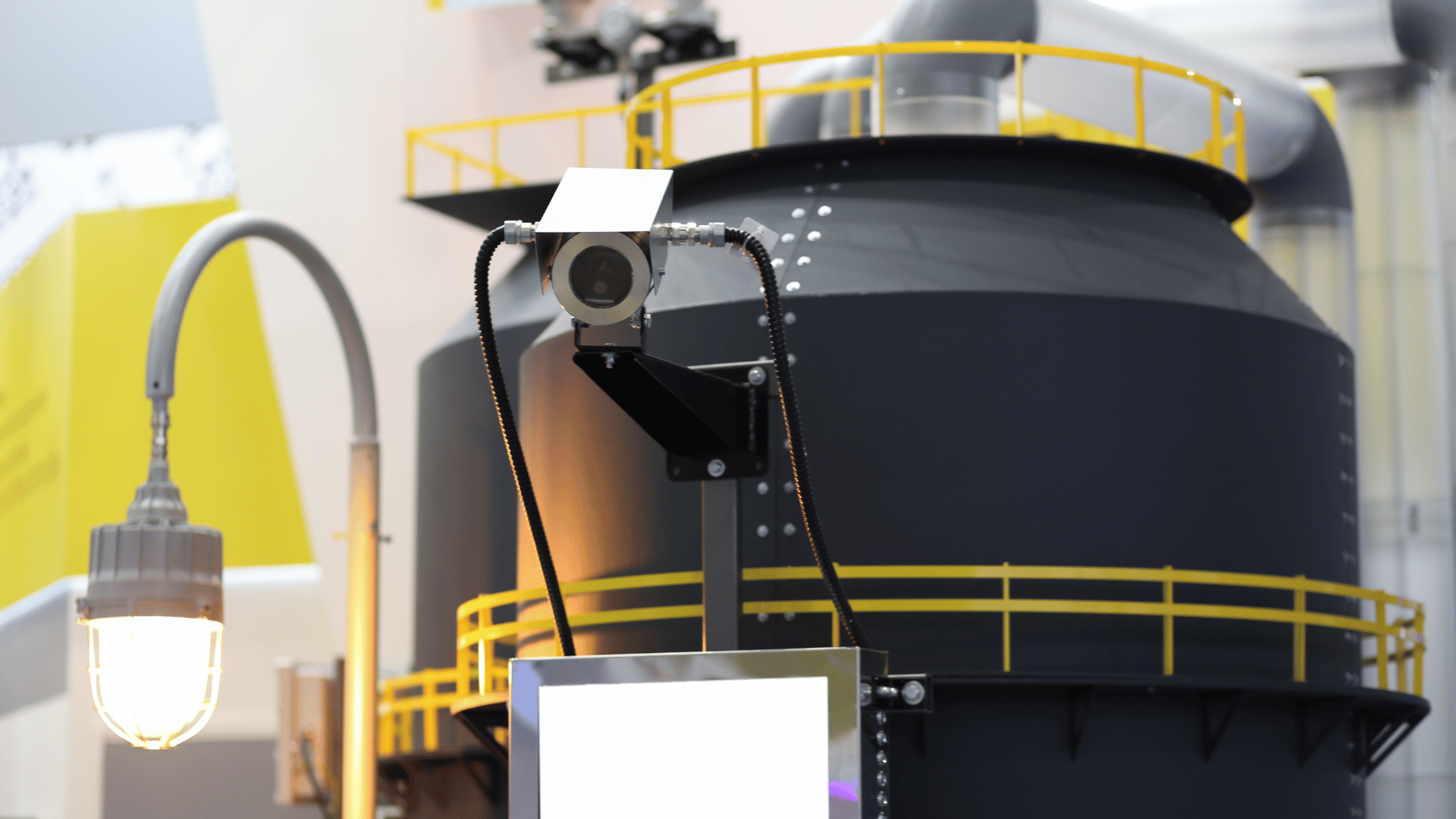
When choosing surveillance equipment for hazardous areas, understanding explosion-proof ratings is not optional — it’s a legal and safety requirement. Areas such as oil refineries, chemical plants, grain silos, and mining facilities may contain flammable gases, combustible dust, or ignitable fibers. Using the wrong equipment can trigger a catastrophic explosion. This guide breaks down every major certification system — NEC, ATEX, and IECEx — and shows you exactly which rating your site requires.
The Three Major Explosion-Proof Certification Systems
Global safety organizations have developed three primary systems to regulate explosion-proof equipment. Each uses different terminology, but all serve the same purpose: ensuring electrical equipment cannot ignite the surrounding atmosphere.
| System | Jurisdiction | Governing Body | Terminology | Common Industries |
|---|---|---|---|---|
| NEC / UL | USA & Canada | NFPA / Underwriters Laboratories | Class, Division, Group, T-Code | Oil & gas, petrochemical, grain, mining |
| ATEX | European Union | EU Directive 2014/34/EU | Zone, Category, Gas Group, Temperature Class | Offshore, chemical, pharmaceutical |
| IECEx | International (60+ countries) | International Electrotechnical Commission | Zone, EPL, Gas Group, T-Class | Global oil & gas, mining, utilities |
NEC / UL Certification — North America
In the United States, hazardous location equipment is certified to the National Electrical Code (NEC) and tested by organizations like Underwriters Laboratories (UL). The NEC system uses four descriptors:
NEC Classes — Type of Hazard
| Class | Hazard Type | Examples |
|---|---|---|
| Class I | Flammable gases or vapors | Oil refineries, gas pipelines, chemical plants |
| Class II | Combustible dust | Grain elevators, flour mills, coal handling |
| Class III | Ignitable fibers / flyings | Textile mills, sawmills, cotton gins |
NEC Divisions — Frequency of Hazard
| Division | Condition | Risk Level |
|---|---|---|
| Division 1 | Hazardous substance present under normal operating conditions | High — equipment must contain any ignition internally |
| Division 2 | Hazardous substance present only under abnormal/fault conditions | Lower — equipment must not produce sparks or hot surfaces |
NEC Groups — Specific Substance
Groups further classify the exact flammable material. For Class I (gases): Group A (acetylene), Group B (hydrogen), Group C (ethylene), Group D (propane/methane). For Class II (dust): Group E (metal dust), Group F (carbon dust), Group G (grain/flour dust).
T-Codes — Maximum Surface Temperature
The T-Code defines the maximum surface temperature the equipment reaches during operation, ensuring it stays below the auto-ignition temperature of the surrounding substance. T1 (450°C) through T6 (85°C) — the lower the number, the higher the allowable surface temperature.
ATEX Certification — European Union
ATEX (ATmosphères EXplosibles) is mandatory for all equipment sold into EU hazardous locations. ATEX uses a Zone-based system rather than Class/Division:
ATEX Zones for Gas (Group II)
| Zone | Condition | NEC Equivalent |
|---|---|---|
| Zone 0 | Explosive atmosphere present continuously or for long periods | Approx. Class I, Div 1 |
| Zone 1 | Explosive atmosphere likely to occur during normal operation | Approx. Class I, Div 1 |
| Zone 2 | Explosive atmosphere unlikely, and only for short duration | Approx. Class I, Div 2 |
ATEX Zones for Dust (Group III)
| Zone | Condition |
|---|---|
| Zone 20 | Combustible dust cloud continuously present |
| Zone 21 | Combustible dust cloud likely during normal operation |
| Zone 22 | Combustible dust cloud unlikely, and only for short duration |
IECEx Certification — International
IECEx (IEC System for Certification to Standards Relating to Equipment for Use in Explosive Atmospheres) is recognized in over 60 countries. IECEx uses the same Zone system as ATEX but is issued by nationally accredited IECEx-certified bodies, not just EU-approved notified bodies. IECEx certificates are accepted in Australia, South Africa, China, Brazil, India, and many Middle East jurisdictions where ATEX is not recognized.
Key difference: ATEX requires EU manufacturer compliance declaration + notified body approval. IECEx requires third-party testing and certification — generally considered the more rigorous of the two.
How to Read an Explosion-Proof Equipment Label
A typical NEC marking might read: Class I, Division 1, Groups C & D, T4. This means: suitable for locations with ethylene or propane/methane vapors (Groups C, D), present under normal operations (Division 1), and the equipment surface never exceeds 135°C (T4).
A typical ATEX marking might read: II 2G Ex d IIB T4 Gb. Breaking this down:
- II — Surface industry (not mining)
- 2G — Category 2, Gas environment (Zone 1)
- Ex d — Flameproof protection method
- IIB — Gas group (ethylene and less-dangerous gases)
- T4 — Max surface temperature 135°C
- Gb — Equipment Protection Level for Gas, Zone 1
Which Explosion-Proof Rating Do You Need?
| Application | Location | Required Rating |
|---|---|---|
| Oil wellhead / pumpjack area | USA | Class I, Division 1, Group D |
| Natural gas compressor station | USA | Class I, Division 1 or 2, Group D |
| Offshore oil platform | International | ATEX Zone 1 or IECEx Zone 1, IIB or IIC |
| Chemical plant — solvent storage | USA | Class I, Division 1, Group C or D |
| Grain elevator — bucket area | USA | Class II, Division 1, Group G |
| Coal mining — underground | USA | Class I or II, Division 1 (check state regs) |
| Paint booth / spray area | USA | Class I, Division 1, Group D |
| Pharmaceutical — solvent rooms | EU | ATEX Zone 1, IIA or IIB |
Explosion-Proof Camera Solutions from 2M Technology
2M Technology designs and installs explosion-proof surveillance systems for Class I Division 1, Class I Division 2, ATEX Zone 1, and IECEx Zone 1 environments across Texas and the Gulf Coast. Every system is specified to the exact hazardous location classification of your facility — we do not install generic “hazardous area” cameras without confirmed certification matching.
- Custom Explosion-Proof Camera Systems — engineered for your specific Class, Division, and Group
- Cisco Meraki Explosion-Proof Housing — for Meraki MV cameras in hazardous locations
- GeoVision Explosion-Proof Housing — ATEX and NEC certified housings for GeoVision cameras
- UniFi Explosion-Proof Housing — Class I Div 2 rated for Ubiquiti cameras
- Verkada Explosion-Proof Housing — for Verkada cameras in classified locations
Frequently Asked Questions — Explosion-Proof Ratings
What is the difference between Class I Division 1 and Division 2?
Division 1 means the hazardous substance (flammable gas, vapor, or liquid) is present under normal operating conditions — during routine production, processing, or handling. Division 2 means the substance is present only under abnormal conditions such as equipment failure or accidental release. Division 1 requires more robust protection methods (flameproof enclosures, intrinsic safety); Division 2 allows less restrictive designs (increased safety, non-sparking equipment).
Are ATEX and IECEx certifications interchangeable?
Not automatically. ATEX is legally required for equipment used within the EU. IECEx is an international scheme recognized in 60+ countries but is not automatically accepted as ATEX compliance without an EU Declaration of Conformity. However, an IECEx certificate can be used as the technical basis for obtaining ATEX certification, significantly reducing testing duplication. In non-EU jurisdictions (Middle East, Australia, parts of Asia), IECEx alone is typically sufficient.
Can a Class I Division 2 camera be used in a Division 1 area?
No. Division 1 equipment can be used in Division 2 areas (it exceeds the minimum requirement), but Division 2 equipment cannot be used in Division 1 areas — the protection level is insufficient. Always match or exceed the classification of the hazardous location, never downgrade.
What does “explosion-proof” actually mean?
In NEC terminology, “explosion-proof” specifically means the equipment enclosure is designed to contain any internal explosion and cool hot gases before they exit — preventing ignition of the surrounding atmosphere. It does not mean the equipment will survive an external explosion. ATEX/IECEx use the term “Ex d” (flameproof) for the same concept. Other protection methods (Ex e, Ex i, Ex n) use different strategies to prevent ignition.
Do explosion-proof cameras require special installation procedures?
Yes. Conduit seals must be installed within 18 inches of the enclosure (NEC 501.15) to prevent gases from traveling through conduit into non-classified areas. Thread engagement must meet specification (typically 5 full threads minimum). Cable entry methods must maintain the enclosure’s protection rating. 2M Technology installs all explosion-proof systems to NEC and ATEX installation requirements as part of every project.
Call (214) 988-4302 or request a quote to spec an explosion-proof camera system for your classified location. Our team will verify the correct Class, Division, Group, and T-Code for your facility before specifying any equipment.

