The Hidden Costs of Food Recalls Beyond the Direct Recall Expense
Direct recall logistics account for less than 40 percent of total recall cost. The hidden costs — brand damage, insurance increases, regulatory burden, operational disruption, and executive liability — typically exceed the visible costs by 2 to 3 times and persist for years after the recall event is closed.
The hidden costs of food recalls are systematically underestimated by food manufacturers because the direct, invoiced expenses — product retrieval, disposal, replacement, and immediate regulatory response — are visible and trackable. The costs that exceed these direct expenses are harder to measure: brand equity erosion, permanent market share loss, insurance premium increases, retailer delisting, executive time diverted from growth initiatives, and the ongoing legal liability from consumer injury claims that may not resolve for years. Understanding the complete cost model for food recalls is essential context for evaluating the ROI of X-ray inspection investment.
The Complete Food Recall Cost Model
Brand Damage: The Largest Hidden Cost
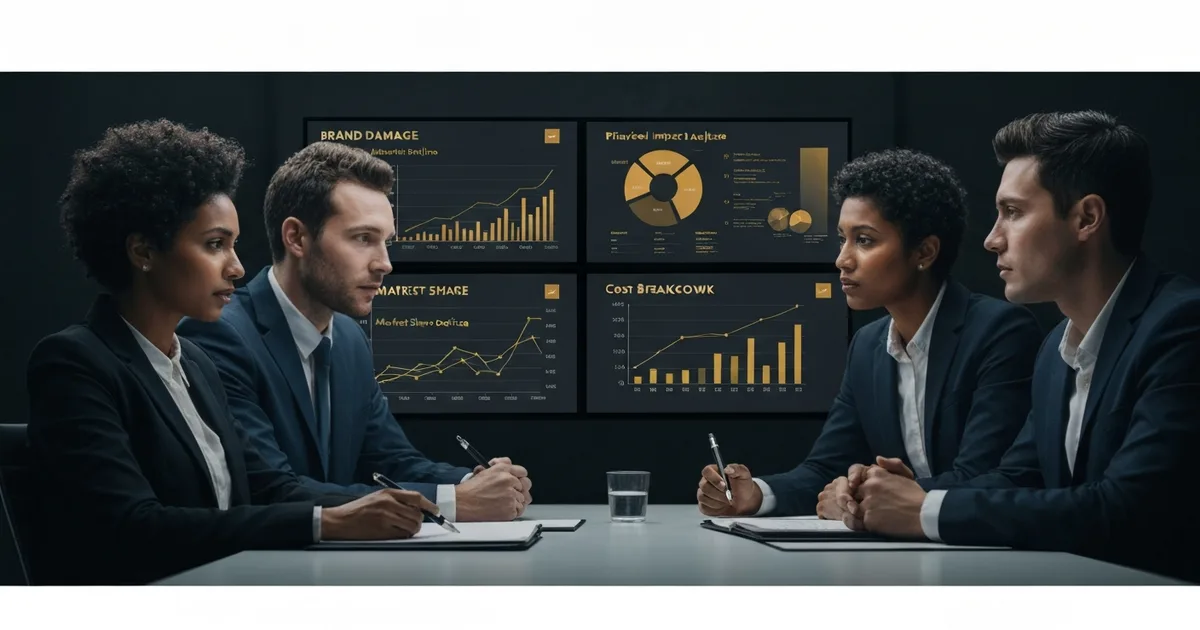
Consumer research consistently shows that food safety incidents cause lasting brand damage that persists well beyond the recall resolution. A 2023 study of 47 Class I food recalls found that the affected brands lost an average of 22 percent of market share in the 12 months following the recall announcement — and only 60 percent of that market share was recovered within 3 years. For a brand generating $50 million in annual revenue, a 22 percent market share decline represents $11 million in annual revenue loss, with a 3-year cumulative impact exceeding $25 million — all from a single recall event that the visible direct costs suggest was a $3 to $5 million incident. The brands that recover fastest are those with strong pre-recall quality narratives, transparent recall communications, and demonstrable investment in inspection infrastructure that signals the recall was an isolated event rather than a systemic failure.
Retailer Delisting: The Channel Cost
Major grocery retailers maintain vendor scorecard systems that track supplier quality incidents. A Class I recall typically results in automatic placement on a quality watch list, requiring quarterly audit reporting and in some cases mandatory third-party food safety audits at supplier expense. Retailers with strict quality programs — including several major national chains — delist suppliers with Class I recalls pending a comprehensive food safety program review. Delisting from a major retail account that represented 15 to 30 percent of distribution eliminates that revenue stream entirely until the retailer reinstates the supplier — a process that typically requires 6 to 18 months and a demonstrated infrastructure investment in prevention. The cost of losing and recovering a major retail account frequently exceeds $1 to $5 million per account for mid-size food manufacturers.
Quantified Hidden Costs by Category
| Hidden Cost Category | Typical Range | Duration |
|---|---|---|
| Brand equity erosion (market share loss) | $5M — $25M+ | 1 — 5 years |
| Retailer delisting and reinstatement costs | $500K — $5M per account | 6 — 18 months per account |
| Insurance premium increases (product liability) | $200K — $800K/year additional | 3 — 5 years post-recall |
| Consumer injury litigation | $50K — $5M+ per claim | 2 — 7 years to resolve |
| Regulatory audit and compliance costs | $150K — $500K/year additional | 2 — 3 years post-recall |
| Executive and management time diversion | $300K — $1M in opportunity cost | 6 — 18 months |
| New customer acquisition (replace lost accounts) | $200K — $2M in sales and marketing | 1 — 3 years |
The X-Ray Inspection Prevention ROI Calculation
A single X-ray inspection system for a food production line costs $80,000 to $250,000 depending on throughput and configuration. Over a 10-year operating life, total cost of ownership including maintenance and calibration is typically $150,000 to $400,000. Compared against the $10 to $30 million total cost of a single Class I recall that the system prevents, the ROI calculation is straightforward — but it requires accounting for the hidden costs, not just the direct recall expenses. Using only direct recall costs underestimates the ROI by a factor of 3 to 5.
Insurance Implications: What Underwriters Look For
Product liability and product recall insurance underwriters evaluate food manufacturer risk profiles during annual policy renewals. Facilities with documented X-ray inspection CCPs, current GFSI certifications, and recent validation records receive significantly lower premiums than comparable facilities without documented inspection programs. Following a recall, insurers routinely require proof of inspection infrastructure upgrades as a condition of continued coverage or reasonable premium rates. Food manufacturers who make X-ray inspection investment proactively — before a recall — typically save 15 to 30 percent on annual product liability premiums compared to peers with equivalent revenue but metal-detection-only programs. Over 5 years, the insurance premium differential alone frequently exceeds the cost of the inspection system.
The Traceback Problem: Why Documentation Quality Determines Recall Scope
The scope of a food recall — how many units are recalled and at what cost — is directly determined by the quality of production and inspection records. Facilities with comprehensive X-ray inspection data logging can trace which specific production batches were inspected at what sensitivity levels, enabling narrow, targeted recalls of only the affected lots. Facilities with incomplete inspection records must recall all production from the relevant period to protect against liability — a decision that can expand a $500,000 targeted recall into a $5 million broad recall. The hidden cost of poor documentation compounds every other hidden cost by expanding the scope of every recall that occurs.
Related Food Inspection Resources
- Food Manufacturing X-Ray Inspection Hub
- Why Food Inspection Systems Fail
- Why Metal Detectors Miss Low-Density Contaminants
- Packaged Goods X-Ray Inspection for CPG
- FDA Recalls, Market Withdrawals, and Safety Alerts Database
Frequently Asked Questions: Hidden Costs of Food Recalls
What is the total cost of a Class I food recall including hidden costs?
The total cost of a Class I food recall including both direct and hidden costs typically ranges from $10 million to $30 million or more for mid-size food manufacturers. Direct recall costs — product retrieval, disposal, replacement, and regulatory response — account for $2 to $5 million. Hidden costs including brand equity erosion, retailer delisting, insurance premium increases, consumer injury litigation, and ongoing regulatory burden add $5 to $25 million over the 3 to 5 years following the recall event.
How long does brand damage from a food recall last?
Brand damage from a food recall typically persists for 1 to 5 years depending on the severity of the incident, the speed and quality of the brand’s recall communication, and whether the brand can demonstrate credible investment in prevention infrastructure. Research on Class I recalls shows affected brands lose an average of 22 percent of market share in the 12 months following the recall announcement, with 40 percent of that loss being permanent — meaning the brand never fully recovers its pre-recall market share.
Does X-ray inspection investment reduce food product liability insurance premiums?
Yes. Product liability underwriters evaluate documented inspection infrastructure as a risk reduction factor during premium calculations. Food manufacturers with documented X-ray inspection CCPs, current GFSI certifications, and validation records typically receive 15 to 30 percent lower product liability premiums than comparable facilities without these programs. Over a 5-year period, the insurance savings alone frequently cover a significant portion of the X-ray inspection system investment.
Calculate Your Recall Risk and Inspection ROI
2M Technology engineers help food manufacturers quantify the full cost of recall risk against inspection investment — contact us for a no-charge inspection ROI analysis for your specific product lines.