Custom Container Security Checkpoint — Complete Design & Build Process
A custom container security checkpoint from 2M Technology is a self-contained, fully engineered personnel screening unit built inside a standard ISO shipping container — also called a containerized access control checkpoint, portable security checkpoint, or modular security screening container. We design and build custom container security checkpoints for construction sites, industrial facilities, stadiums, border crossings, and government facilities across Texas and nationwide. Each custom container security checkpoint is assembled and tested at our Grand Prairie, TX facility before delivery — ready to plug in and run on day one.
Below is our complete five-phase process from your first call to the day your custom container security checkpoint goes live on site.
Phase 1 — Custom Container Security Checkpoint Requirements & Site Assessment
Every custom container security checkpoint starts with understanding your operation. We begin with a consultation — on-site visit or video call — to document your exact requirements before any design work begins:
- Throughput: How many people per hour at peak? One-way entry, two-way, or split in/out lanes?
- Threat model: Weapons screening only, full baggage X-ray, biometric identity verification, or a combination?
- Access control integration: Does your checkpoint need to connect to an existing badging system, time & attendance, or visitor management platform?
- Site constraints: Delivery access, ground conditions, power availability (shore power vs. generator), and climate (outdoor Texas heat, covered structure).
- Regulatory requirements: DHS, TSA, OSHA walking/working surface standards, local codes, or industry-specific compliance for petrochemical, federal contractor, or correctional environments.
- Staffing model: Staffed X-ray operator, fully automated entry, or hybrid?
Output from Phase 1 is a signed requirements document that locks scope before engineering begins — no scope creep, no surprises on delivery day.
Phase 2 — Custom Design & Equipment Selection
With requirements confirmed, our engineering team designs your custom container security checkpoint layout and selects every component. You receive a full equipment spec sheet and CAD layout for approval before fabrication begins.
Container Configuration
- Container size: 20-ft standard, 40-ft for multi-lane or larger equipment, or custom length
- Lane count: single-lane, dual-lane (our most common configuration), or multi-lane for stadium-scale throughput
- Interior layout: screening room position, operator workstation location, equipment rack placement
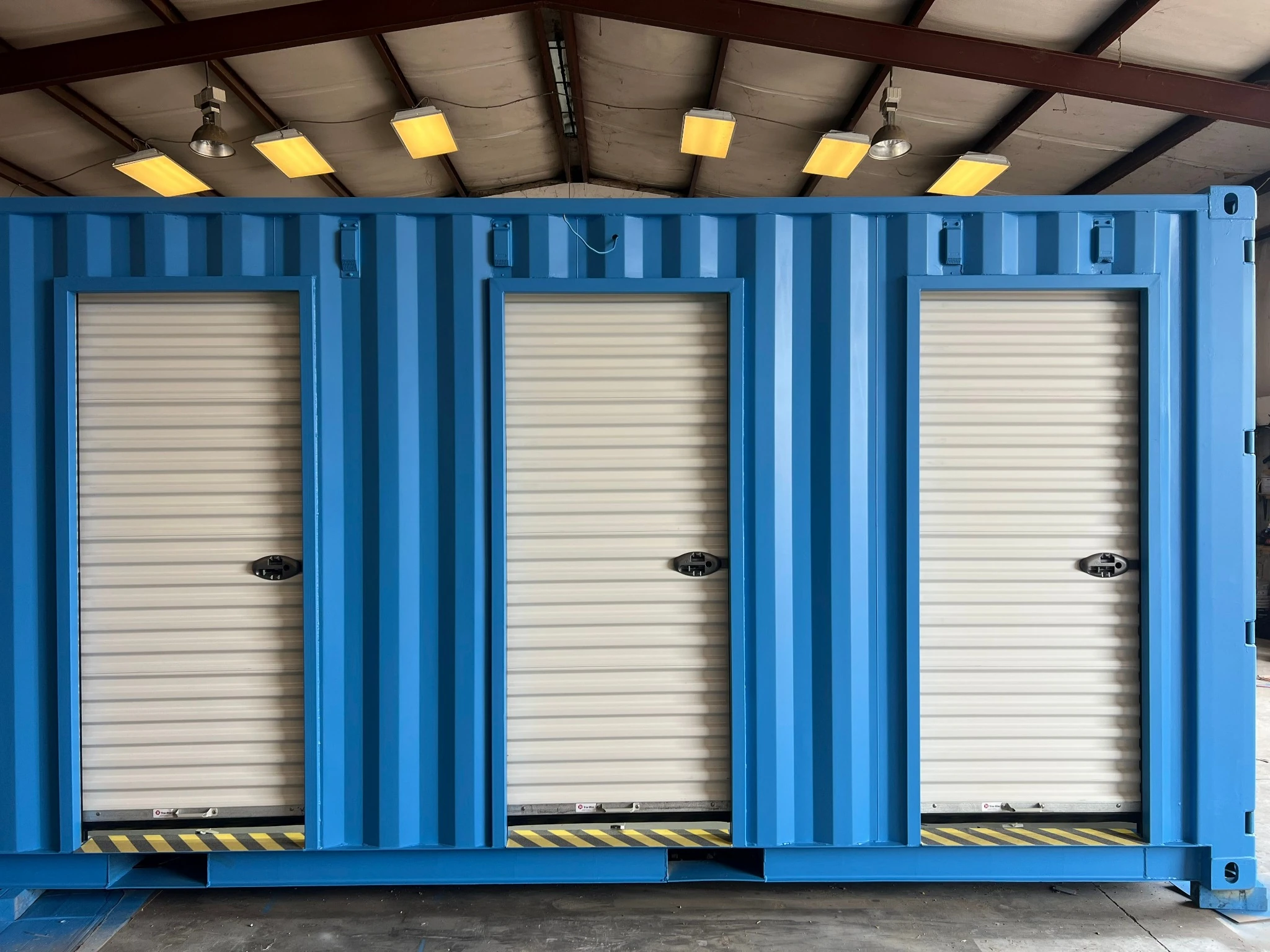
- Exterior finish: paint color, safety markings (hazard stripes, directional signage), branding
Equipment Options
| Category | Options |
|---|---|
| Turnstile Type | Full-height (maximum security), optical speedgate, half-height waist-high |
| Baggage Screening | Single-view or dual-view X-ray conveyor, manual inspection table |
| Personnel Screening | Walk-through metal detector, millimeter-wave body scanner |
| Identity Verification | Card/fob, biometric (fingerprint, iris, face), QR/barcode |
| Surveillance | IP intercom, overhead IP cameras, operator display monitors |
| Power | Shore power, generator hookup, hybrid with battery backup UPS |
Phase 3 — Fabrication & Systems Integration
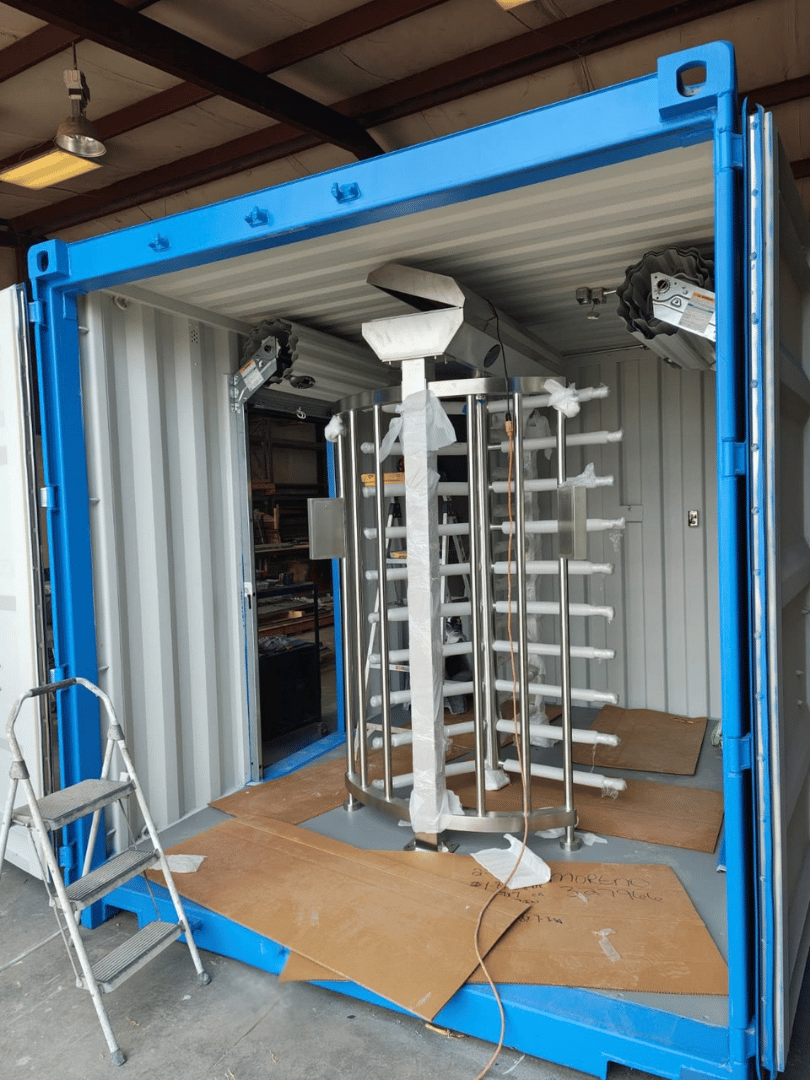
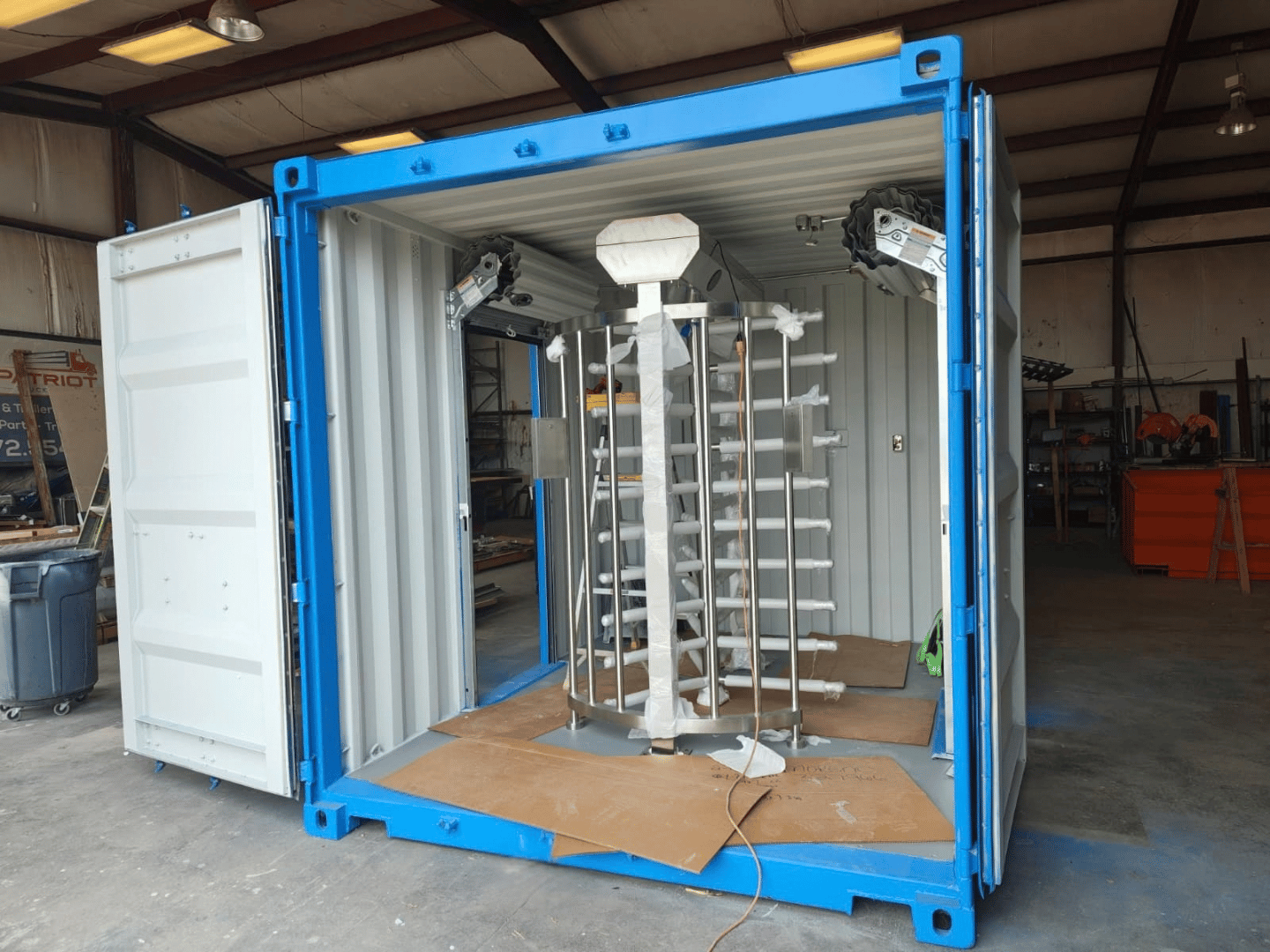
All fabrication of your containerized access control checkpoint happens at our Grand Prairie, Texas facility. Our team handles structural modification, equipment installation, and full systems integration in-house under one roof:
- Container structural work: door cutouts, reinforced openings, floor plating, anti-slip surfaces, hazard stripe markings
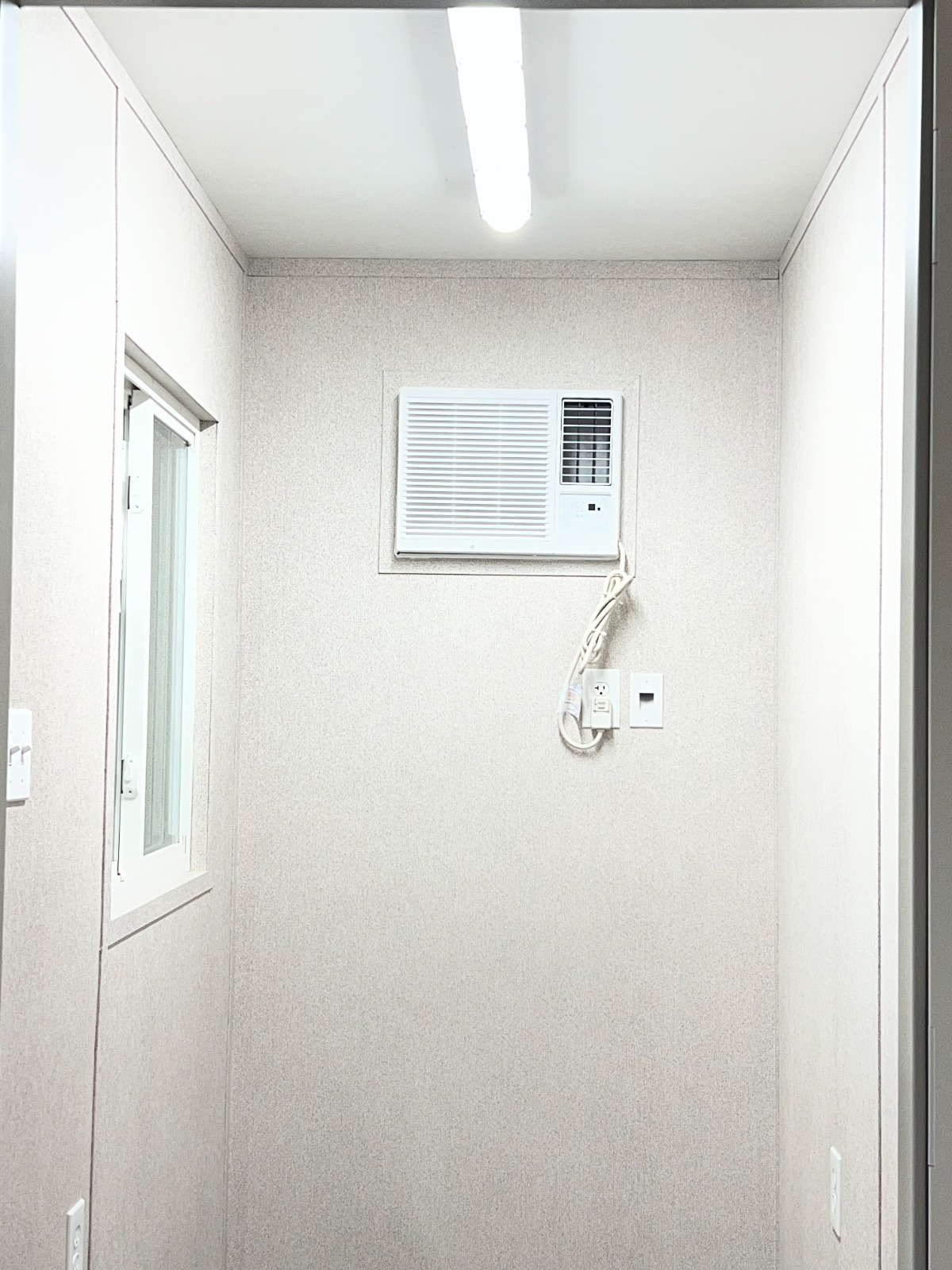
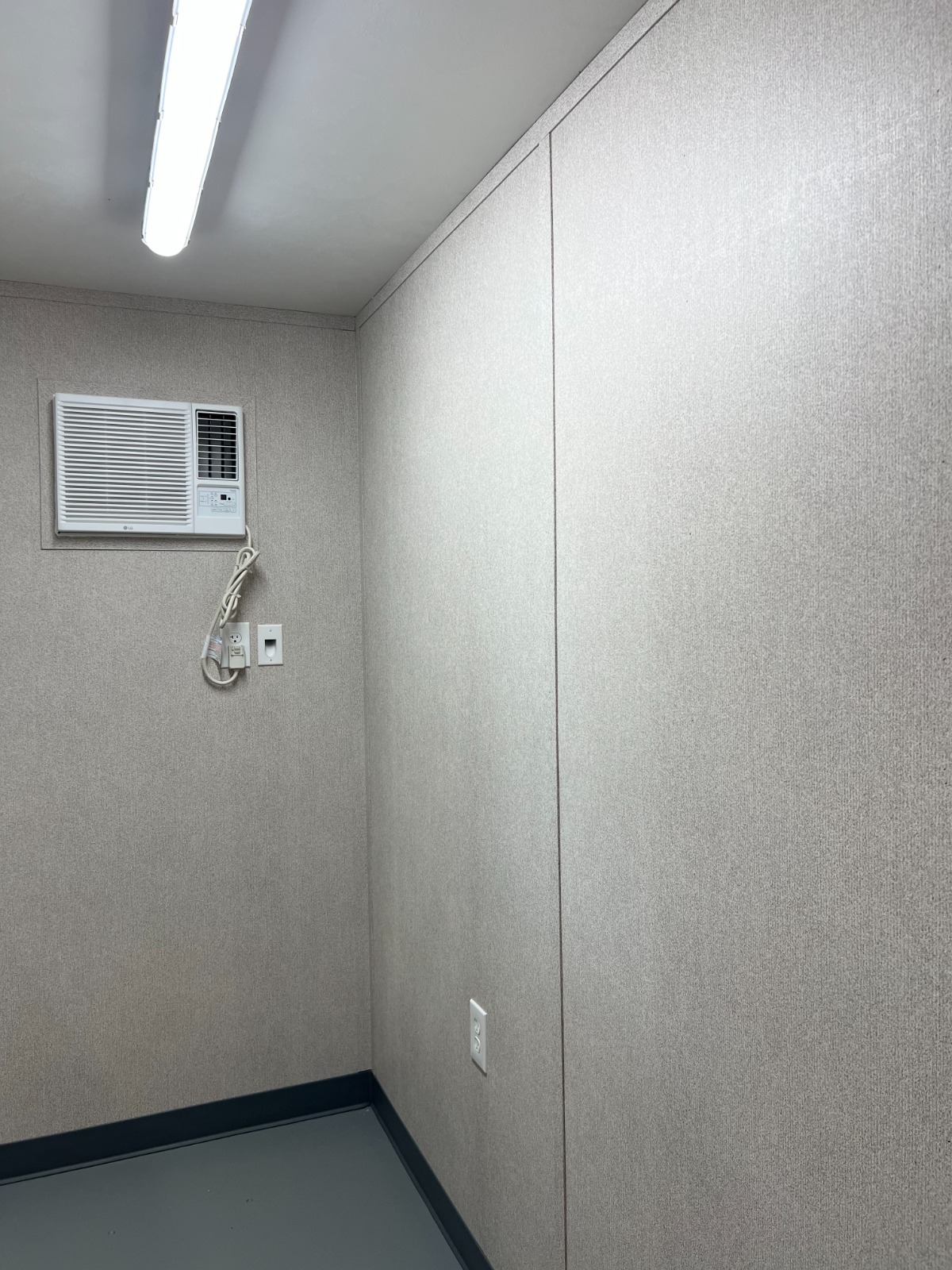
- HVAC: climate control sized for Texas summer heat and full equipment thermal load
- Electrical: 200A service panel, conduit runs, operator workstation circuits, equipment power, LED lighting
- Data & network: structured cabling, PoE switch, access control panel, IP camera wiring throughout
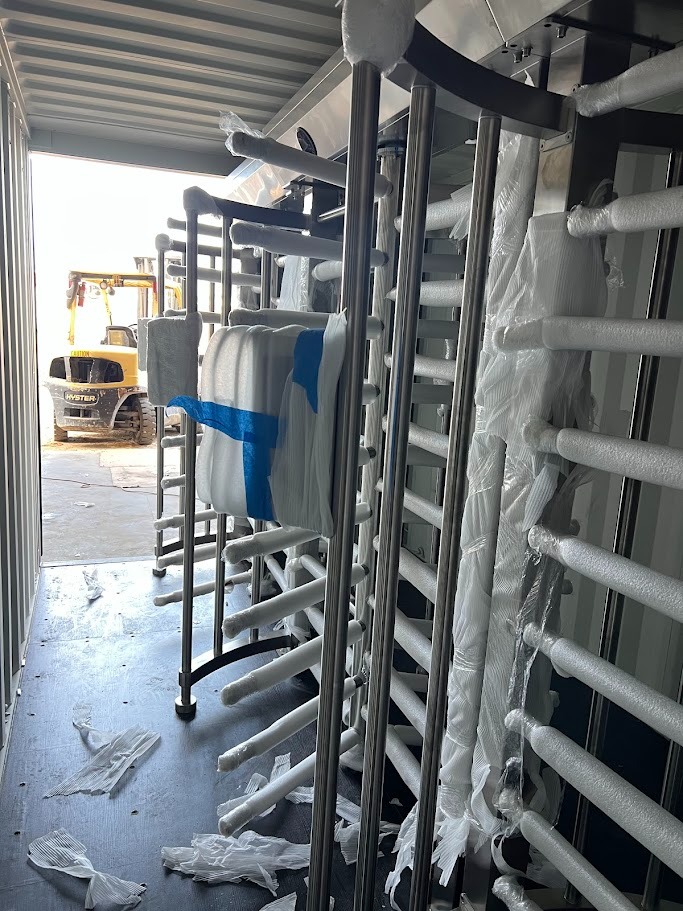
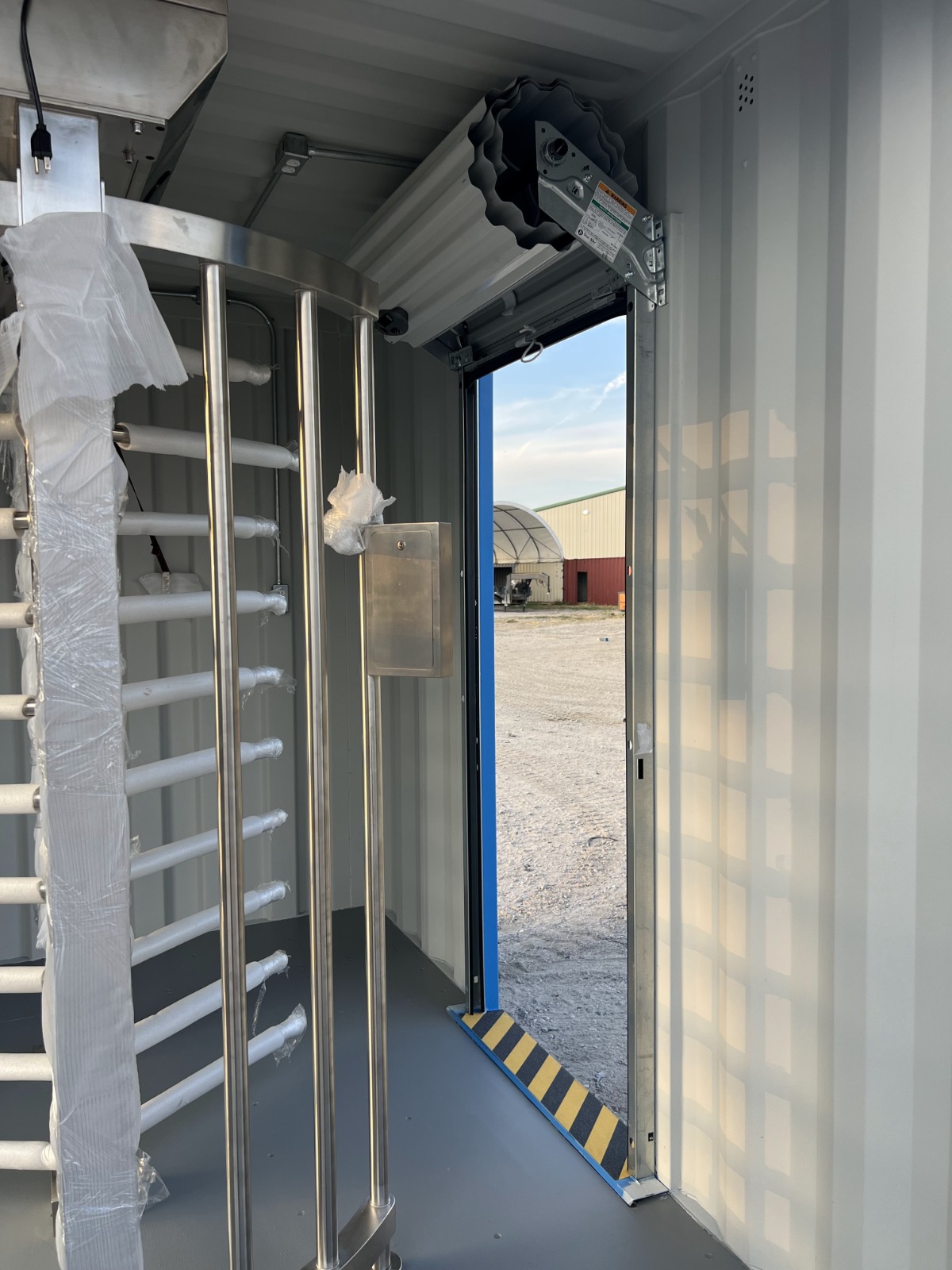
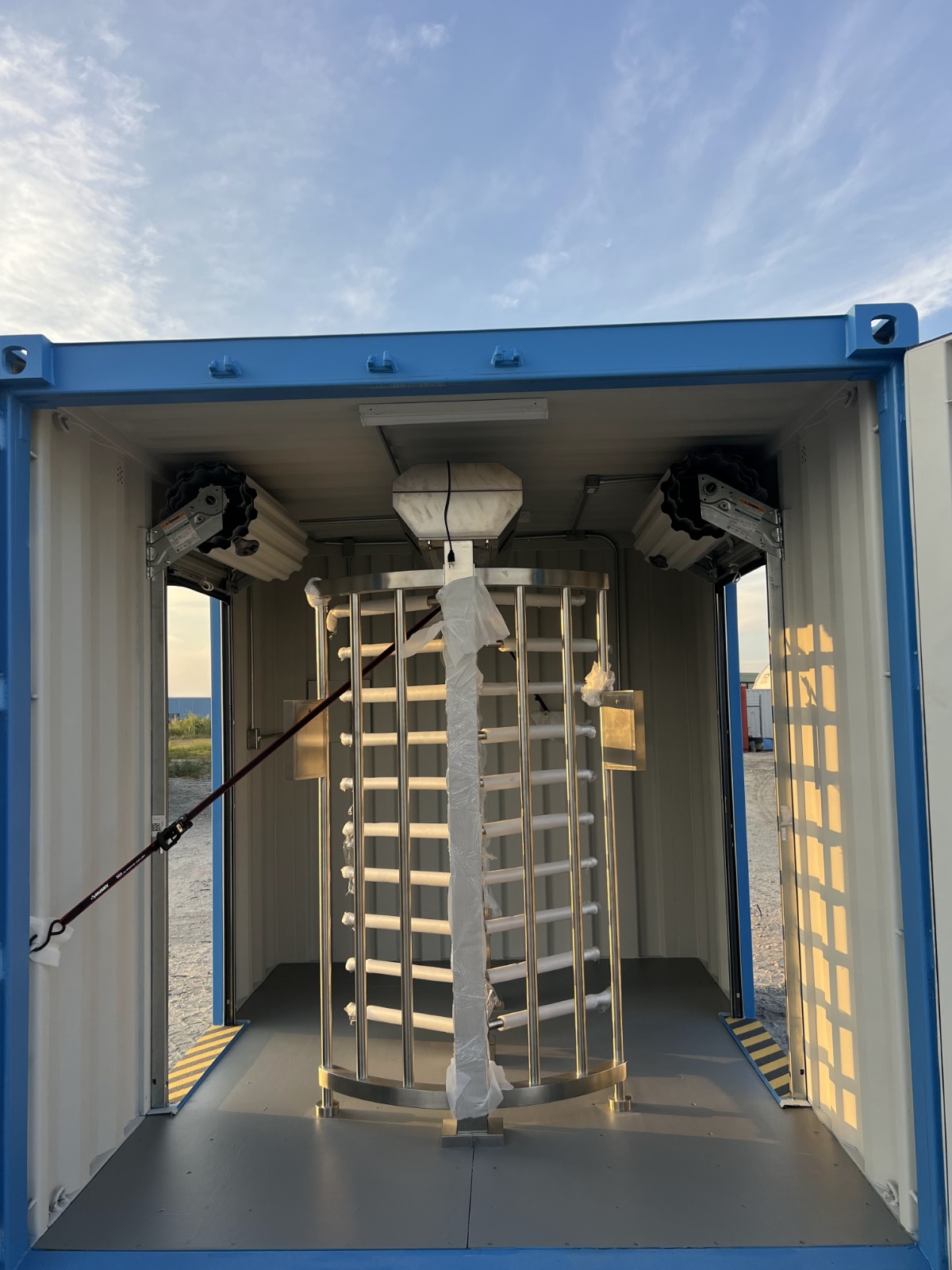
- Turnstile installation, alignment, and software configuration
- X-ray conveyor installation, calibration, and radiation shielding verification
- Access control software: credential enrollment, door schedules, alarm outputs, remote management
- Operator workstation: monitors, intercom console, access control interface
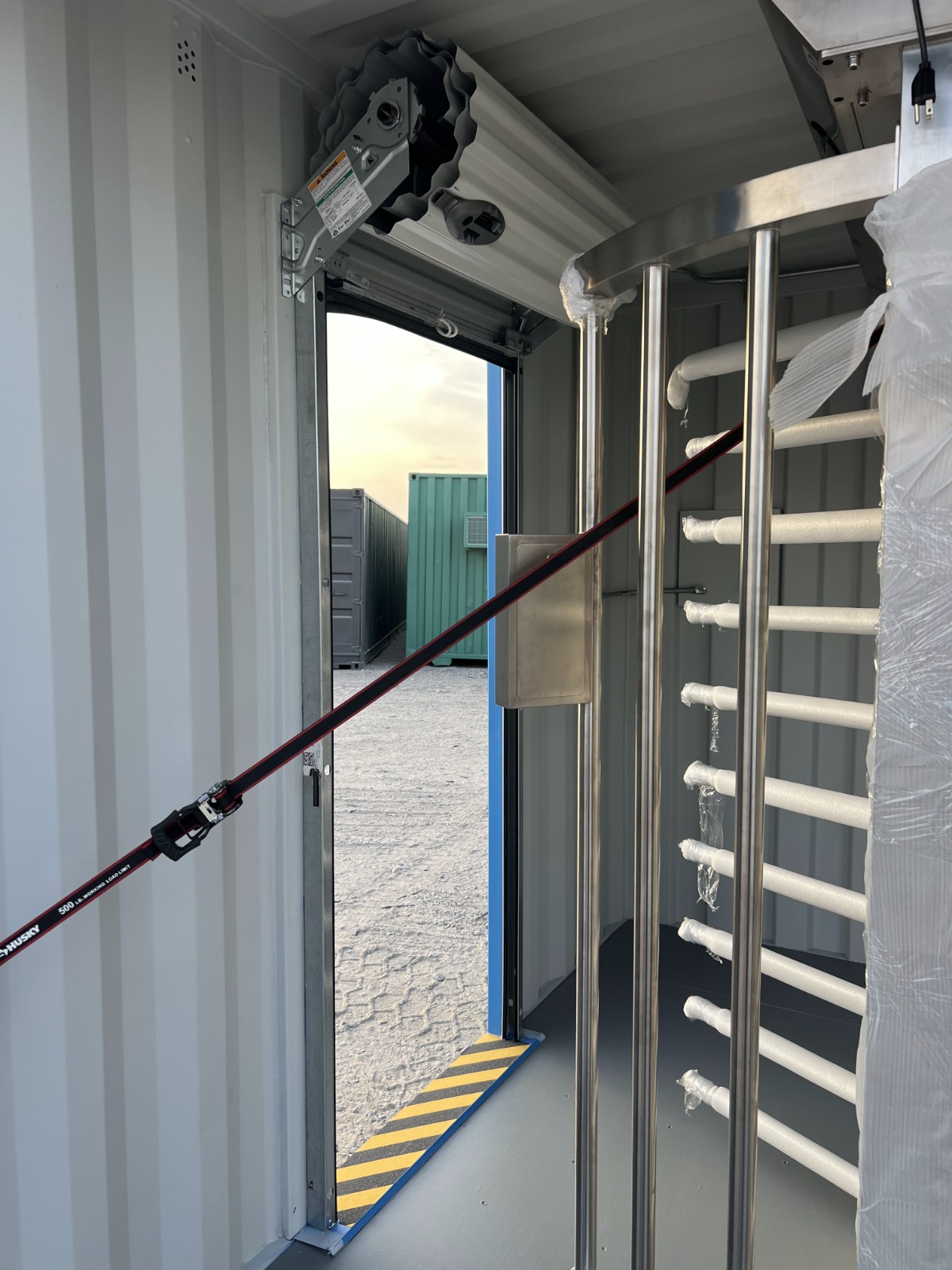
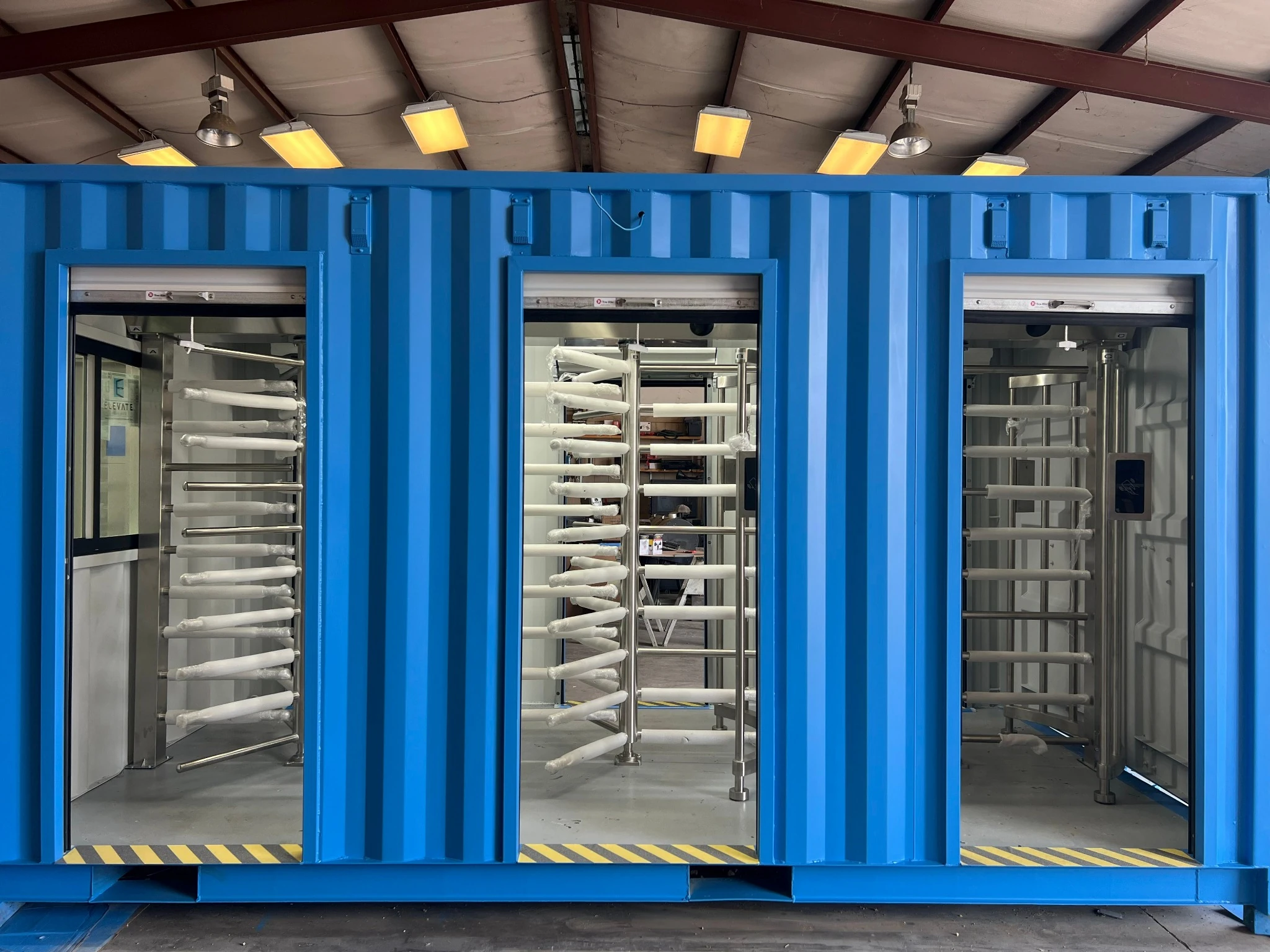
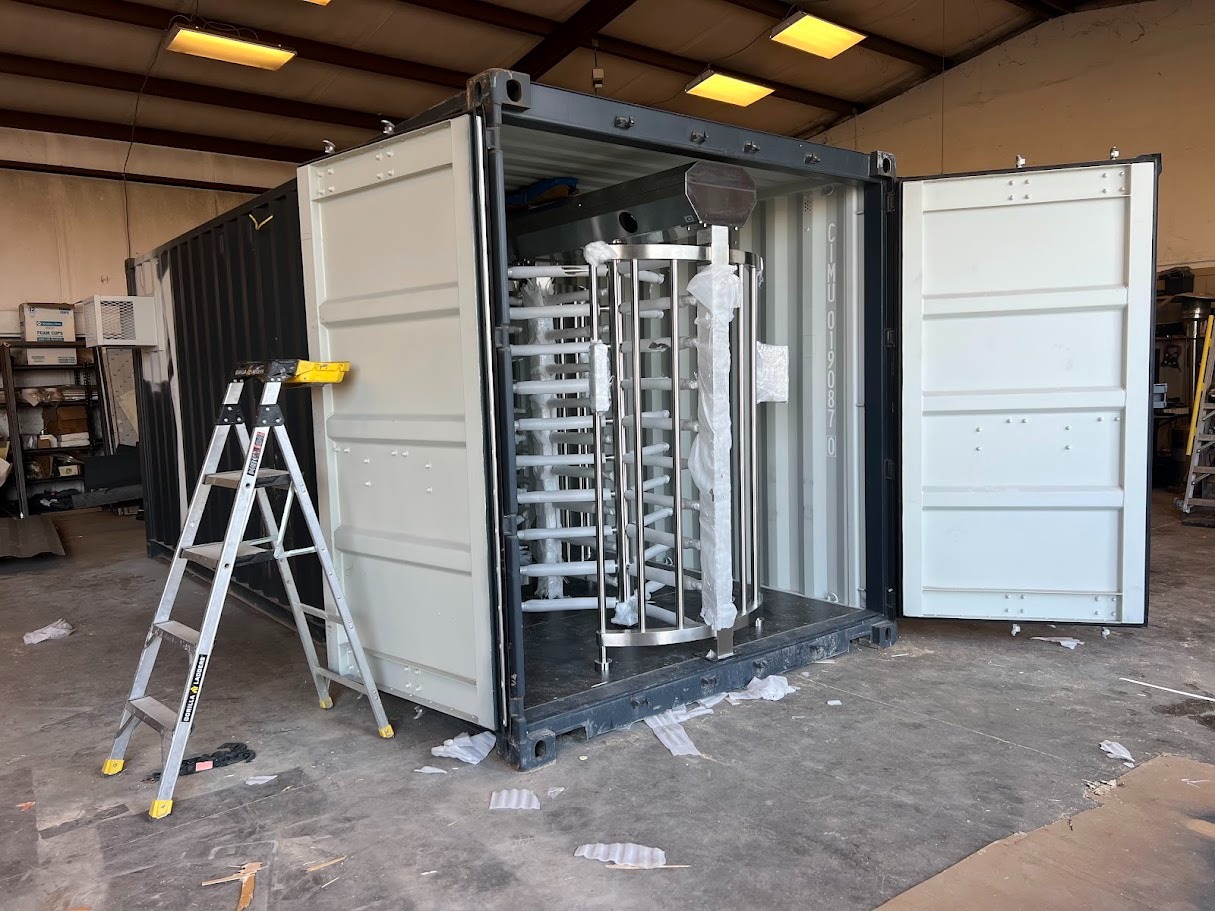
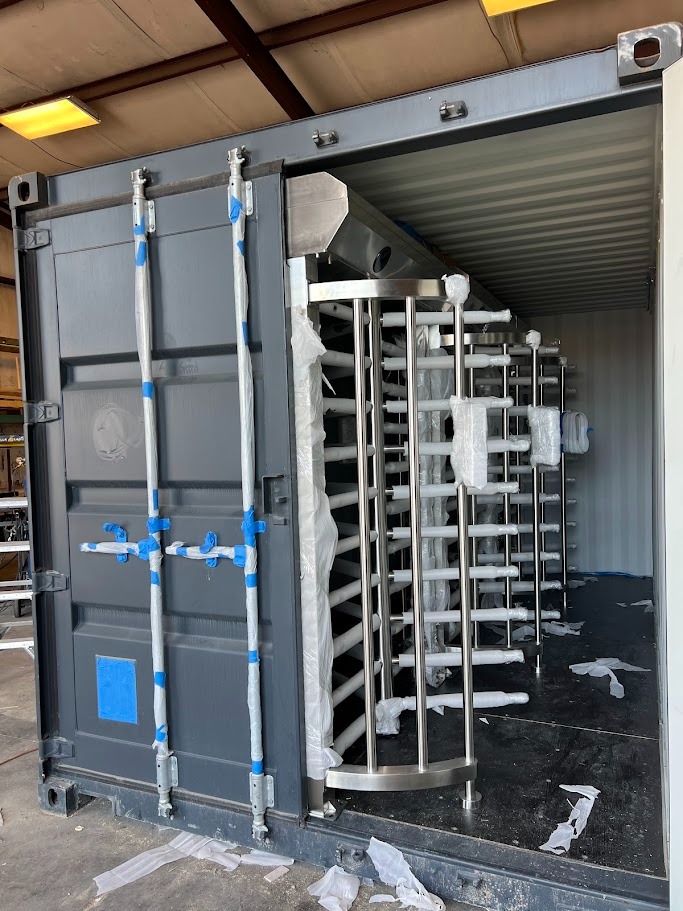
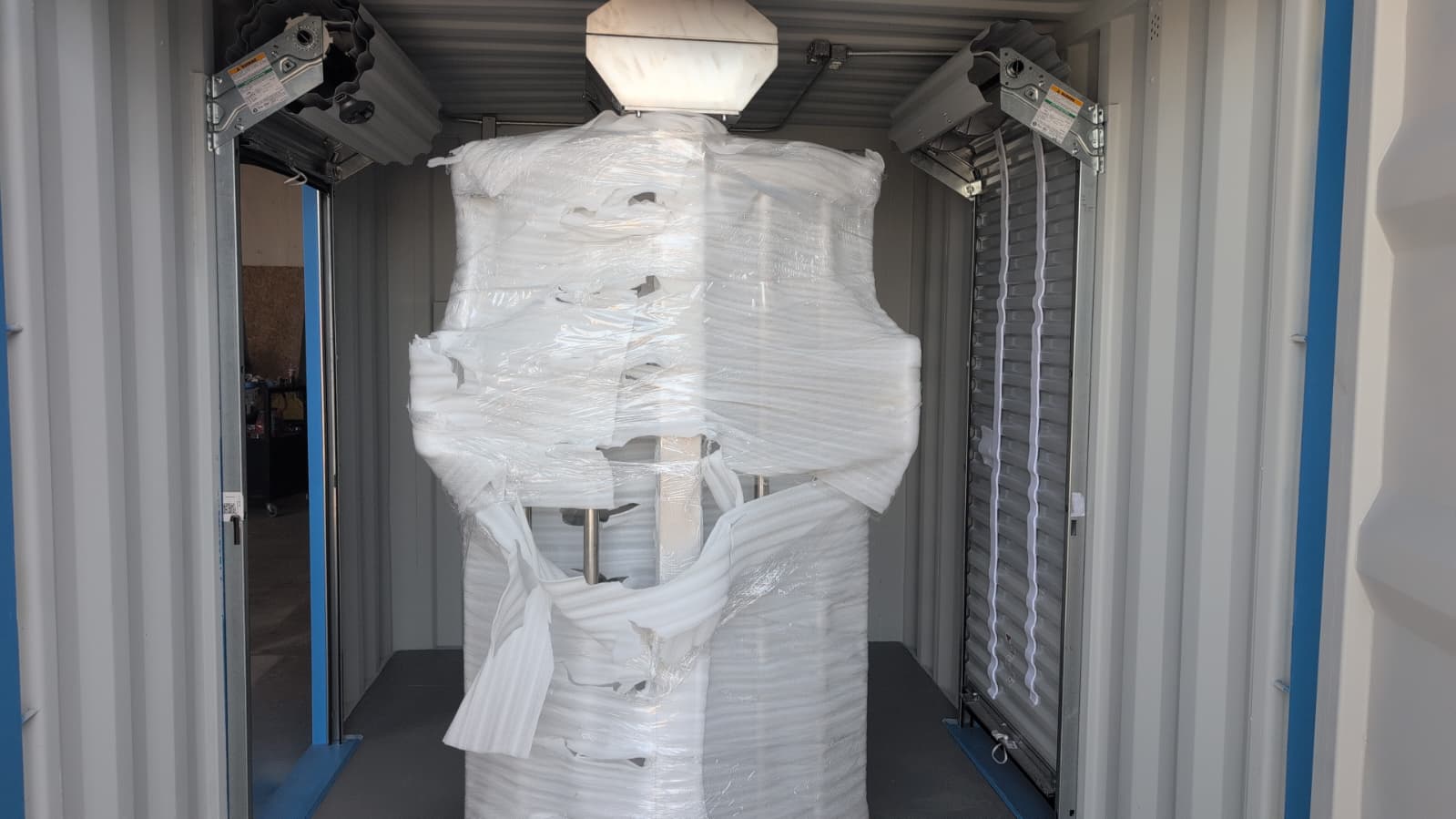
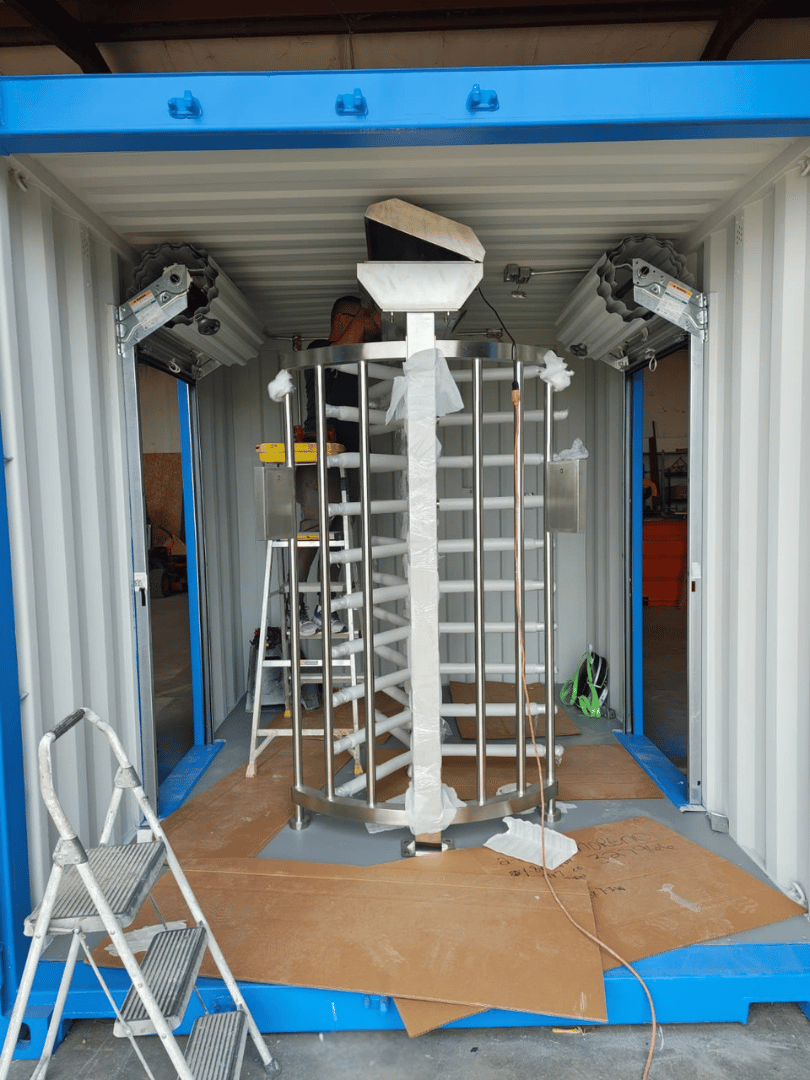
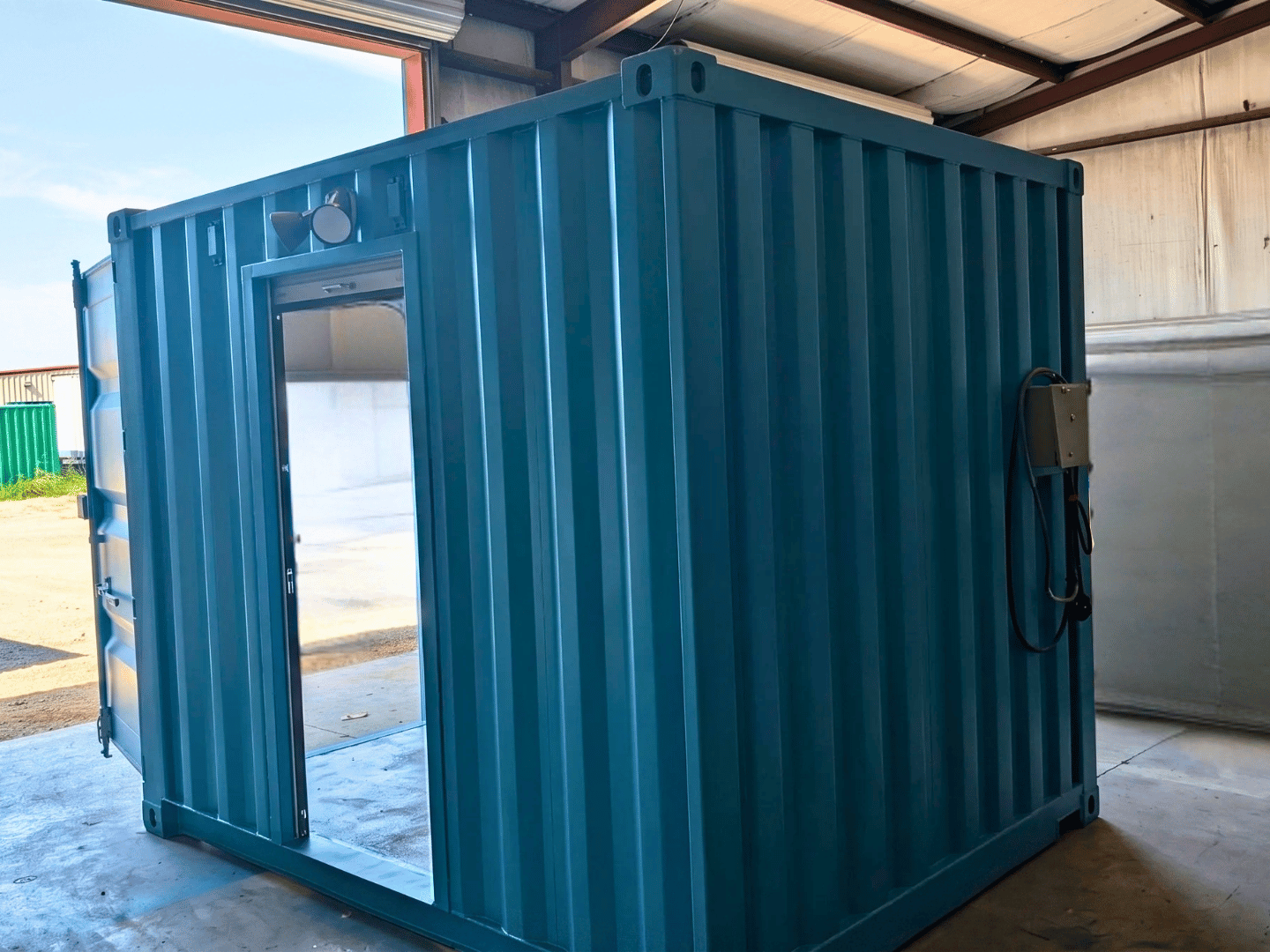
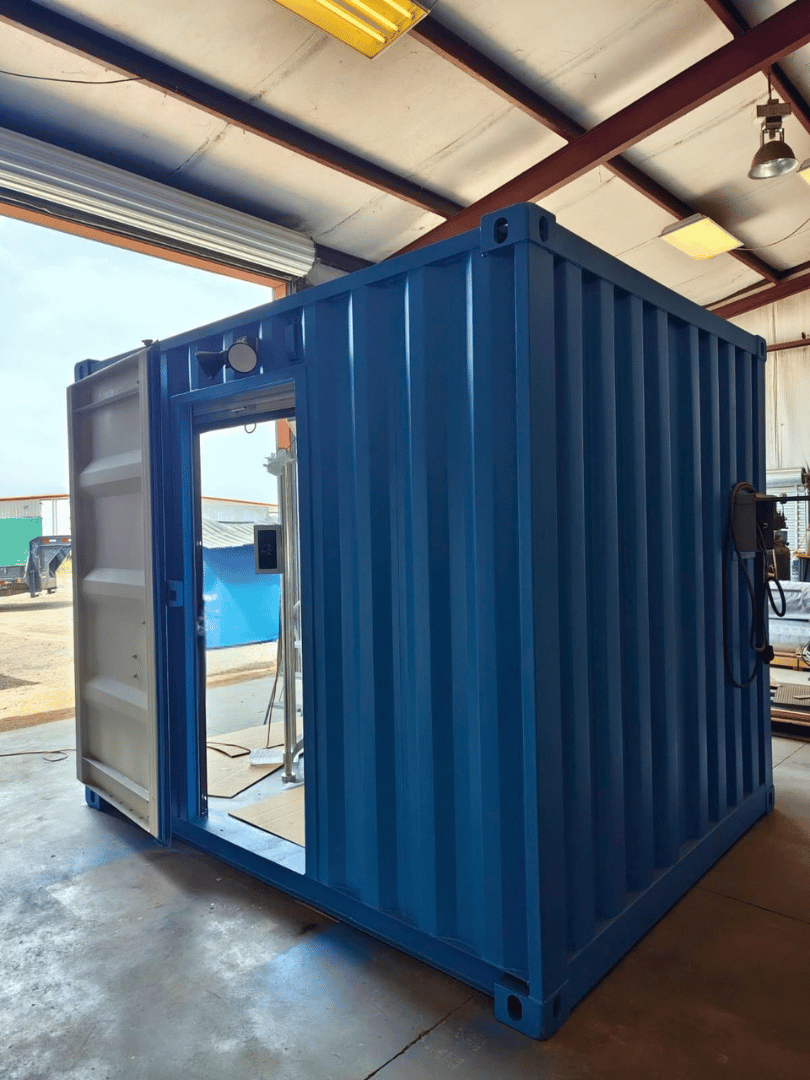
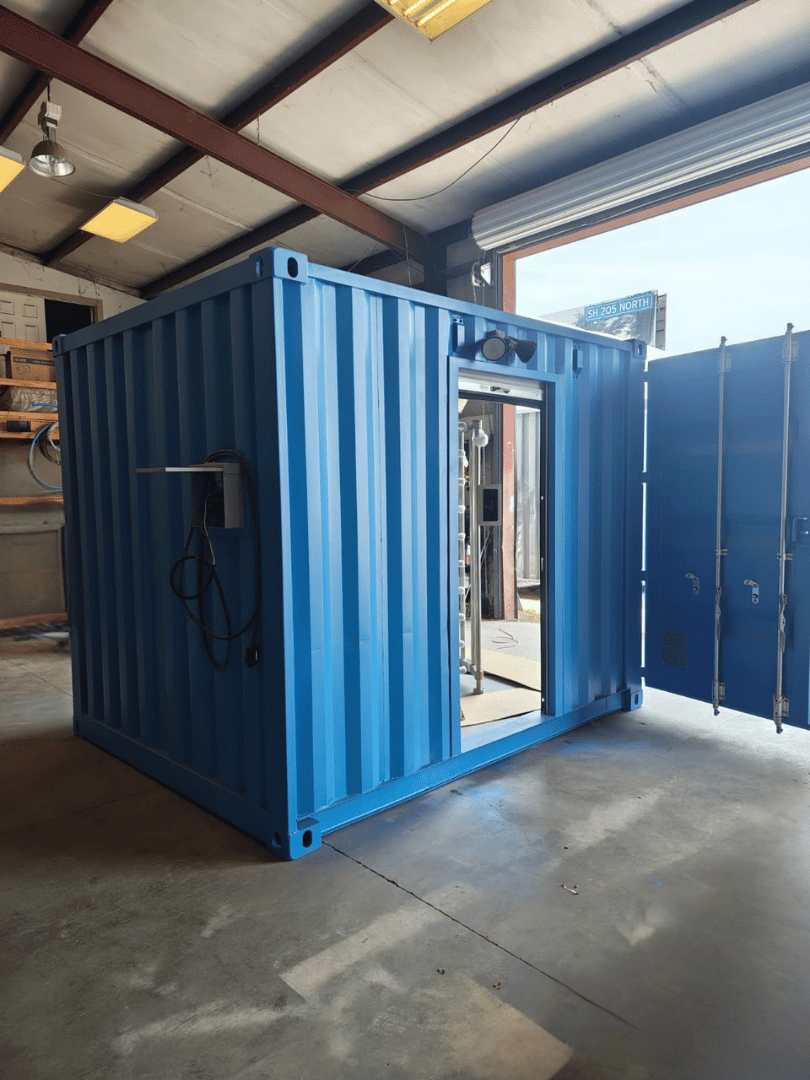
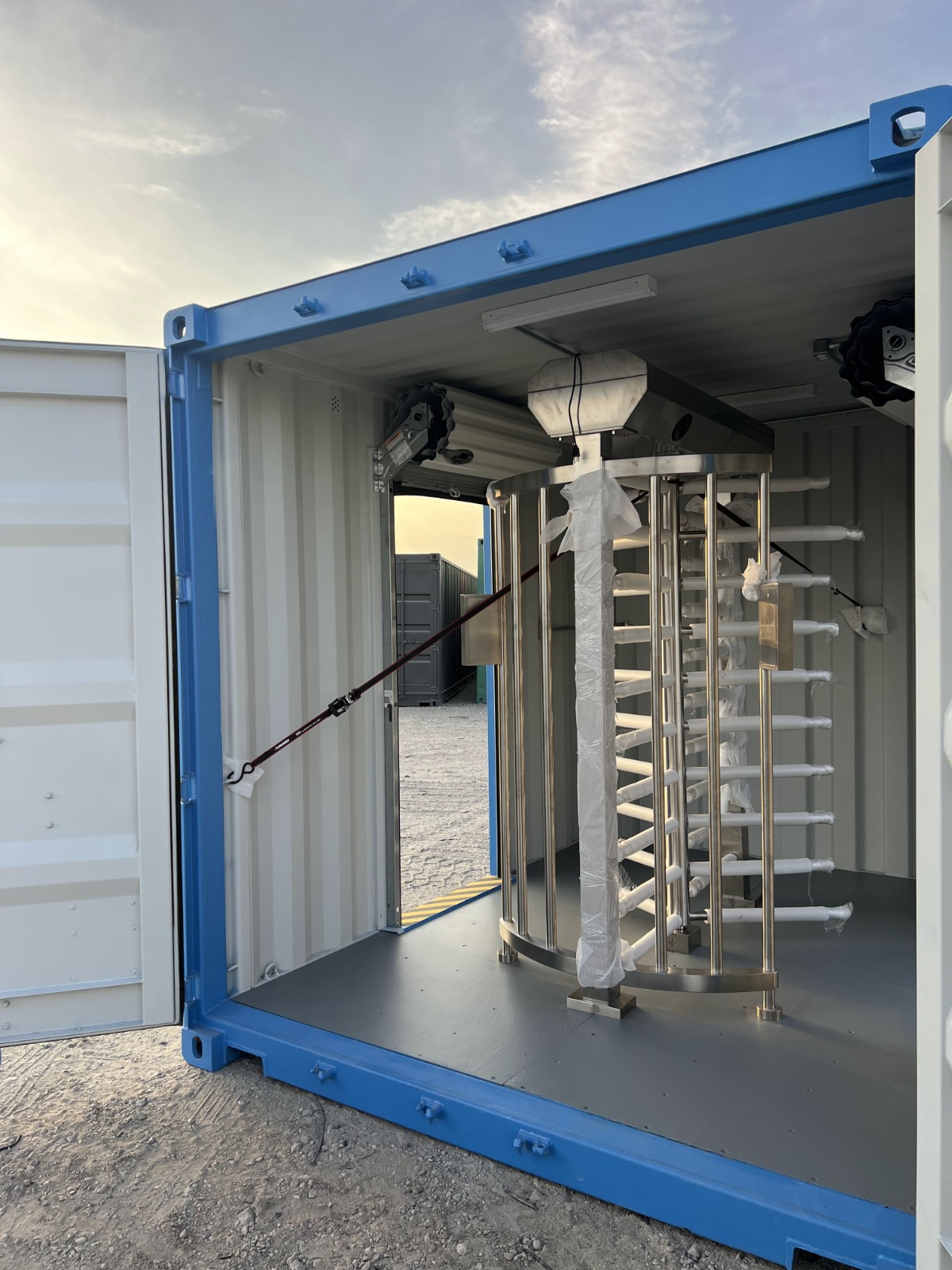
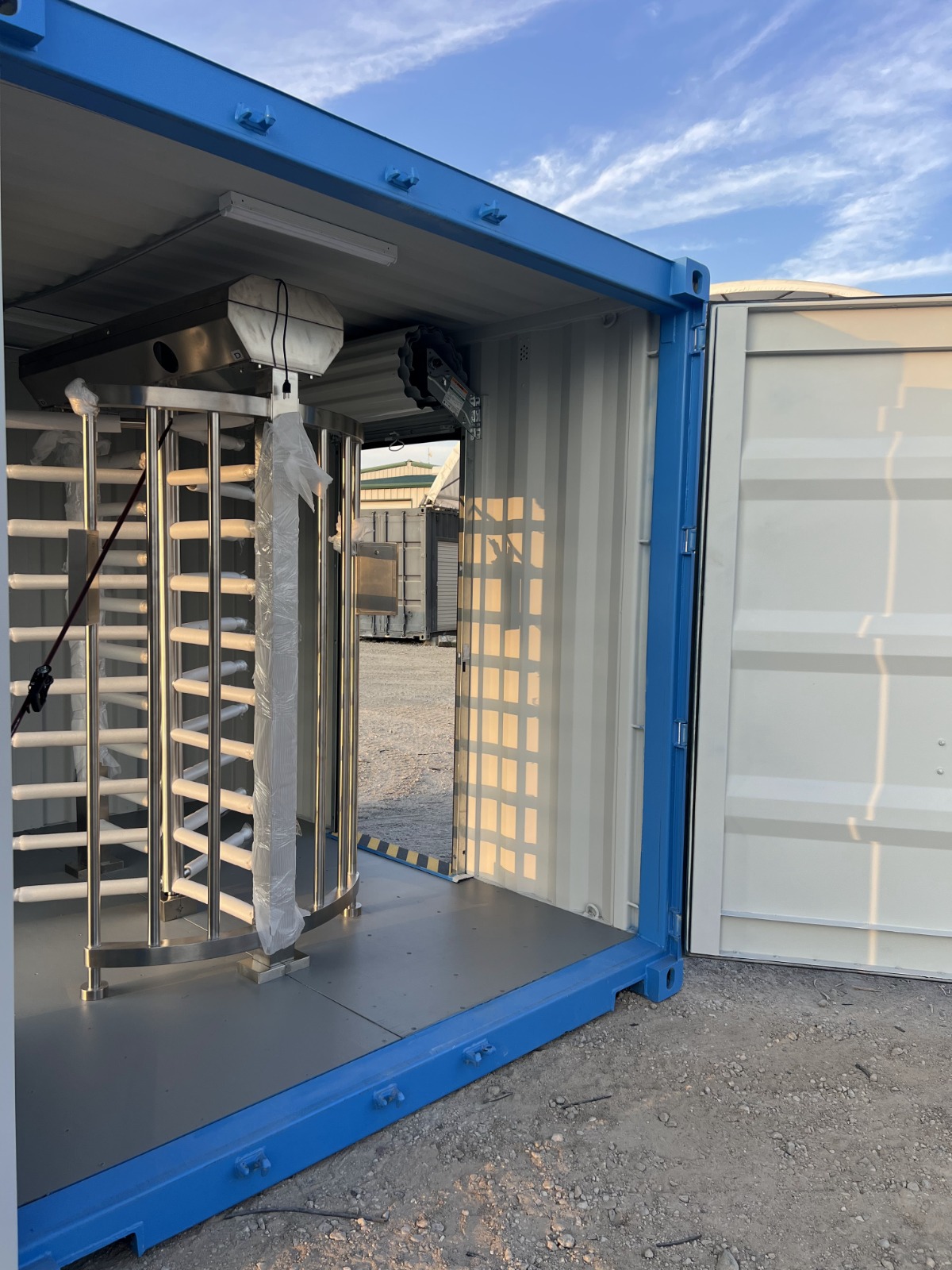
Photos below show turnstile installation in progress at our Grand Prairie, TX fabrication facility.


Phase 4 — Container Security Checkpoint Factory Acceptance Testing
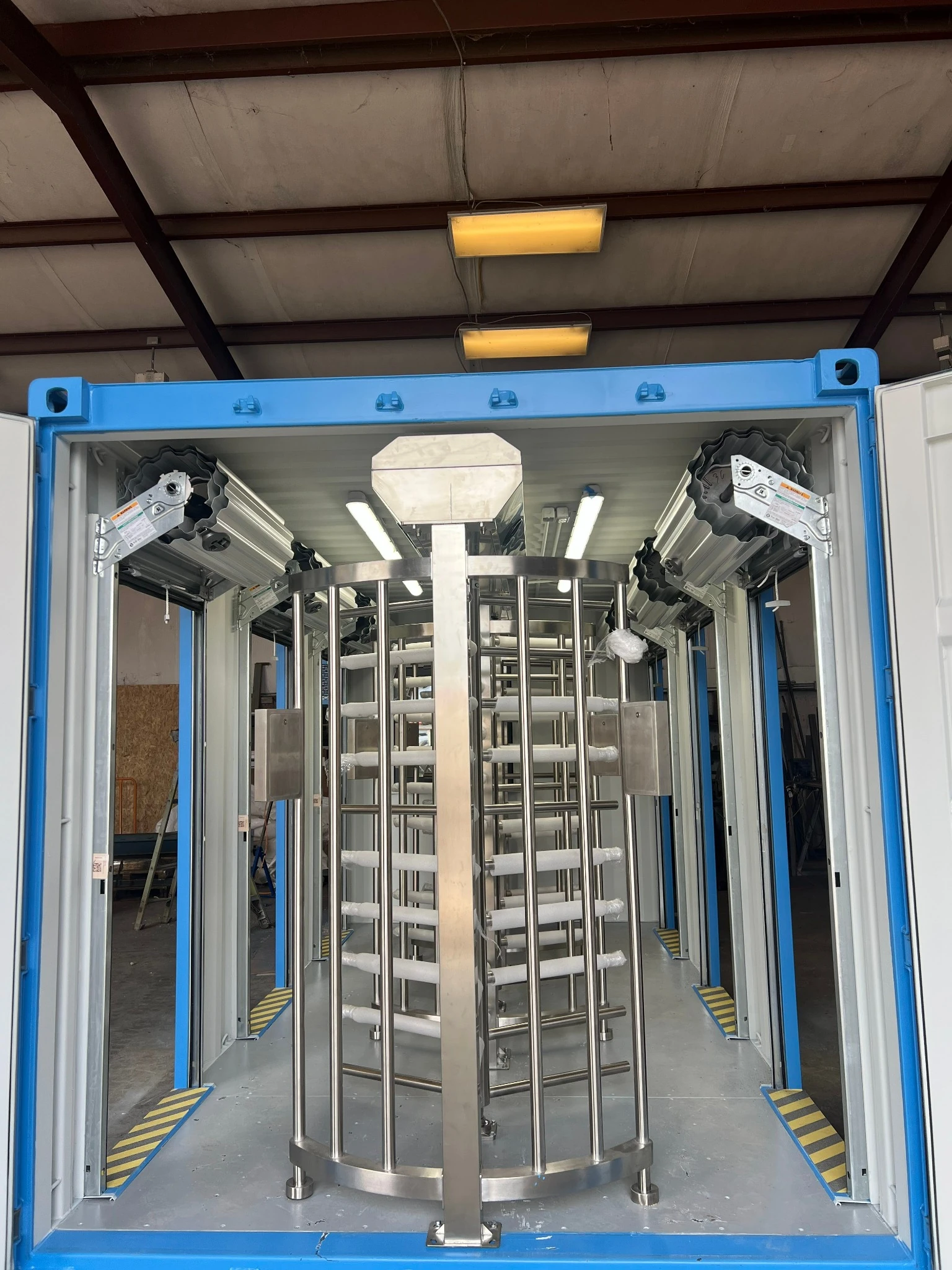
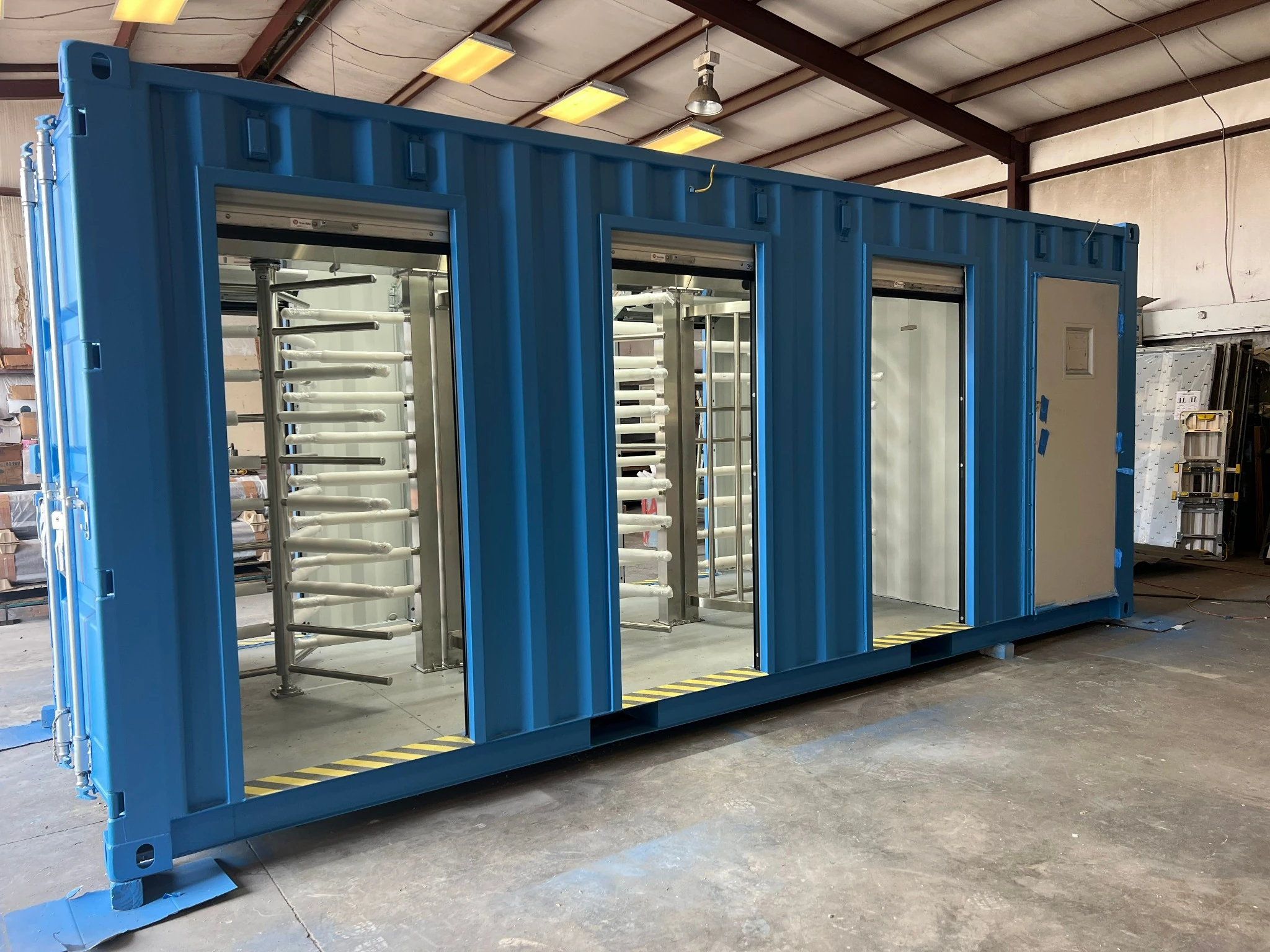
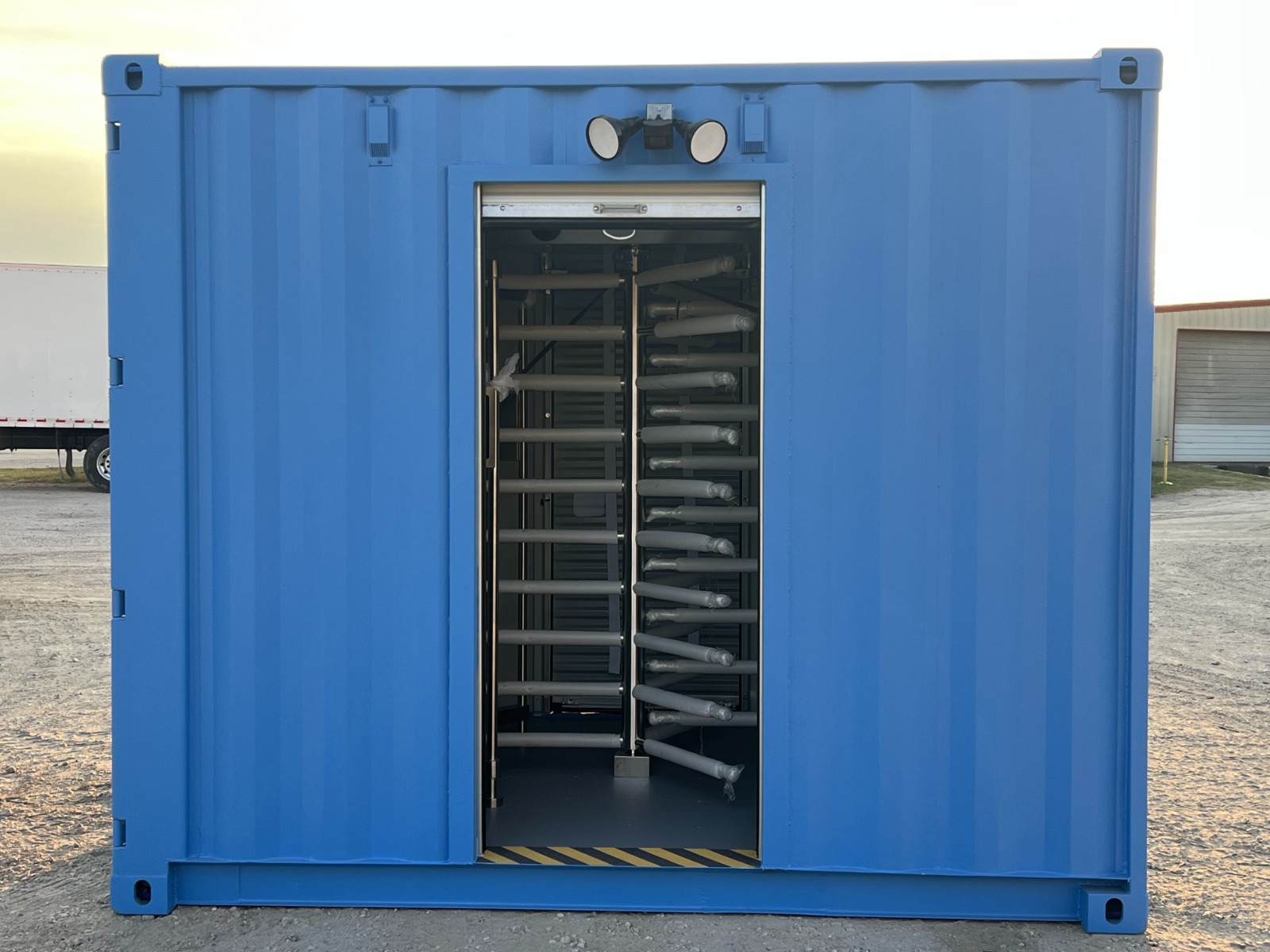
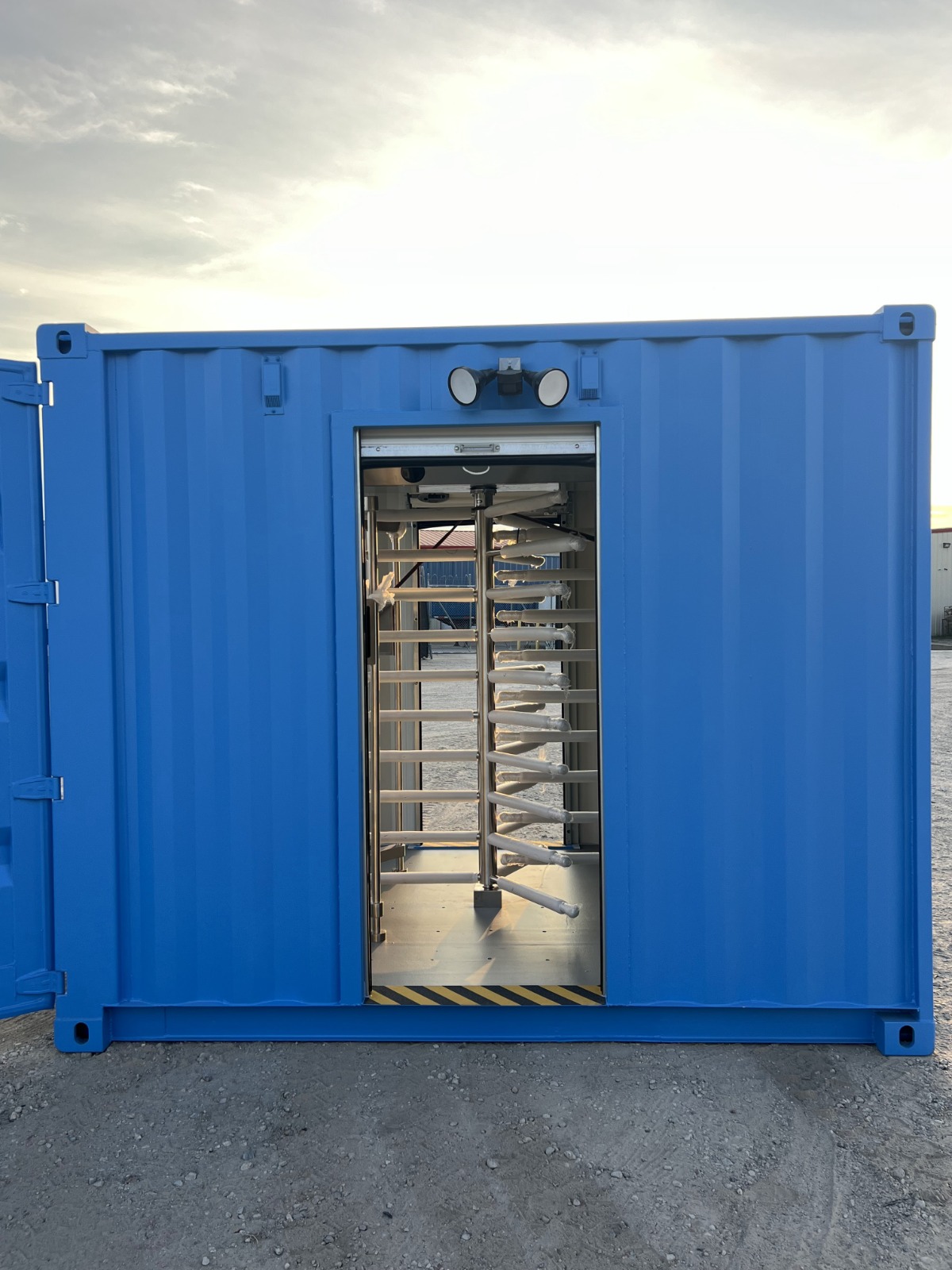
Before your custom container security checkpoint leaves our facility, every system is fully commissioned and tested. Customers are encouraged to attend — many bring their security director and IT team for the walkthrough at our Grand Prairie location.
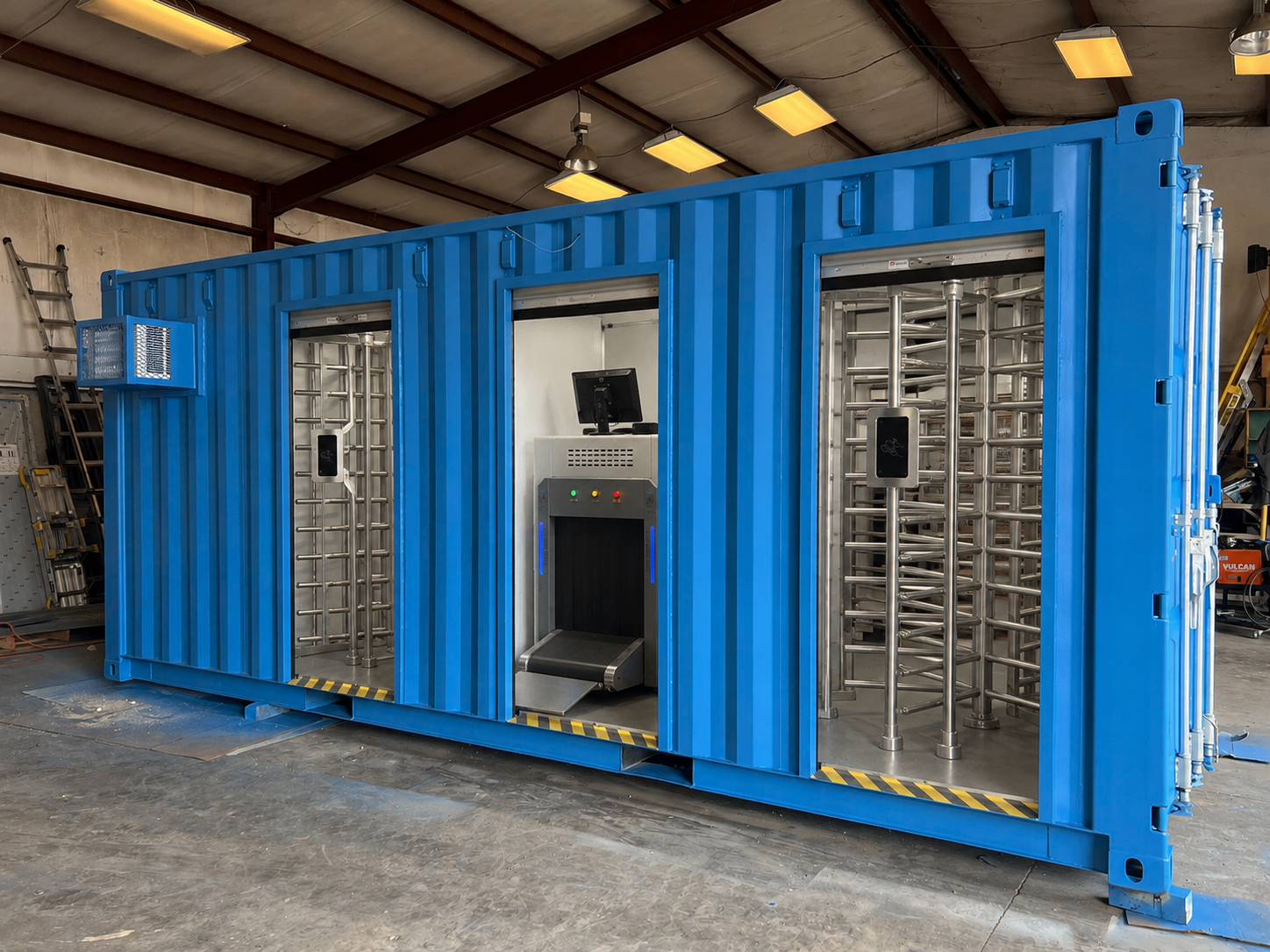
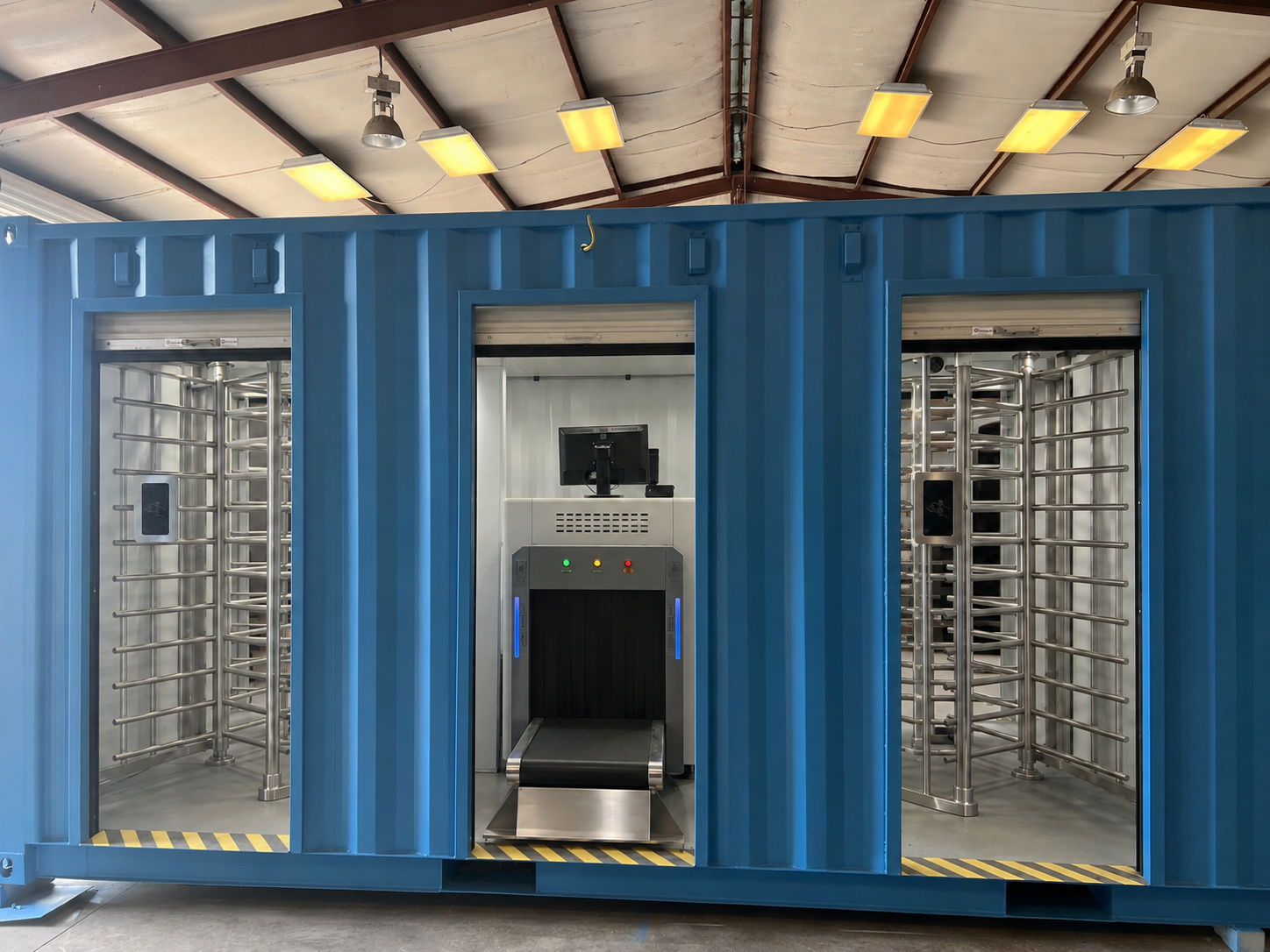
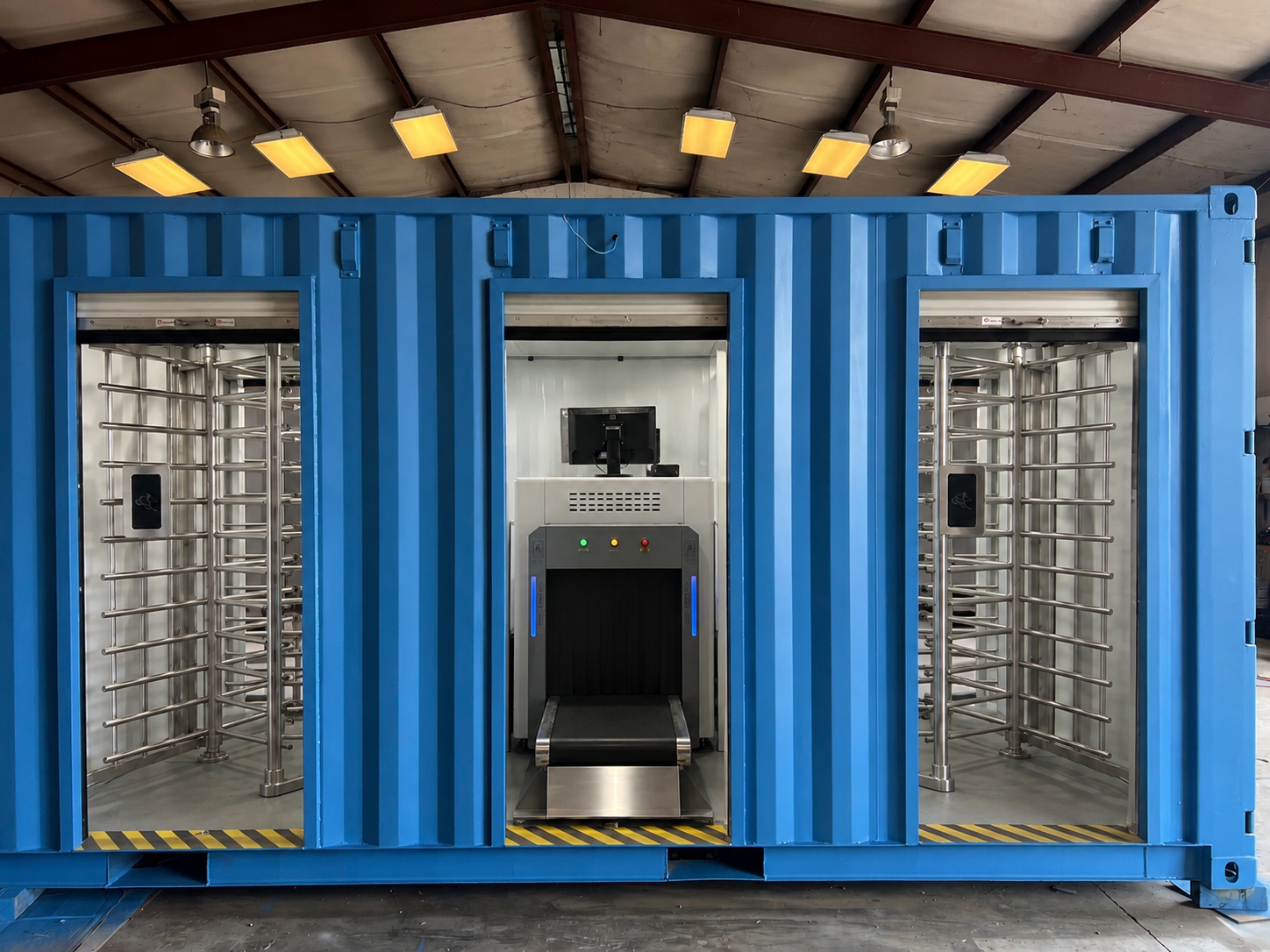
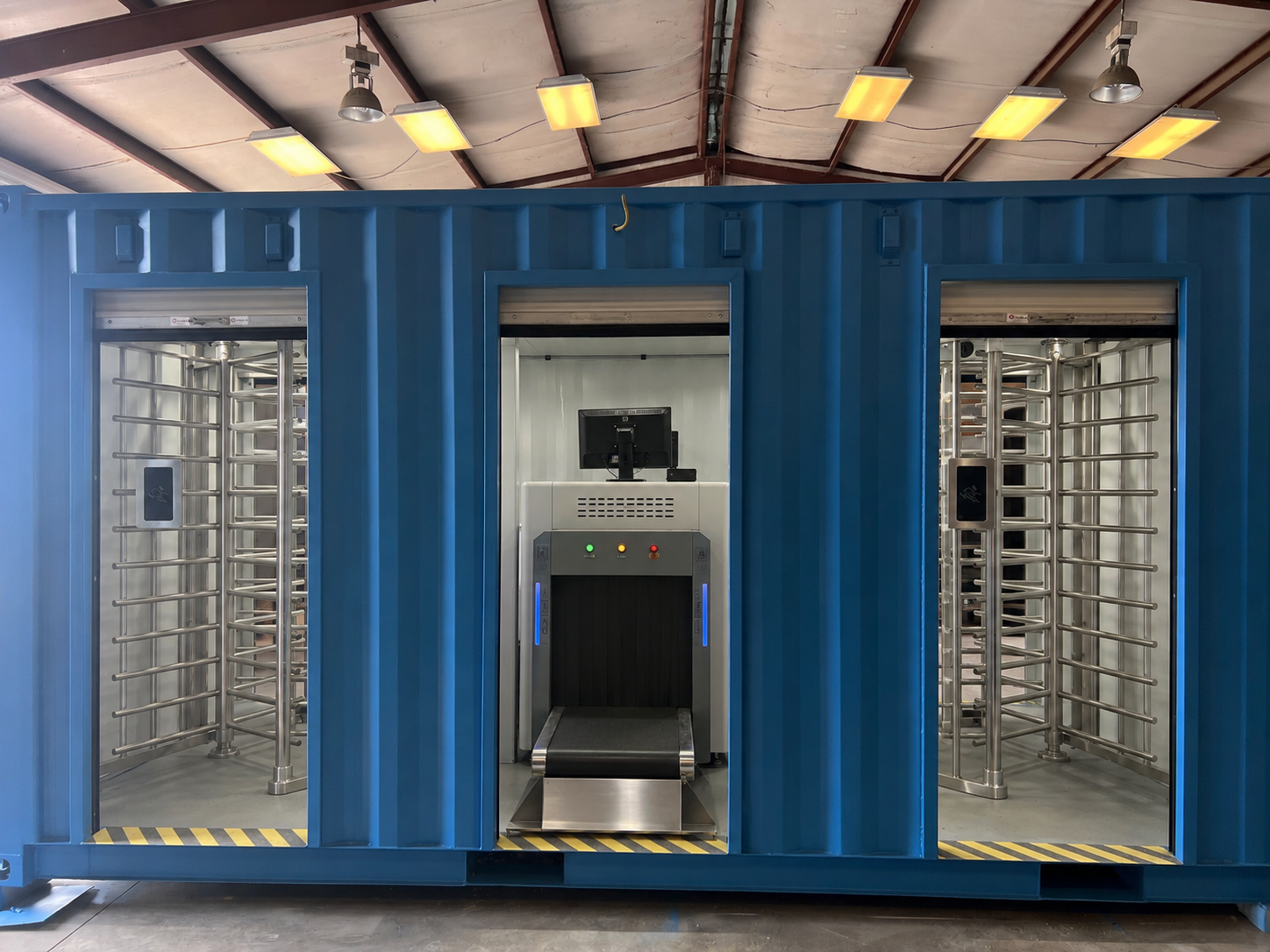
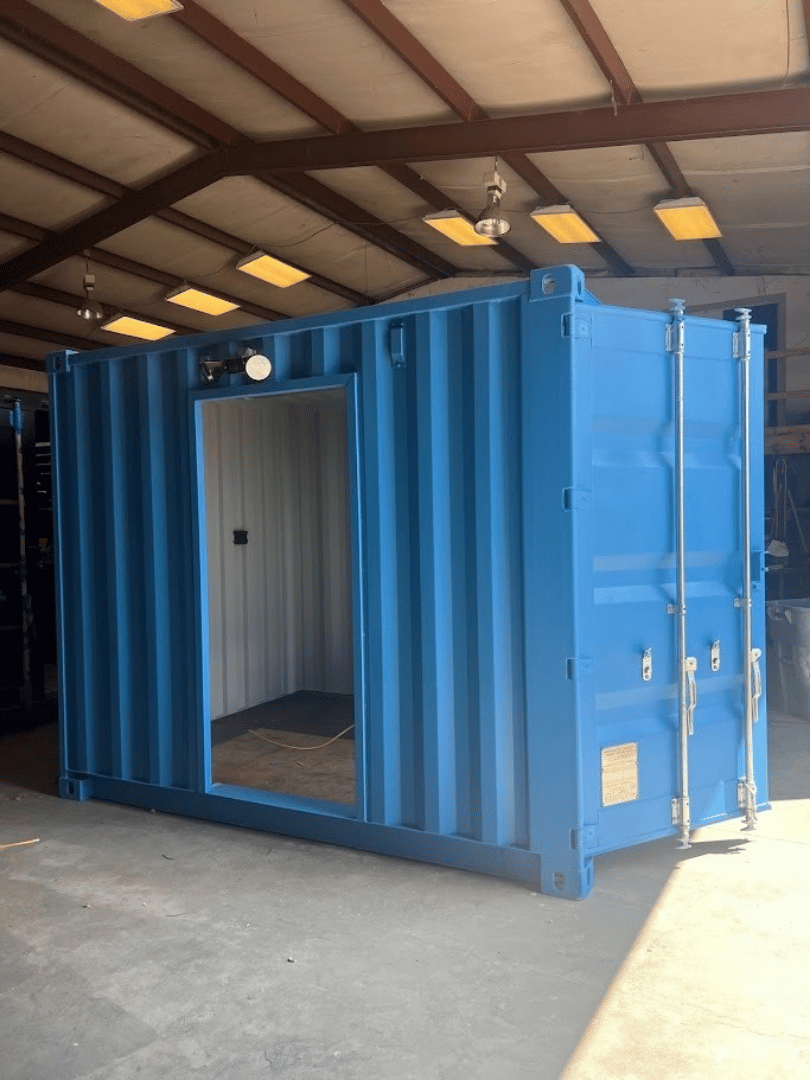
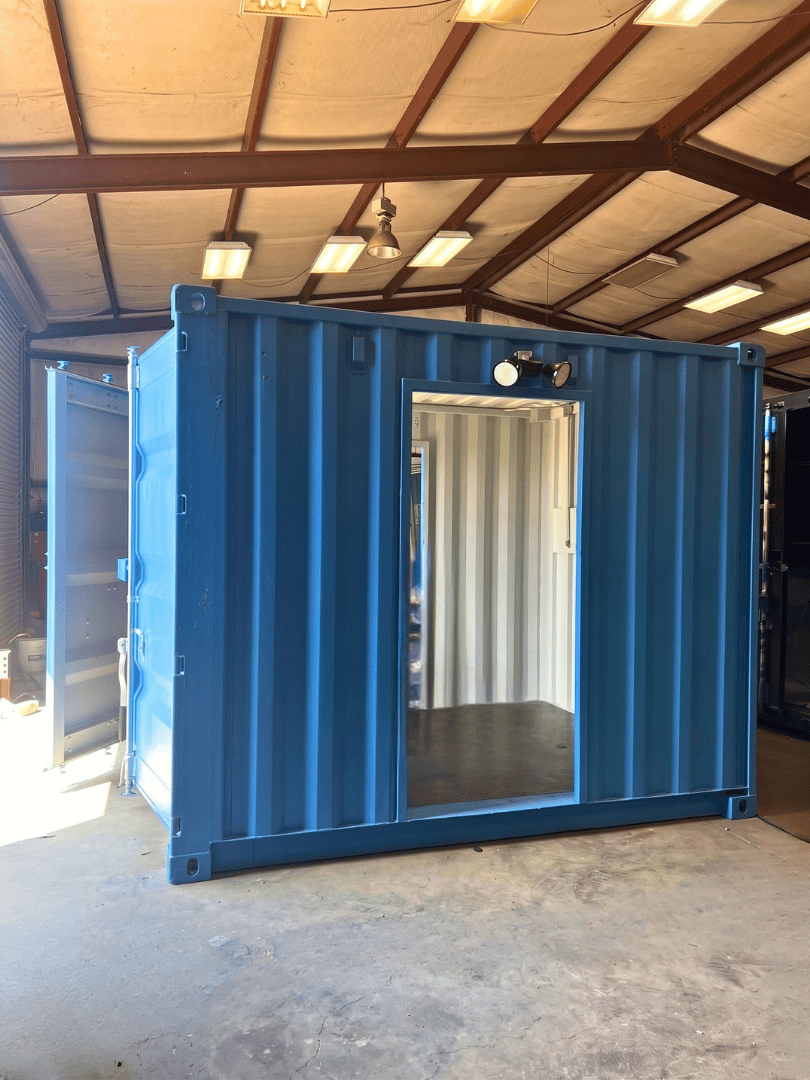
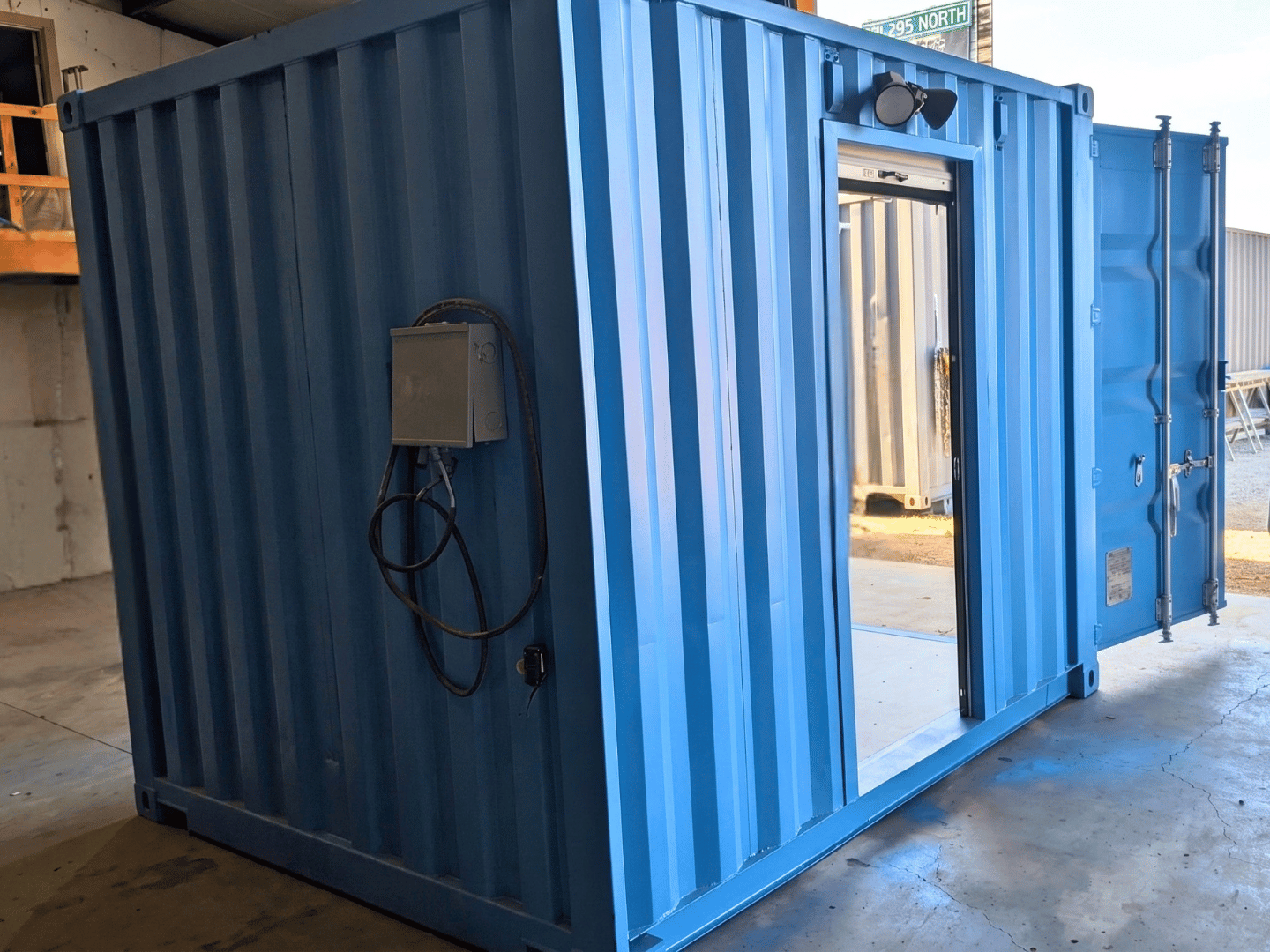
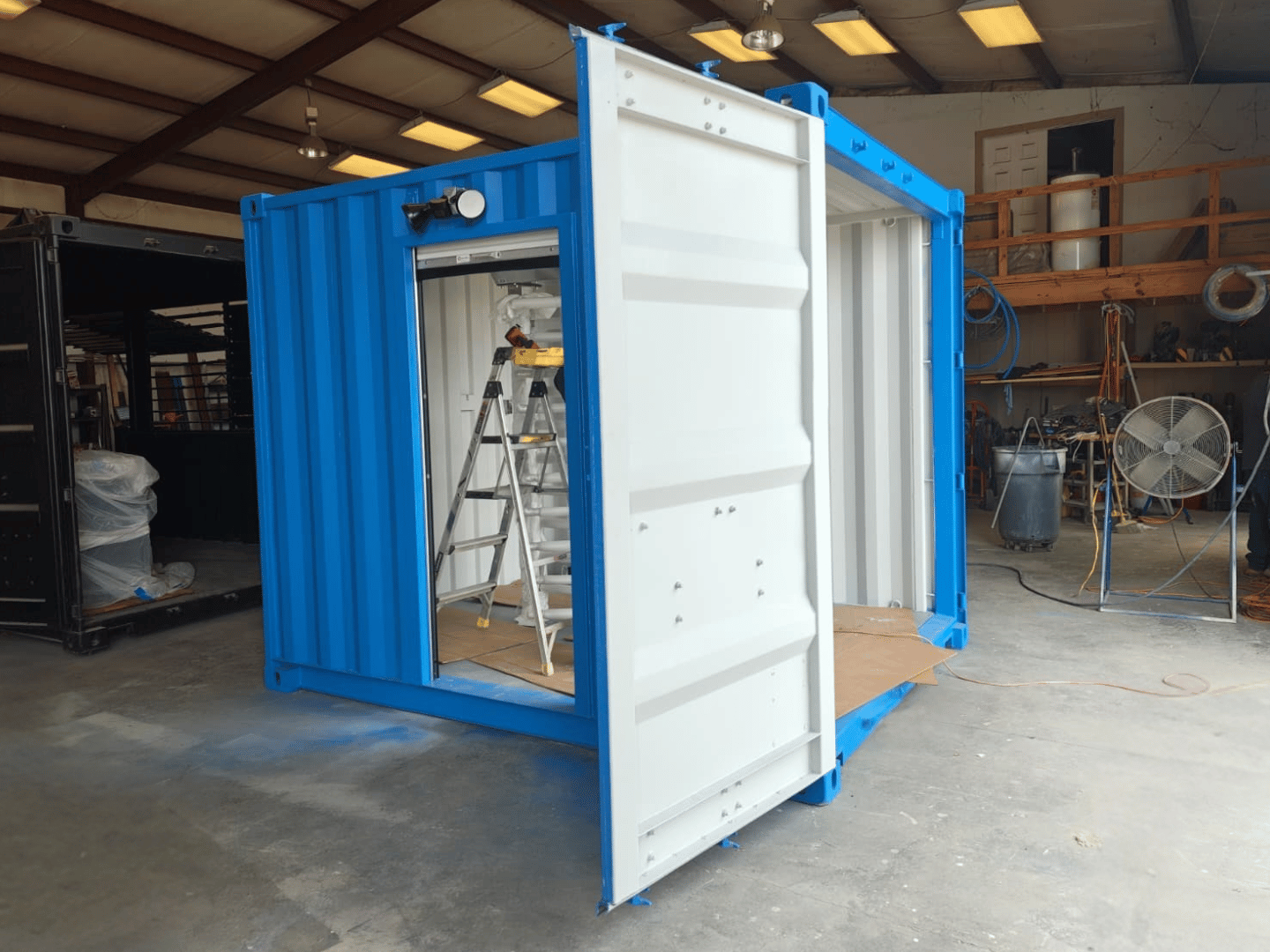
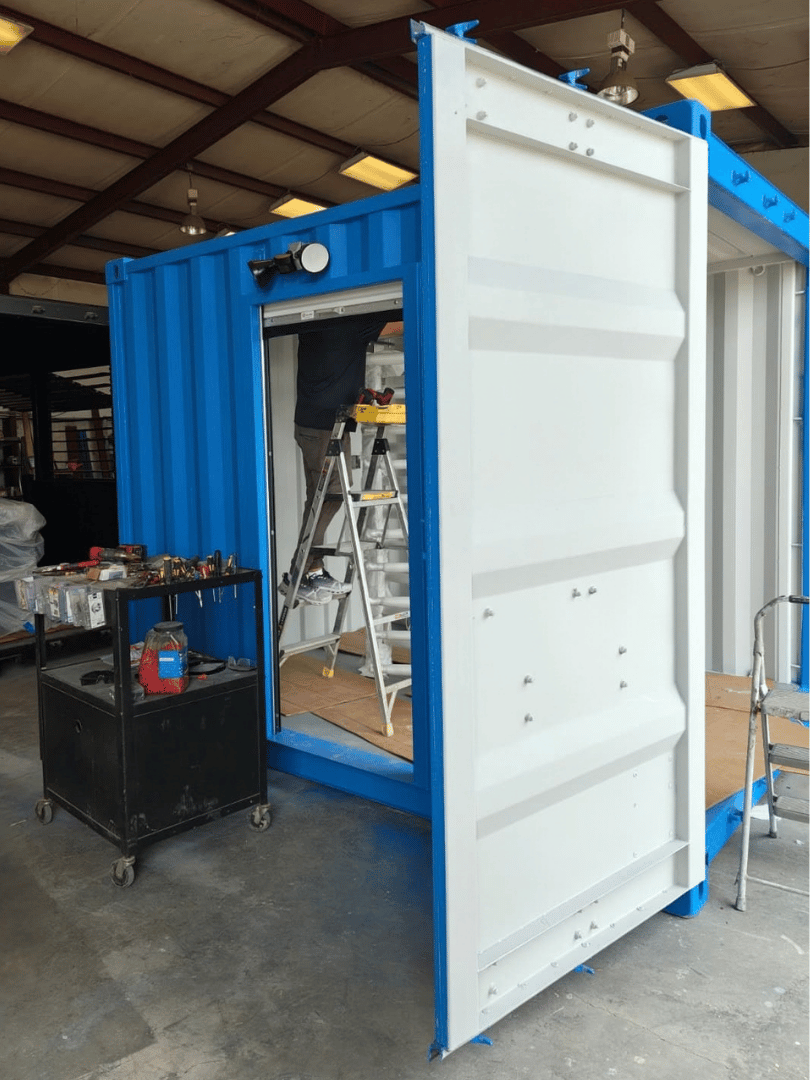
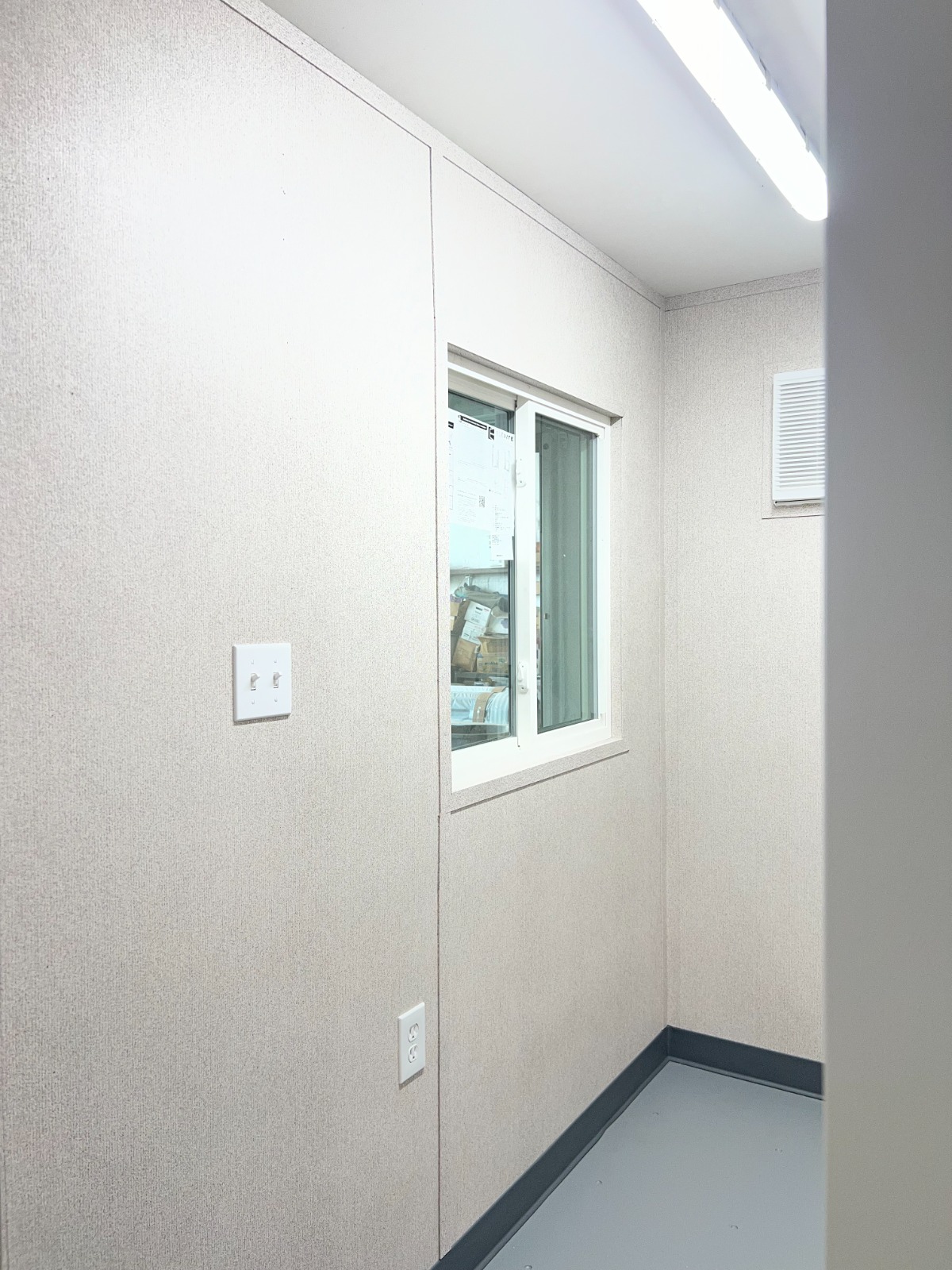
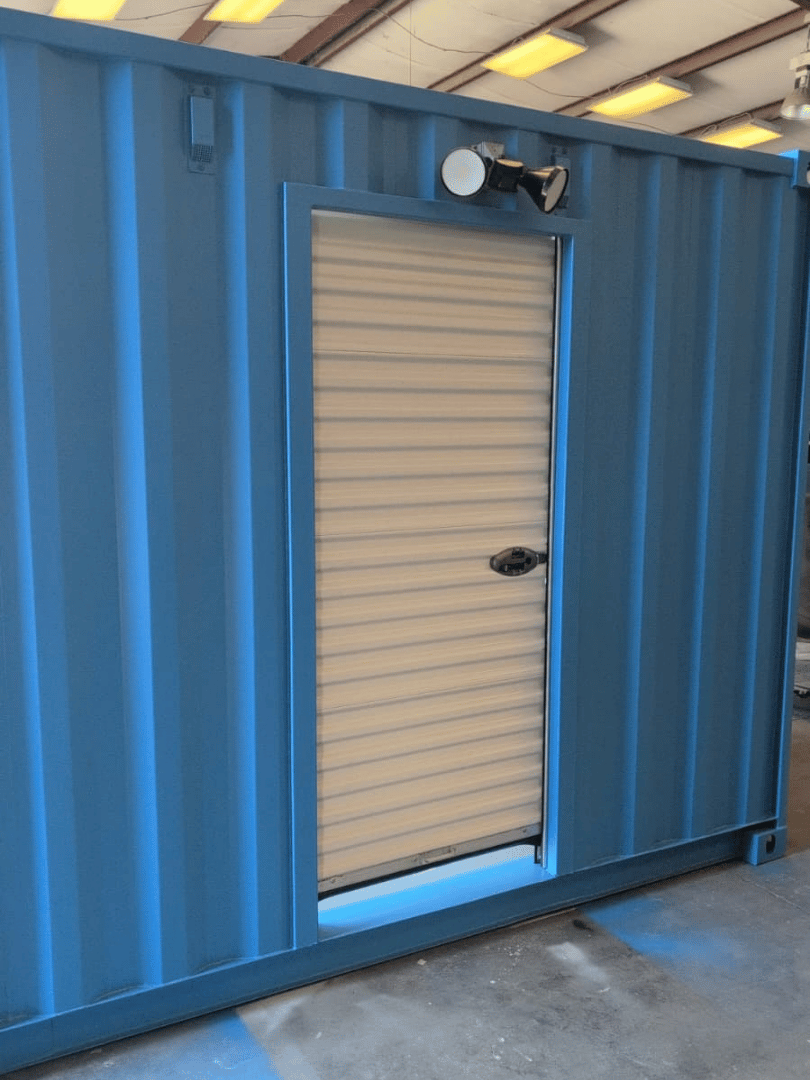
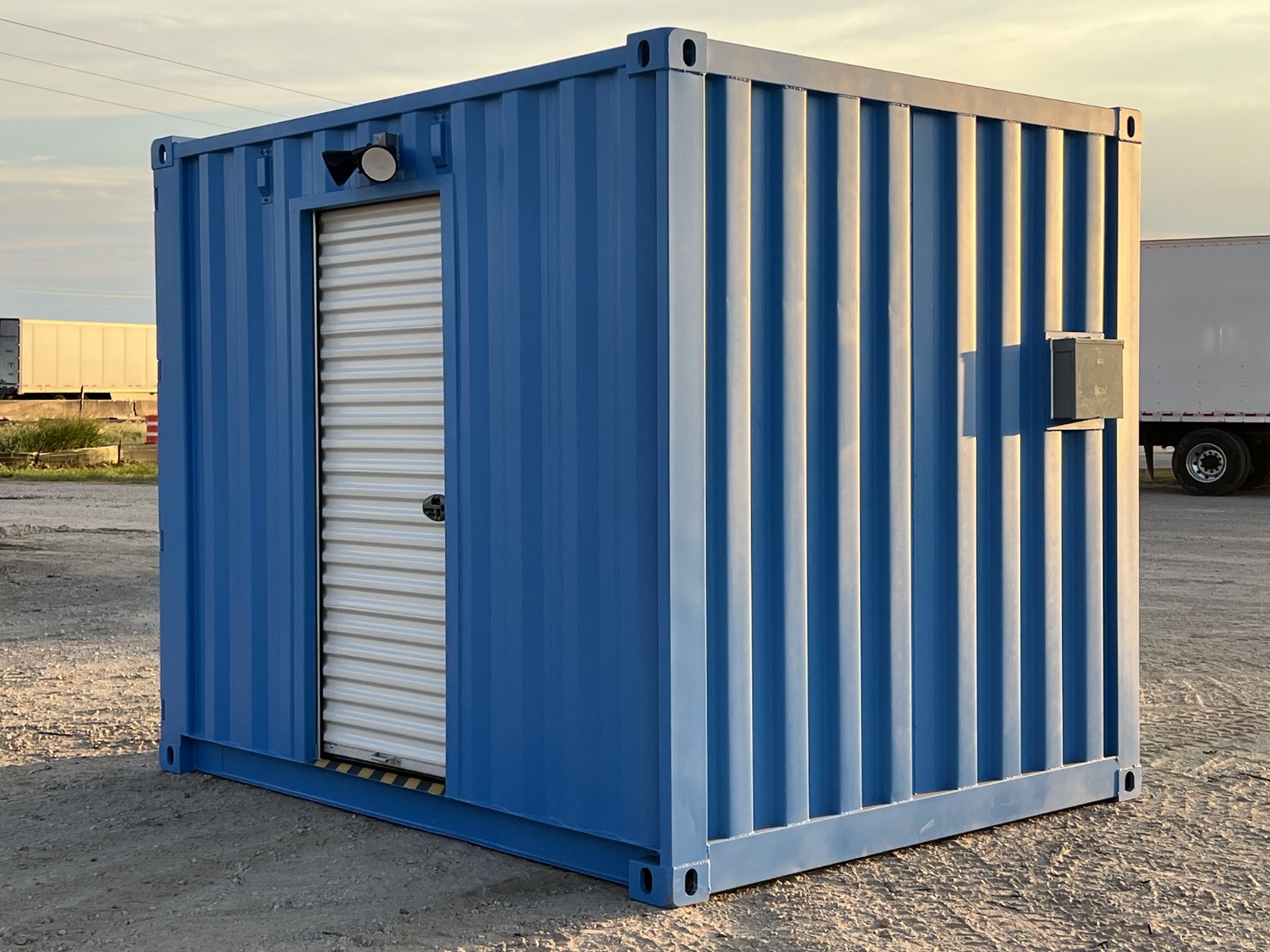
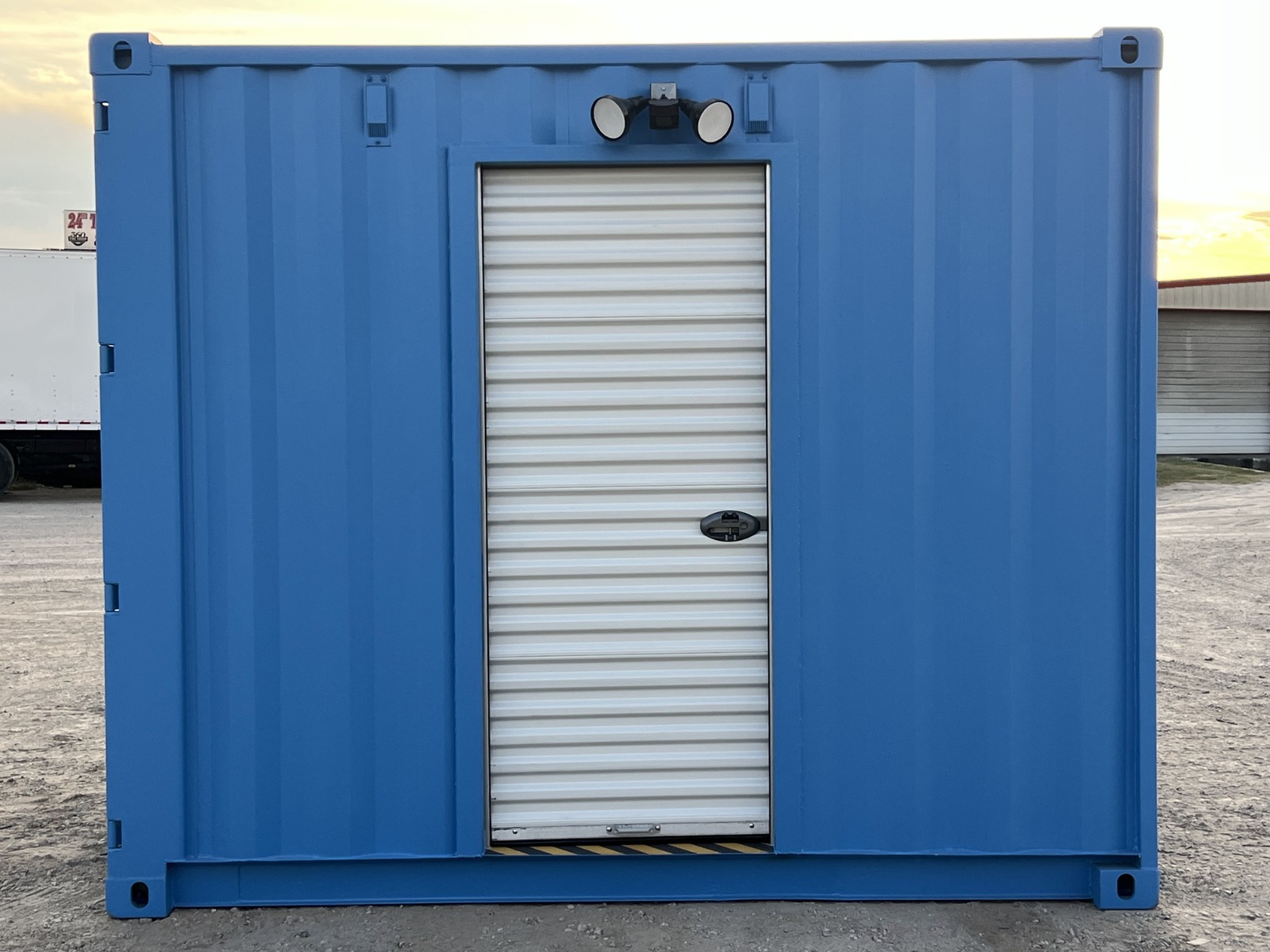
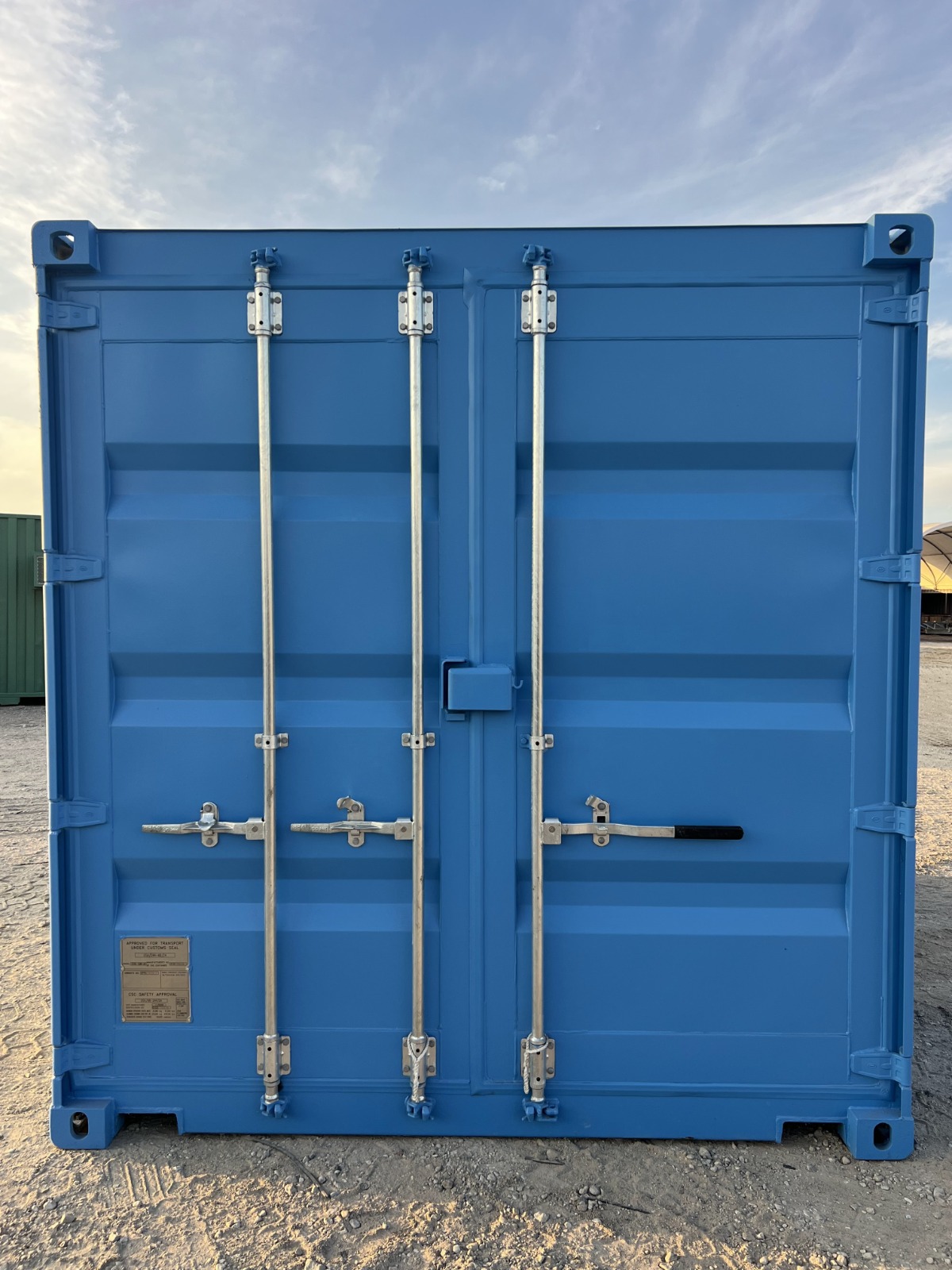
Photos below show a completed custom container security checkpoint during factory acceptance testing at our Grand Prairie, TX facility.
Factory acceptance testing for every custom container security checkpoint covers:
- Throughput test at target volume (timed passage, e.g., 300 people/hour)
- Access control: credential grant/deny, anti-passback, emergency override, alarm outputs
- X-ray: image quality, conveyor function, emergency stop
- Turnstiles: normal entry/exit, tailgating detection, anti-climb, direction reversal
- HVAC: temperature stability at full equipment load
- Network: remote access, camera recording, software connectivity
- Power: shore power connection, UPS failover if configured
FAT sign-off is required before scheduling delivery. All punch list items are resolved before the unit ships.
Phase 5 — Delivery, Commissioning & Training
Your custom container security checkpoint ships by flatbed to your site. Our installation team handles final placement, power connection, network integration, and on-site commissioning.
- Delivery logistics: Flatbed delivery coordinated by 2M. Site requires clear access for a 40-ft flatbed and adequate ground bearing for container placement.
- Power connection: Shore power hookup to site electrical panel. We coordinate licensed electrician in DFW if needed.
- Network integration: On-site connection of the checkpoint to your existing access control platform, VMS, and IT network.
- Operator training: Half-day training covering daily operation, credential management, alarm response, and routine maintenance.
- Go-live support: 2M staff on-site through the first full operational day to resolve any issues.
Industries We Build Container Checkpoints For
- Construction & industrial sites: Construction site access control containers and industrial turnstile checkpoint containers for active project sites without permanent infrastructure. Relocates as the project moves.
- Petrochemical & refineries: Controlled entry to restricted process areas with integration into plant badging systems.
- Stadiums & arenas: Event security screening at entry gates, scalable to event capacity.
- Border & checkpoint facilities: Pre-engineered units for CBP, port security, or government facility access control.
- Military & government: Base access, contractor screening, SCIF entry control.
- Correctional facilities: Staff and visitor screening checkpoint separate from the main facility perimeter.
Frequently Asked Questions
How long does it take to build a custom container security checkpoint?
Typical lead time for a custom container security checkpoint (also referred to as a portable security checkpoint or mobile personnel screening checkpoint) is 8–14 weeks from signed requirements to delivery, depending on equipment availability and project complexity. Rush builds are available for certain configurations — ask about your timeline.
What does a container security checkpoint cost?
Custom container security checkpoint pricing depends on container size, lane count, equipment selection, and integration scope. A dual-lane checkpoint with full-height turnstiles and X-ray screening typically ranges from $65,000 to $195,000. Single-lane configurations start lower. Contact us for a project-specific quote.
Can the checkpoint be relocated after delivery?
Yes. Each custom container security checkpoint is a self-contained unit that can be craned or forklift-lifted and transported by flatbed to a new site. Power and network reconnection at the new location typically takes less than one day.
Will it hold up in Texas outdoor heat?
Yes. All units include HVAC sized for outdoor Texas summer conditions and continuous operation. We have deployed container checkpoints across DFW, Houston, and West Texas in extreme heat environments.
Can it integrate with our current access control system?
In most cases, yes. We have integrated container checkpoints with Lenel, Genetec, CCURE 9000, Software House, Honeywell Pro-Watch, and custom platforms. Integration scope is defined in Phase 1.
Optional X-ray Baggage Screening Integration
An X-ray baggage conveyor can be added to your custom container security checkpoint as a fully integrated option — sized and positioned based on your specific business requirements. The central screening bay accommodates a single-view or dual-view X-ray conveyor, operator workstation, and monitor, all within the container footprint. No separate structure, external power run, or additional tent required.
X-ray integration is specified during Phase 1 and engineered into the container layout before fabrication begins. The X-ray unit, conveyor, and operator display are installed, calibrated, and tested at our Grand Prairie facility as part of the standard FAT process.


Need Turnstile Access Control Only?
For sites that need workforce, contractor, visitor, or event entry control without X-ray baggage screening, see our custom container turnstiles — portable access control checkpoints with full-height turnstiles, badge and biometric readers, cameras, HVAC, and power.
View Custom Container Turnstiles →Start Your Container Checkpoint Project
Share your site requirements and throughput needs. We will prepare a concept design and preliminary budget for your custom container security checkpoint within 5 business days at no charge.