In volatile industrial sectors, standard off-the-shelf surveillance hardware rarely satisfies strict electrical safety codes and specialized operational requirements at the same time. Systems integrators serving the oil, gas, and petrochemical industries frequently face a difficult engineering dilemma: their end-users require modern edge-based video analytics, but the cameras capable of running those analytics are not manufactured with hazardous-location certifications.
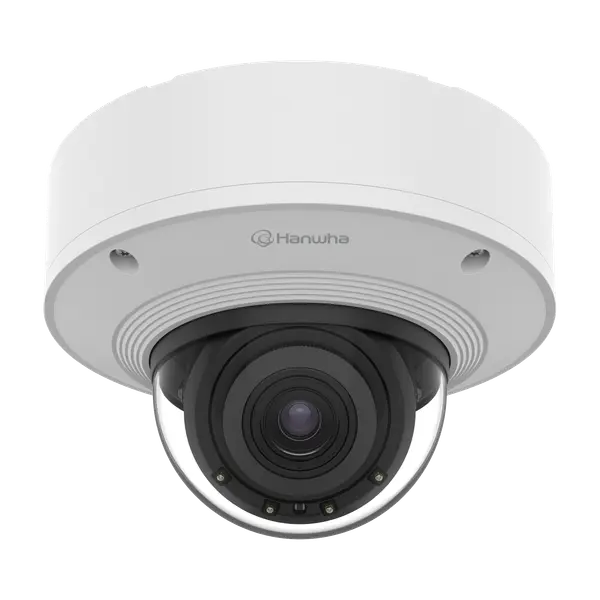
That was the exact problem facing a commercial security integrator planning a deployment in Eden Prairie, Minnesota. To meet the end-user’s strict facility safety standards without sacrificing analytical performance, the integrator partnered with 2M Technology. Leveraging our custom design and metal fabrication capabilities, our engineering team developed a brand-new hazardous area camera housing built specifically for the Hanwha PNV-A9081RLP dome camera, engineered to meet NEC and UL Class II, Division 1 standards for combustible dust environments.
Project Summary
| Specification | Detail |
|---|---|
| Client Type | Commercial Security Systems Integrator |
| Industry | Oil, Gas & Petrochemical |
| Camera Model | Hanwha PNV-A9081RLP |
| Hazardous Area Rating | NEC / UL Class II, Division 1 (Combustible Dust) |
| Explosion-Proof Marking | Exd IIC T6 Gb / ExtD A21 IP68 T80°C |
| Enclosure Material | 304 Stainless Steel |
| Units Delivered | 3 |
| Delivery Location | Eden Prairie, Minnesota |
| Project Timeline | 2 Months (Concept, Fabrication & Delivery) |
The Challenge: Pairing Vehicle AI Analytics with Explosion-Proof Protection
The integrator approached 2M Technology with a clear set of technical and logistical requirements. Their end-user, operating within the oil, gas, and petrochemical sector, had chosen the Hanwha PNV-A9081RLP dome camera for critical gate, access lane, and perimeter vehicle monitoring. The facility selected this specific 4K AI dome camera because it comes pre-installed with the Wisenet Road AI application, delivering edge-based vehicle intelligence essential to their security operations:
- License and Number Plate Recognition: High-accuracy edge capture of vehicle plates entering and exiting sensitive industrial zones.
- Make, Model, and Color Recognition: Automated vehicle classification beyond plate numbers alone, enabling security teams to verify vehicle descriptions.
- Black and White List Notifications: Instant automated alerts triggered when flagged or unauthorized vehicles approach restricted checkpoints, or streamlined verification for approved fleet vehicles.
- SmartSearch Capabilities: Rapid forensic video filtering by license or number plate, country, vehicle make, model, color, and date to accelerate incident investigations.
However, deploying that camera inside the facility introduced three major engineering and scheduling obstacles:
Strict Hazardous Area Classification
The installation zone carries an NEC / UL Class II, Division 1 rating. Unlike Class I environments that deal with flammable gases or vapors, Class II, Division 1 designates areas where combustible dust is present in the air under normal operating conditions in quantities sufficient to produce explosive or ignitable mixtures. Any electrical equipment placed in this zone requires a hazardous area camera housing engineered so internal sparks, arcs, or elevated surface temperatures cannot ignite the surrounding atmosphere.
Mechanical Mounting Limitations of the Camera
Although our team knew from the beginning that this housing project would be challenging, opening up the Hanwha camera revealed that its internal architecture was far more complex than anticipated. Originally, our engineers planned to adapt one of our existing dome housings to save time, fastening the camera to an internal mounting plate inside the housing to lock it in its optimal position. However, physical inspection showed that unlike most cameras we have worked with, this model lacked exposed mounting screws. Instead, there are three protruding locking notches on the camera body designed to twist and lock it in place. Since there were no screws to fasten the camera onto a custom internal mounting plate, modifying an existing enclosure was not viable.

Aggressive Delivery Expectations and Vendor Limitations
The integrator initially needed all three units delivered within a tight three-week window. Most major explosion-proof housing manufacturers only offer one-size-fits-all models with multi-month lead times and zero willingness to modify internal mounting geometries for a low-volume order of three units, which is why they came to us for this project. However, once teardown confirmed that an existing dome housing could not be used, the project shifted from a housing adaptation to designing and fabricating an entirely new hazardous area camera housing from scratch, extending the build beyond the initial three-week expectation.
Why the Integrator Chose 2M Technology
When evaluating potential suppliers, the systems integrator chose 2M Technology over competing hardware vendors for one primary reason: our in-house custom engineering and fabrication capabilities.
Many security distributors act strictly as resellers of standardized enclosures, offering only a couple of sizes each for dome, bullet, PTZ, and fisheye cameras. When someone needs an explosion-proof housing for a specific camera, they simply recommend whichever housing is closest in size. While standardized housings work for some cameras, others require custom-designed enclosures to preserve optical performance and proper fit. In this case, a custom hazardous area camera housing was necessary to maintain the Hanwha camera’s original LPR capabilities. The integrator needed a manufacturing partner capable of engineering a custom hazardous area camera housing built specifically around the camera’s exact dimensions, rather than forcing an off-the-shelf enclosure to fit.
At 2M Technology, our mechanical engineering and metal fabrication teams work together to build custom solutions tailored to each customer’s needs. Even when the Hanwha camera proved more intricate than expected, we did not ask the client to switch to a different camera that lacked Wisenet Road AI or settle for an oversized, poorly fitted enclosure. Instead, our team pivoted directly to creating an entirely new hazardous area camera housing designed around the camera’s exact locking notches and screwless chassis. Our ability to quickly prototype and fabricate a tailored hazardous area camera housing gave the integrator confidence that the finished units would comply with safety standards and perform reliably from day one.


Our Solution: Class II, Division 1 Hazardous Area Camera Housing
To satisfy both the electrical safety codes of NEC / UL Class II, Division 1 and the mechanical and optical requirements of the Hanwha PNV-A9081RLP, 2M Technology engineered three identical hazardous area camera housings.
Form-Fitted From Scratch Around Camera Notches and Dimensions
The defining engineering challenge of this project was securing the camera inside the explosion-proof housing. Because the camera has no internal screws for bolting onto a mounting plate, our mechanical engineers designed the entire hazardous area camera housing directly around the exact physical dimensions and contours of the Hanwha PNV-A9081RLP dome camera.
This custom-tailored architecture eliminated the need for internal mounting plates altogether and solved several critical issues at once:
- Snug, Zero-Movement Retention: Achieved by shaping the internal cavity to match the camera’s exact footprint and height, holding the Hanwha camera snugly in place without screws or mounting plates and preventing vibration-induced movement that could shift the field of view.
- Preserved Wisenet Road AI Optical Alignment: Positioning the dome lens precisely against an optically clear, impact-resistant viewing window prevents glare, IR bounce-back, or distortion that could interfere with license plate reading and vehicle make, model, and color recognition.
- Accommodation for the Three Locking Notches: By machining custom internal clearances directly into the housing structure, the camera sits properly without interference or stress on its casing.
Engineered for NEC / UL Class II, Division 1 Compliance
Designing a compliant hazardous area camera housing for Class II, Division 1 requires meticulous attention to dust-tight integrity and thermal management. Combustible dust can settle on hot surfaces and ignite at lower temperatures than many vapors, or penetrate microscopic gaps in poorly machined joints. Our engineering team designed the enclosure body with precision-machined mating surfaces, heavy-duty dust-ignition-proof joints, and cable entry ports to prevent dust ingress under continuous normal operation.
Heavy-Duty 304 Stainless Steel Construction
Oil, gas, and petrochemical facilities expose hardware to corrosive washdowns, chemical vapors, airborne particulates, and wide temperature swings. We fabricated the exterior shell of each hazardous area camera housing from high-grade 304 stainless steel. 304 stainless steel delivers superior corrosion resistance, structural rigidity, and long-term durability compared to painted carbon steel or cast aluminum enclosures that can pit, flake, or degrade in harsh industrial plants.


View the Custom Hanwha PNV-A9081RLP Dome Housing Datasheet for the complete technical specifications.
Project Timeline and Execution
Although the integrator initially needed the units within three weeks, pivoting from an existing dome housing to a completely new enclosure design required thorough mechanical re-engineering, custom CAD modeling around the camera’s three locking notches, precision 304 stainless steel machining, and rigorous hazardous-location quality verification.
While the build took longer than originally anticipated, 2M Technology maintained transparent communication with the integrator throughout the two-month engineering and fabrication cycle to ensure zero compromises in mechanical fit or safety compliance. Once fabrication and testing were completed, all three units were packaged and shipped directly to the final project destination in Eden Prairie, Minnesota, arriving ready for immediate field installation.
Results and Impact
By partnering with 2M Technology for a custom hazardous area camera housing solution, the systems integrator successfully bridged the gap between specialized edge-based vehicle analytics and strict industrial safety compliance:
- Full Wisenet Road AI Functionality Retained: The end-user deployed their preferred Hanwha PNV-A9081RLP camera with complete access to license plate recognition, make/model/color classification, black/white list alerts, and SmartSearch forensic filtering.
- Custom Fit Without Internal Mounting Plates: Rather than relying on an internal mounting plate, an entirely new enclosure was built to overcome both the protruding locking notches and the lack of internal mounting screws.
- Hazardous Area Safety Compliance: Each hazardous area camera housing was built specifically for NEC / UL Class II, Division 1 combustible dust conditions, protecting facility personnel and critical infrastructure.
- Turnkey Mechanical Fit: The custom enclosure eliminated field rigging, allowing the integrator’s installation crew in Eden Prairie to mount, wire, and commission all three units efficiently.
- Long-Term Environmental Durability: Fabricated from 304 stainless steel, the three enclosures can withstand years of exposure in a demanding petrochemical environment.
Need a Custom Hazardous Area Camera Housing for Your Next Project?
2M Technology delivers custom-engineered protection built to your exact camera dimensions. Contact our engineering team today to discuss your camera model, NEC/UL or ATEX/IECEx rating requirements, and project timeline.
Texas Security License B15309 • sales@2mtechnology.net • (214) 988-4302 • Response within 2 business hours
Frequently Asked Questions (FAQs)
-
What safety rating is required for a hazardous area camera housing in combustible dust environments?
Facilities where combustible dust is present in the air under normal operating conditions require equipment rated for NEC / UL Class II, Division 1. A compliant hazardous area camera housing for these zones features precision-machined, dust-ignition-proof joints, certified cable entry ports, and controlled surface temperatures so internal electrical arcs or heat cannot ignite airborne dust.
-
Can a hazardous area camera housing support edge-based AI analytics like Wisenet Road AI?
Yes, provided the hazardous area camera housing is engineered with optical precision. Wisenet Road AI relies on a clear, fixed field of view to perform license plate recognition, vehicle make, model, and color classification, black and white list notifications, and SmartSearch filtering. Custom-fitting the enclosure prevents vibration drift while pairing the lens with an optically clear, impact-resistant viewing window that eliminates glare and distortion.
-
Why is 304 stainless steel used for explosion-proof camera housings in petrochemical sites?
Oil, gas, and petrochemical facilities subject surveillance hardware to corrosive chemical vapors, high-pressure washdowns, airborne particulates, and extreme temperature fluctuations. Fabricating a hazardous area camera housing from 304 stainless steel provides superior corrosion resistance, structural strength, and long-term durability compared to painted carbon steel or cast aluminum housings that can pit or flake over time.
-
How long does it take to design and fabricate a custom hazardous area camera housing?
While off-the-shelf catalog enclosures are built to fixed dimensions, engineering a bespoke hazardous area camera housing around a specific camera model involves custom CAD modeling, precision 304 stainless steel machining, and safety verification. For the three-unit Hanwha PNV-A9081RLP deployment shipped to Eden Prairie, Minnesota, 2M Technology completed engineering sign-off, fabrication, quality assurance testing, and delivery within two months.