Deploying enterprise cloud video surveillance offers immense operational value, but hardware options often fall short in hazardous industrial environments. When two separate industrial clients approached 2M Technology, both needed to bridge the gap between their preferred Verkada cloud platform and strict hazardous area safety mandates.
Summary of Specifications
| Parameter | Specification Details | |
|---|---|---|
| Enclosure Model | 2M Technology 2MEXH-2435 Explosion-Proof Enclosure for Verkada | |
| Supported Models | Verkada CF83-E (Outdoor Fisheye Camera) |
Verkada CD63-E (Outdoor Dome Camera) |
| Camera Dimensions (Ø × H) | 155 × 69.2 mm (6.1 × 2.7 in) | 155 × 104.4 mm (6.1 × 4.1 in) |
| Housing Dimensions (Ø × H) | 240 × 357 mm (9.4 × 14.1 in) | |
| Internal Usable Size (Ø × H) | 176 × 195 mm (6.9 × 7.7 in) | |
| Explosion-Proof Marking | Ex d IIC T6 Gb | |
| Ingress Protection | IP68 | |
| Enclosure Rating | NEMA-6P enclosure rating | |
| Housing Material | Electro-polished 304 stainless steel | |
| Window Material | High-strength optical tempered glass dome | |
| Mounting Mechanism | 2M Technology custom CNC-machined internal adapter plates | |
Client A, a specialty oil refinery, selected the Verkada CF83-E outdoor fisheye camera for wide-angle 180-degree situational coverage. Client B, a midstream petrochemical plant, chose the Verkada CD63-E outdoor varifocal dome camera for targeted equipment monitoring. Neither client could place commercial hardware directly into hazardous production zones without explosion-proof protection, yet neither wanted to abandon their chosen cloud architecture.
Instead of developing two completely different explosion-proof housings or pushing catalog models that forced operational trade-offs, 2M Technology resolved both challenges through resourcefulness and custom engineering. Using our 2MEXH-2435 explosion-proof speed dome camera housing as a foundation, our team fabricated custom internal mounting plates tailored to the dimensions of each camera. Adapting this single explosion-proof enclosure for Verkada across both projects eliminated the need for separate housing models, proving that creative problem-solving can turn a standard core product into a versatile, customized solution.
The Dual Client Challenge: Two Different Requirements, Zero Room for Compromise
Because surveillance cameras are electrical devices, any units installed in hazardous locations must comply with strict explosion-proof safety standards. Standard commercial cameras carry inherent ignition risks, including internal electrical sparks, component failures, and surface heat that can trigger an explosion in classified areas containing flammable gases, vapors, or combustible dust. Since ordinary cameras are meant for everyday business spaces, they cannot be deployed safely in volatile industrial environments without explosion-proof protection.
When researching off-the-shelf options across the security distribution market, both clients encountered the same frustrating dilemma: settle for an ill-fitting, third-party explosion-proof enclosure for Verkada that compromised camera performance, or drop their preferred Verkada cloud platform altogether for expensive explosion-proof systems tied to outdated proprietary software.
2M Technology offered the best of both worlds. We designed a custom-fitted explosion-proof enclosure for Verkada cameras, allowing each client to keep their chosen camera model and centralized cloud ecosystem. While both clients turned to 2M Technology in search of an explosion-proof enclosure for Verkada cameras, each deployment came with its own set of operational parameters:
Project Profile 1: Specialty Oil Refinery (Client A)
- Application: High-overhead situational awareness across chemical processing suites with volatile solvent vapors.
- Camera Selection: Verkada CF83-E Outdoor Fisheye (12.5MP, 180-degree sensor).
- Technical Hurdle: Wide-angle fisheye lenses require the curved optical dome to sit flush against the protective viewing window. If the enclosure extends even a few millimeters past the lens edge, the front rim clips the peripheral field of view, creating dark vignette rings that distort image geometry and render digital dewarping algorithms unusable.

Project Profile 2: Petrochemical Plant (Client B)
- Application: Close-range surveillance of valve manifolds, compressor skids, and automated production machinery.
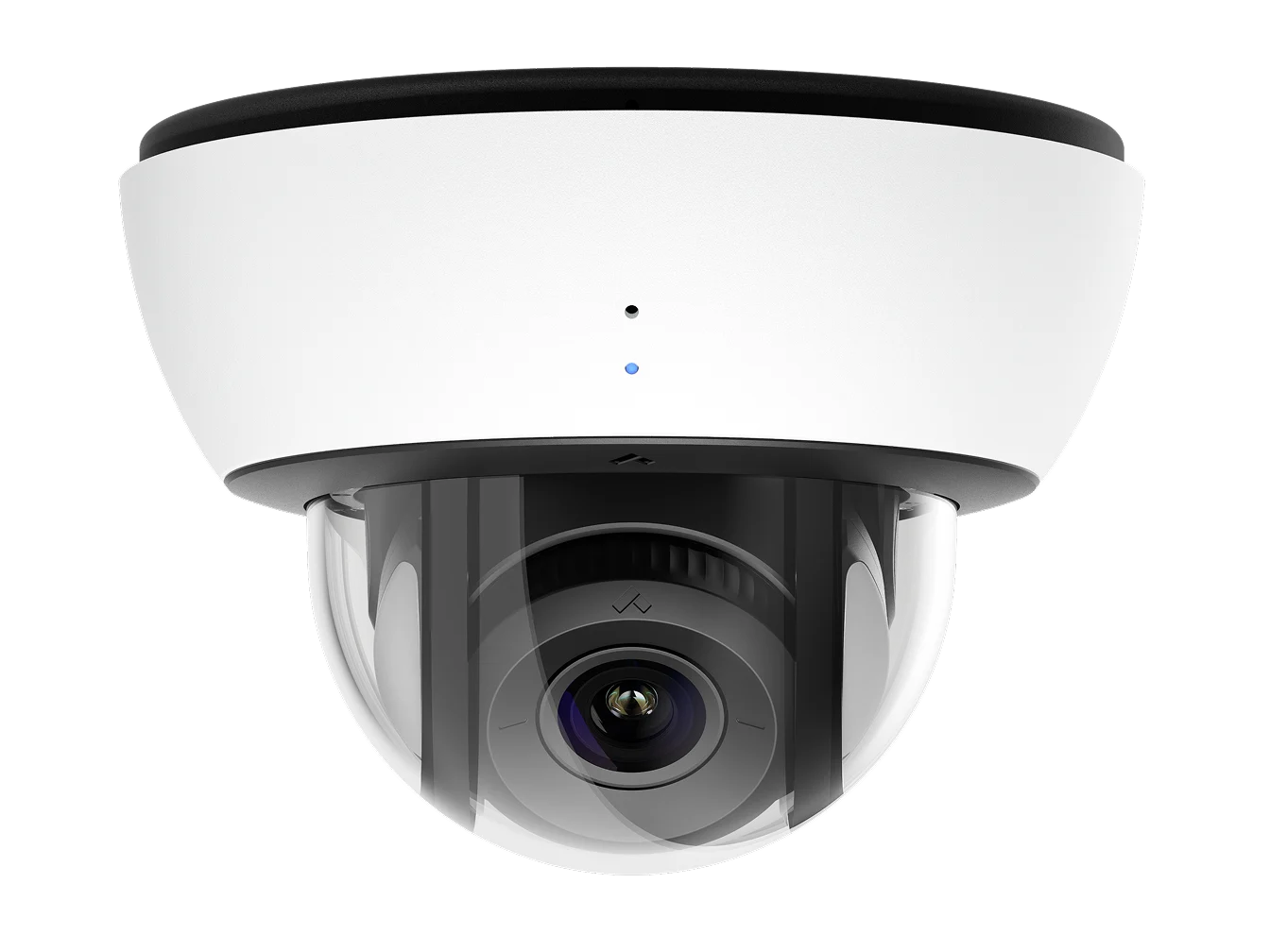
- Camera Selection: Verkada CD63-E Outdoor Dome (4K high-resolution, motorized varifocal sensor).
- Technical Hurdle: The CD63-E incorporates a directional gimbal, a motorized zoom mechanism, and built-in infrared illuminators. A standard flat mounting plate positions the lens too far back, causing infrared light to reflect off the interior viewing glass, which blinds the sensor at night and severely degrades video quality.
The 2M Technology Approach: Versatility, Creativity, and Custom Engineering
Too often in the security industry, sourcing an explosion-proof housing means the supplier simply opens a catalog, finds whatever model loosely matches the outer dimensions, and leaves the customer to figure out internal positioning, lens alignment, and cable routing on their own. At 2M Technology, we reject the practice of settling for an off-the-shelf product that merely satisfies the bare minimum on a spec sheet. Instead of bending client requirements to match existing stock, we take an active engineering approach: developing customized solutions that solve the immediate customer need while establishing a versatile framework adaptable for future projects.

Our engineering team evaluated the physical dimensions, optical clearances, and hazardous area demands of both Verkada cameras. The CD63-E dome and the CF83-E fisheye shared the same outer diameter, hazardous compliance targets, and the need for a curved optical viewing window. Rather than manufacturing two entirely different housings from scratch, we recognized an opportunity to use the 2MEXH-2435 as a base unit, adapting a single explosion-proof enclosure for Verkada cameras across both projects.
Constructed from durable 304 stainless steel, the 2MEXH-2435 carries an Ex d IIC T6 Gb explosion-proof marking, making it suitable for Zone 1 and Class I, Division 1 classified areas. As a flameproof enclosure, its robust barrel and precision-ground optical window contain internal blast pressures without structural rupture while effectively dissipating heat buildup away from internal electronics.
Technical Solution: The Modular Internal Mounting System
The key to making one housing fit two different cameras was internal customization. While both models matched in diameter, their physical heights created completely different optical clearances. Our engineers resolved this variance by fabricating custom internal mounting plates that adjusted the interior depth clearance of the 2MEXH-2435 to each camera. This transformed the standard housing into a versatile explosion-proof enclosure for Verkada cameras that locks each form factor into the exact millimeter optical alignment required, preventing image distortion and ensuring reliable performance.
| Feature / Metric | Client A: Verkada CF83-E Fisheye | Client B: Verkada CD63-E Dome |
|---|---|---|
| Mounting Architecture | Elevated aluminum adapter plate on riser standoffs | Low-profile aluminum adapter plate on riser standoffs |
| Internal Base Anchoring | Bolted to baseplate pillar standoffs | Bolted to baseplate pillar standoffs |
| Z-Axis Focal Alignment | Shifted forward to align lens with dome apex | Shifted backward to fit taller body and gimbal assembly |
| Optical Configuration | Sub-millimeter clearance beneath tempered glass dome | Factory dome bubble removed to prevent double-doming |
| Engineering Problem Solved | Eliminates wide-angle peripheral lens vignetting | Eliminates internal IR reflection and double-dome glare |
| Operational Result | True 180° panoramic coverage with clean dewarping | Full 3-axis manual adjustment and clear IR imaging |
2M Technology designed and CNC-machined two custom internal bracket assemblies tailored specifically to the dimensions of each camera model.
1. The CF83-E Fisheye Solution for Client A
Wide-angle lenses maximize site coverage from a single vantage point, but placing them inside an explosion-proof enclosure for Verkada requires careful optical alignment. Without proper depth positioning, the expansive field of view inevitably captures the housing’s inner edges, creating dark vignette borders around the perimeter of the frame. To resolve this challenge for Client A, our team fastened the camera to a custom aluminum mounting plate anchored to heavy-duty baseplate pillar standoffs, pushing the CF83-E camera forward along the Z-axis inside the 2MEXH-2435 housing.
This calculated elevation positions the curved fisheye lens just fractions of a millimeter away from the tempered glass dome apex, ensuring complete optical clearance across the entire frame. With the line of sight fully unobstructed from edge to edge, Client A can take advantage of the camera’s 180-degree field of view and native Verkada Command dewarping tools to deliver distortion-free, panoramic situational visibility with zero edge clipping or dark border rings.


2. The CD63-E Varifocal Dome Solution for Client B
For Client B’s CD63-E dome camera, the primary engineering objective was providing physical clearance for the taller lens assembly while preventing optical glare across every viewing angle. Because the camera relies on a 3-axis manual gimbal for pan, tilt, and rotation during setup, the internal mount needed to maintain consistent spacing beneath the housing’s curved dome regardless of how technicians oriented the lens. To achieve this, our team utilized the same baseplate and standoff architecture developed for the CF83-E, securing the camera’s factory mounting base onto significantly shorter pillars. This recessed layout accommodates the camera’s taller footprint, shifting the camera backward to provide ample clearance for free gimbal movement without striking the glass dome.
In addition to height calibration, technicians detached the camera’s outer trim and factory plastic bubble before sealing the housing. Removing this redundant secondary boundary stops double-doming, preventing internal infrared bounce-back, haloing, and optical scatter. With the exposed lens and IR emitters transmitting directly through the housing’s single glass dome, the completed explosion-proof enclosure for Verkada retains full manual articulation during setup, allowing technicians to adjust critical angles while delivering sharp daytime video and glare-free nighttime performance.
3. Standardized Power and Thermal Management
Both custom mounting configurations feature central pass-through cutouts for incoming Power over Ethernet (PoE) cabling. Network lines feed directly through the baseplate stack into the camera’s perimeter channel, where technicians crimp and terminate the RJ45 connector on-site without sharp bends or pinching. Furthermore, the elevated standoff architecture maintains open thermal spacing between the camera core and the 304 stainless steel enclosure walls, facilitating passive heat dissipation away from internal electronics for dependable, continuous operation in classified environments.
Dual Project Outcomes and Field Results
By adapting the 2MEXH-2435 base unit as an explosion-proof enclosure for Verkada cameras, 2M Technology resolved two different industrial monitoring challenges with measurable success:
- Client A (Specialty Oil Refinery): Achieved complete 180-degree panoramic coverage across high-risk compounding suites, delivering total situational visibility with zero lens vignetting while meeting strict hazardous area safety compliance standards.
- Client B (Petrochemical Plant): Implemented motorized optical surveillance directly over critical process manifolds with zero internal infrared glare or nighttime reflection, maintaining dependable process and perimeter monitoring around the clock.
- Shared Enterprise Continuity: Both industrial operators retained their preferred Verkada Command ecosystem, avoiding costly secondary recording servers, third-party protocol gateways, or fragmented video management software.
- Scalable Engineering Value: 2M Technology demonstrated the value of active engineering, transforming a single explosion-proof enclosure for Verkada into an adaptable solution for multiple camera types without the expense and lead-time delays of starting from scratch each time.
Engineered Explosion-Proof Protection for Enterprise Hardware
Deploying surveillance in hazardous locations should never force you to compromise optical performance, sacrifice your preferred camera platform, or settle for ill-fitting third-party enclosures. 2M Technology designs and fabricates custom explosion-proof enclosures built specifically around your enterprise camera hardware, site compliance ratings, and operational needs, delivering turn-key hazardous area protection with zero field modifications required.
Secure Hazardous Worksites with a Custom Explosion-Proof Enclosure for Verkada
Contact our engineering team today to discuss your project requirements, request a housing design draft, or receive a tailored quote for an explosion-proof enclosure for Verkada cameras.
Quotes returned within 24 hours • sales@2mtechnology.net • (214) 988-4302 • Texas Security License B15309
Frequently Asked Questions (FAQs)
-
Why is a specialized explosion-proof enclosure for Verkada cameras necessary in industrial facilities?
Verkada commercial hardware is not natively certified for hazardous locations where volatile vapors, ignitable gases, or combustible dust clouds occur. An industrial explosion-proof enclosure for Verkada cameras contains internal electrical sparks, arcing, and thermal faults inside its reinforced stainless steel shell, preventing ignition of the surrounding atmosphere.
-
Does 2M Technology offer an explosion-proof enclosure for Verkada bullet, PTZ, or other camera models?
Yes. In addition to the fisheye and dome models highlighted in this case study, 2M Technology customizes and fabricates housings to support a wide range of camera types, including bullet, PTZ, box, and panoramic models. Depending on your project requirements, we can engineer a custom-built enclosure around the camera dimensions or manufacture specialized internal mounting plates to ensure proper lens alignment and positioning inside one of our existing base models.
-
Does 2M Technology carry explosion-proof enclosures that can fit other camera brands besides Verkada?
Yes. Through our in-house engineering and fabrication services, 2M Technology designs custom internal mounting plates, standoffs, and power distribution brackets to house cameras from Ubiquiti UniFi, Cisco Meraki, Axis, Hanwha Vision, Avigilon, and other major manufacturers.
-
Does mounting a camera inside an explosion-proof enclosure degrade image quality?
If a camera is installed inside a generic enclosure without precise mechanical alignment, the internal bezels can clip the frame, particularly on wide-angle lenses. 2M Technology eliminates this issue by engineering custom internal mounting plates that position the optical lens at the exact distance and angle needed for clear, unobstructed coverage through the glass window.
-
What custom engineering services does 2M Technology provide for hazardous plant applications?
2M Technology provides complete turnkey integration services for challenging industrial applications. Our capabilities include precision CAD bracket design, custom CNC plate machining, thermal management evaluations, explosion-proof illuminator integration, pre-wired PoE harnesses, and full pre-assembly testing before hardware ships to the project site.