What Are Explosion Proof Led Lights?
explosion proof led lights are luminaires certified for use in Class I, II, and III hazardous locations where flammable gases, vapors, or combustible dusts may be present. Unlike standard commercial fixtures, explosion proof led lights enclose all electrical components inside a housing that can contain any internal arc or spark — preventing ignition of the surrounding atmosphere. This guide covers the NEC Article 500 classification system, T-ratings, gas groups, and how to select the correct explosion proof led lights for your specific hazardous area designation.
In hazardous areas with flammable gases, vapors, or dust, safety is a top priority. Explosion-proof lights are essential in these environments to reduce the risk of fires or explosions. These lights provide reliable, long-lasting illumination in some of the most hazardous workspaces. Let’s take a look at why explosion-proof lighting is so important and how it helps protect both workers and equipment.
Why Do We Need Explosion-Proof Lighting?
Any worksite needs bright lighting to help workers see clearly and avoid accidents. But in certain industries, standard lighting can be dangerous. Hazardous areas, places where flammable gases, combustible dust, or ignitable fibers are present, require specialized lighting to prevent accidents.
If a regular light sparks, overheats, or malfunctions, it could ignite these materials and cause a fire or explosion. Explosion-proof lights certified for the hazardous-location classes defined in NFPA 70 (the National Electrical Code) prevent this by containing internal sparks or flames. They stop ignition sources from escaping and reaching the surrounding environment, which could have flammable hazards. This reduces explosion risks, keeping employees, equipment, and facilities safe and well-lit.
What are Explosion-Proof Lights and How Do They Work?
Explosion-proof lights are specifically made for use in hazardous areas. Their primary function is to prevent internal sparks, heat, or flames from igniting flammable materials outside the fixture. If an internal failure happens, such as a short circuit or electrical spark, the fixture contains it. This ensures ignition sources don’t spread to the external environment and trigger an explosion.
Here’s how explosion-proof lights provide protection in hazardous zones:
- Durable Enclosures: Made from strong materials like stainless steel, the thick casing can withstand internal explosions without rupturing.
- Flame Paths: Small gaps in the fixture’s joints cool down hot gases as they escape. By the time gases exit, they are no longer hot enough to ignite the surrounding atmosphere.
- Sealed Components: Electrical parts like wiring and switches are tightly sealed to stop sparks from escaping and to block flammable particles from entering.
- Heat Management: Equipped with cooling fins or heat dissipation systems, these lights prevent overheating that could otherwise lead to ignition.
An added advantage of explosion-proof lights is their ability to endure harsh conditions. While standard lights can fail in extreme temperatures, high humidity, or corrosive environments, explosion-proof lights are built to last. Their stainless steel construction resists rust and corrosion, making them suitable for areas exposed to saltwater or chemicals. Their tightly sealed enclosures also protect internal components from moisture, dust, and temperature fluctuations, ensuring reliable performance in even the toughest industrial settings.
Who Uses Explosion-Proof Lights?
Explosion-proof lights are necessary in industries that operate in hazardous areas. These industries often deal with flammable materials that could be ignited by sparks or heat. Here are some industries that rely on explosion-proof lighting:
- Oil and Gas: Refineries, drilling sites, and fuel storage facilities, where flammable gases and vapors are common.
- Chemical Plants: Areas where chemicals are produced, processed, or handled, which can release volatile substances.
- Mining: Both underground and above-ground mines with explosive gases and dust.
- Manufacturing: Factories producing or using flammable materials such as paints, solvents, or chemicals.
- Waste Management: Facilities like landfills or sewage treatment plants that handle waste, which emits methane gas.
What are the Different Types of Explosion-Proof Lighting?
There are several types of explosion-proof lights, each designed for specific purposes and applications in hazardous industries.
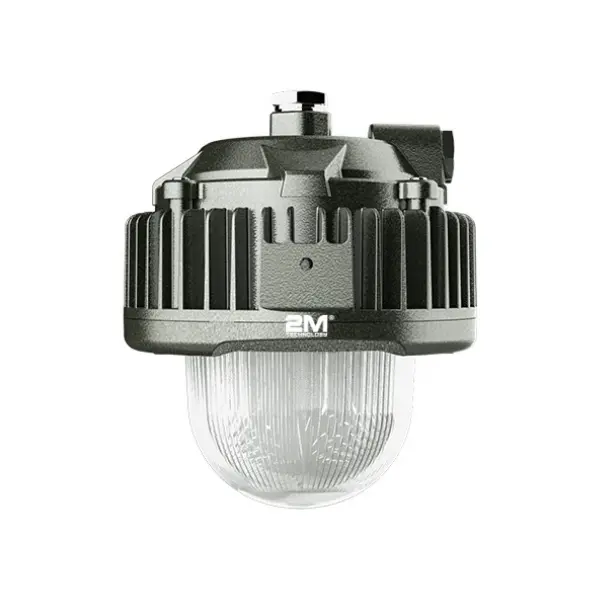
Hanging Lights
Hanging lights are suspended from ceilings and provide directional lighting in industrial environments. They are often used in workshops, chemical plants, and other facilities where focused lighting is needed to illuminate specific work areas.
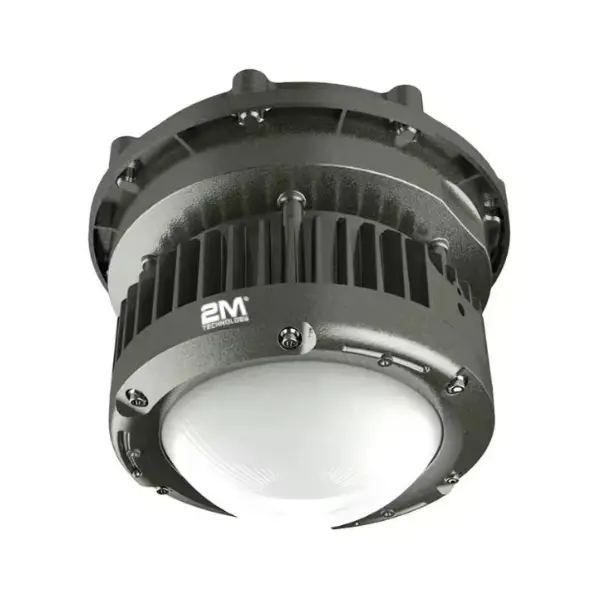
High Bay Lights
High bay lights provide bright and powerful illumination for large spaces with high ceilings. These lights are typically used in warehouses, manufacturing floors, and aircraft hangars, ensuring that expansive areas are well-lit for optimal work conditions.
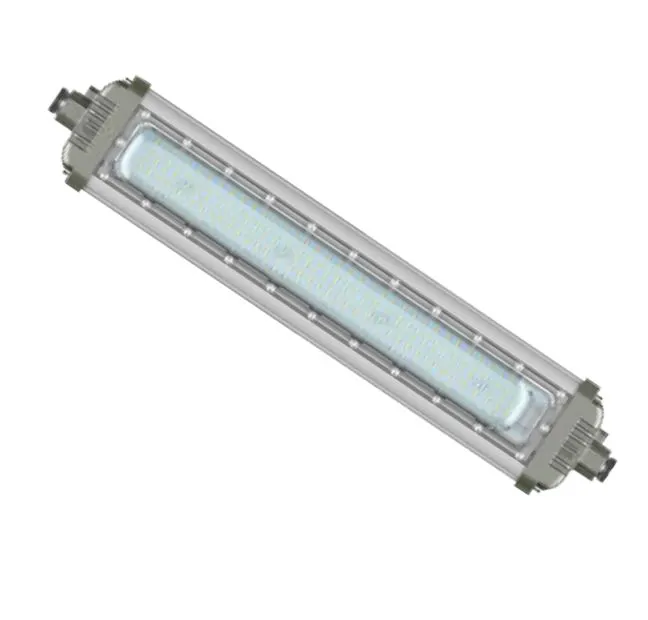
Linear Lights
Linear lights are long, narrow lights that provide consistent illumination over extended areas. They are typically used in tight spaces, such as tunnels, corridors, and hallways, where their slim design allows them to fit into narrow spaces while offering reliable lighting.
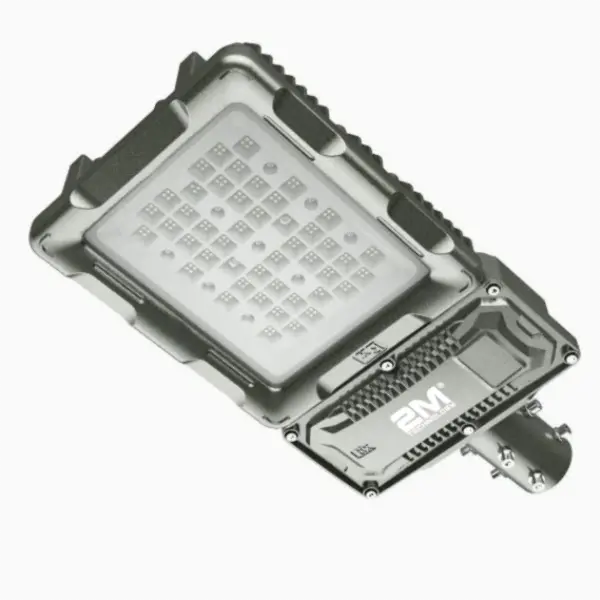
Street Lights
Street lights are used to illuminate roads, pathways, and access routes in industrial areas like refineries and petrochemical plants. They keep workers safe by allowing them to maintain visibility as they travel within the site during low-light conditions.
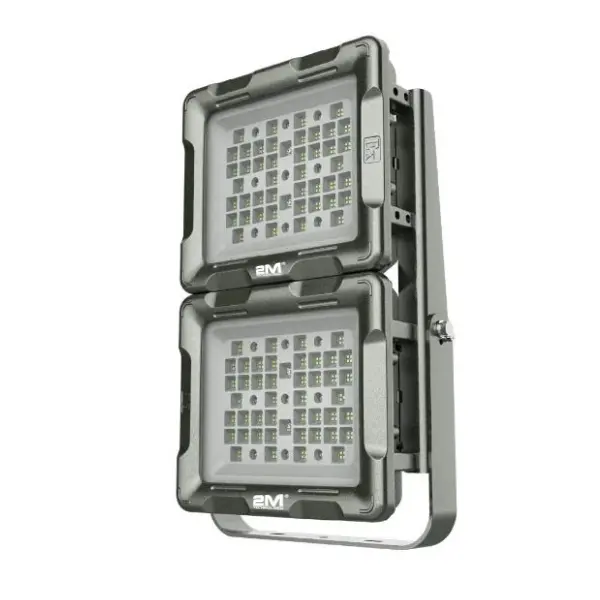
Floodlights
Floodlights provide uniform, wide-area lighting for large outdoor spaces, such as construction sites, mining areas, and industrial yards. They are ideal for illuminating extensive areas and ensuring that work can continue safely even after dark.
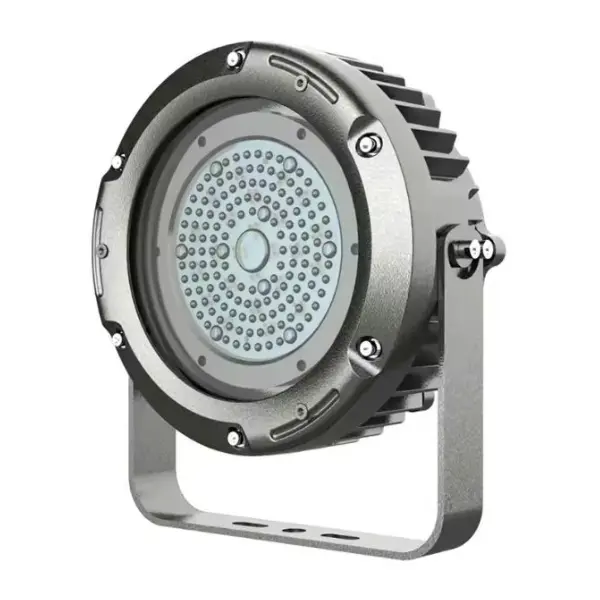
Spotlights
Spotlights are used to give focused and intense lighting for tasks requiring precision, such as inspections, detailed work, or highlighting specific areas in industrial settings. Their concentrated beam helps improve visibility in critical tasks.
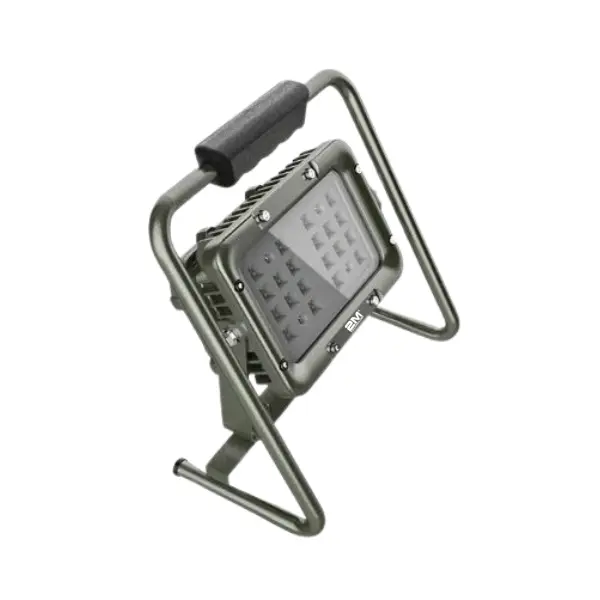
Portable Lights
Portable lights are mobile and easy to transport, making them ideal for temporary use during repairs, maintenance, or emergencies. These lights can be quickly moved to different areas as needed to provide essential lighting when stationary lights are unavailable.
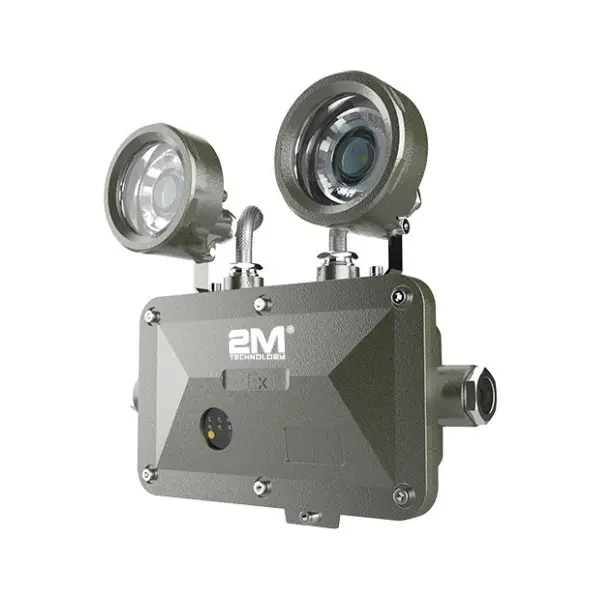
Emergency Lights
Emergency lights provide illumination during power outages or emergencies, ensuring that workers can safely exit. These lights are commonly found in factories, offshore platforms, and other critical industrial sites.
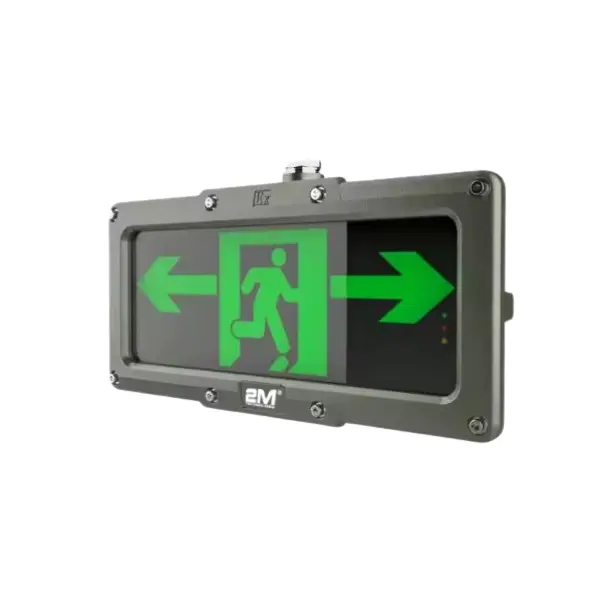
Emergency Exit Signs
Emergency exit signs are essential for guiding workers to exits during emergencies. They clearly mark exit pathways, helping workers evacuate quickly and safely.
Protect Your Site with Explosion-Proof Lighting
Explosion-proof lights are important for keeping people and equipment safe in risky environments. At 2M Technology, we provide top-notch explosion-proof lighting solutions designed for reliable performance in even the most challenging industrial settings. Whether you need lighting for security, emergencies, or general illumination, we have the right solution for you. Trust us to help protect your workforce, equipment, and facility. Contact us today at +1 (214) 988-4302 or sales@2mtechnology.net to learn more about how our explosion-proof lighting can make a difference.
Explosion Proof LED Lights vs. Legacy Technologies
Explosion proof LED lights have largely replaced fluorescent and HID fixtures in hazardous locations over the past decade. The shift is driven by three advantages that legacy explosion proof LED lights do not share: energy consumption 60–80% lower than HID equivalents, rated lifespans of 50,000–100,000 hours (eliminating lamp replacement in hard-to-access locations), and instant-on performance with no warm-up period at cold temperatures.
Modern explosion proof LED lights maintain full light output from -40°C to +60°C — a requirement for outdoor oil & gas facilities and cold-storage chemical plants where HID performance degrades significantly. All 2M Technology explosion proof LED lights are rated for Class I Division 1 and Class I Division 2 environments, with ATEX/IECEx variants available for international projects.
Selecting the Right Explosion Proof LED Lights
- Area classification first — Identify your NEC hazardous location Class and Division (or ATEX Zone) before specifying explosion proof LED lights. Class I Div 1 requires the highest protection level; Class I Div 2 allows lighter-duty housings and lower cost.
- Lumen output and mounting — Explosion proof LED lights are available from 1,500 lumens (work light) to 30,000+ lumens (area flood). Match output to the maintained illuminance level (lux) required by your safety plan or facility lighting standard.
- Wiring method — Explosion proof LED lights in Class I Div 1 environments must be wired in conduit with explosion proof fittings. Class I Div 2 permits MC cable and conduit in some configurations — confirm with your AHJ.
Contact 2M Technology to specify explosion proof LED lights for your hazardous area project — we provide photometric layouts, product selection, and installation support.
2M Technology stocks a full range of explosion proof LED lights for immediate delivery — including linear fixtures, high bay explosion proof LED lights, portable explosion proof LED lights for temporary sites, and explosion proof LED lights rated for outdoor and wet locations. All models include a 3-year warranty and are backed by US-based technical support.
Explosion Proof LED Lights vs. Standard Industrial Lights: Key Differences
Standard industrial lights — even heavy-duty warehouse fixtures — are not rated for hazardous areas. The difference between an explosion proof LED light and a standard LED fixture is not simply build quality; it is certification to a recognized standard that proves the fixture cannot ignite surrounding flammable gases or dust.
| Feature | Explosion Proof LED | Standard Industrial LED |
|---|---|---|
| Enclosure standard | ATEX / IECEx / NEC 500 or NEC 505 | IP65 or IP66 (water/dust, no ignition rating) |
| Suitable for Class I Div 1 | Yes — with ExdIIB or ExdIIC certification | No |
| Suitable for Class II Div 1 | Yes — dust-ignition-proof versions | No |
| Wiring method | Sealed conduit entries, certified glands | Standard knockouts |
| Glass lens material | Borosilicate or polycarbonate — shock rated | Standard acrylic or polycarbonate |
| Housing material | 316L stainless, GRP, or marine-grade aluminum | Aluminum or painted steel |
| Corrosion rating | IP66/IP68 standard; marine C5-M available | IP20–IP65 typical |
| Operating temp range | -40°C to +60°C standard; T4–T6 ambient | 0°C to +40°C typical |
| Lumen output (100W equiv.) | 10,000–14,000 lm | 10,000–14,000 lm (similar efficiency) |
| Price range | $350–$1,200+ per fixture | $40–$200 per fixture |
Using a non-certified light in a Class I Div 1 area violates OSHA 29 CFR 1910.307 and NEC Article 500. A single ignition event in a refinery or grain facility can result in fatalities, facility loss, and criminal liability.
Explosion Proof LED Light Ratings Explained
NEC 500 vs. NEC 505: Which Standard Applies?
The United States uses two parallel classification systems:
- NEC 500 (Class/Division): The traditional North American system. Class I = flammable gases/vapors; Class II = combustible dust; Class III = ignitable fibers. Division 1 = hazard present under normal conditions; Division 2 = hazard present only under abnormal conditions.
- NEC 505/506 (Zone system): Adopted from IEC/ATEX. Zone 0 = continuous hazard; Zone 1 = occasional hazard; Zone 2 = abnormal conditions only. Compatible with ATEX and IECEx certified equipment.
Most U.S. facilities built before 2000 use the Class/Division system. Newer facilities and all international installations use the Zone system. 2M Technology supplies explosion proof LED lights certified to both systems.
Gas Group Classifications
| Gas Group | System | Representative Gas | Risk Level |
|---|---|---|---|
| Group A | NEC 500 | Acetylene | Highest |
| Group B | NEC 500 | Hydrogen | Very high |
| Group C | NEC 500 | Ethylene | High |
| Group D | NEC 500 | Propane, gasoline | Moderate |
| IIC | IEC/ATEX | Hydrogen, acetylene | Highest |
| IIB | IEC/ATEX | Ethylene | High |
| IIA | IEC/ATEX | Propane | Moderate |
A light rated for Group IIB (the most common ATEX designation) is suitable for hydrogen sulfide, ethylene, and petroleum vapors — covering the majority of oil & gas and chemical applications. Group IIC certification (hydrogen) is required in battery rooms, electrolysis facilities, and some specialty chemical environments.
Choosing the Right Explosion Proof LED Light by Application
High Bay and Warehouse Applications (Class I Div 1, Zone 1)
Refineries, chemical plants, and paint manufacturing facilities need high-bay lighting (mounting heights 15–35 feet) that delivers even illumination without hot spots. Look for:
- Minimum 10,000 lumens at 100W input
- Wide beam angle (120°–140°) for aisle coverage without glare
- T6 temperature class (surface temperature ≤ 85°C) for the widest gas group coverage
- IP66 minimum; IP68 where wash-down occurs
- Stainless steel or GRP housing for salt or chemical atmospheres
Outdoor Area Lighting (Floodlights and Perimeter Lighting)
Tank farms, wellheads, and dock perimeters require fixtures that handle both wind load and explosion protection. Key specifications:
- Sealed conduit entries (not standard cable glands) for Zone 1
- UV-stabilized polycarbonate or borosilicate lens to resist solar degradation
- Stainless steel mounting hardware to resist coastal corrosion
- Wide operating temperature range for outdoor Texas extremes (-20°C to +55°C minimum)
Emergency Lighting and Exit Signs (Hazardous Areas)
Emergency lighting in hazardous areas must be both explosion proof AND maintained continuously (Class M) or non-maintained (Class NM) depending on NFPA 101 occupancy type. Standard exit signs are never acceptable in Class I Div 1 areas — they require ExdIIB T4 certification minimum.
Real Project: Chemical Plant Relight, Gulf Coast, TX (2024)
A specialty chemical manufacturer on the Texas Gulf Coast contacted 2M Technology after a compliance audit identified 47 non-rated pendant fixtures in a Class I Div 1 processing area. The existing fixtures were standard industrial high bays that had been installed during a pre-2010 renovation before the area was reclassified following a process change.
2M Technology assessed the facility, identified 47 pendant positions across three production bays, and supplied 47 × 150W explosion proof LED high bay fixtures rated ExdIIB T4 (ATEX Zone 1, Class I Div 1 Group C/D). The relight was completed in two weekend shutdowns with zero production impact. The facility reduced lighting energy consumption by 38% versus the previous 400W metal halide fixtures and achieved full NEC 500 and OSHA 1910.307 compliance.
Frequently Asked Questions: Explosion Proof LED Lights
Do explosion proof lights actually contain an explosion?
No — the term is misleading. Explosion proof lights do not contain an explosion inside the fixture. Instead, they are designed so that any internal arc or spark cannot ignite the surrounding atmosphere. The enclosure is strong enough to withstand internal ignition pressure and cool any escaping gases below the ignition temperature of the surrounding hazardous gas. The correct term used internationally is “flameproof” (Ex d).
What is the difference between explosion proof and intrinsically safe?
Explosion proof (Ex d) contains any ignition inside a heavy enclosure. Intrinsically safe (Ex i) limits the energy in the circuit to below ignition levels so that even an open spark cannot cause ignition. Explosion proof is used for lighting and power equipment; intrinsically safe is used for sensors, transmitters, and instrumentation. For LED lights, Ex d (explosion proof / flameproof) is the standard approach.
Can I replace metal halide explosion proof fixtures with LEDs?
Yes, and it is strongly recommended. Modern explosion proof LED high bays at 100–150W deliver the same or greater lumen output as 400W metal halide, with 80,000-hour L70 life versus 10,000–15,000 hours for metal halide. However, the replacement fixture must carry its own explosion proof certification — you cannot use a standard LED retrofit bulb inside an existing explosion proof metal halide housing.
How long do explosion proof LED lights last?
Quality explosion proof LED fixtures from certified manufacturers carry an L70 life rating of 60,000–100,000 hours. At 10 hours per day, that is 16–27 years before the light drops to 70% of original output. The LED driver (power supply) is typically the first component to reach end-of-life; look for fixtures with field-replaceable drivers to extend the useful life of the housing.
Are explosion proof LED lights required by OSHA?
OSHA 29 CFR 1910.307 requires that all electrical equipment in classified hazardous locations be approved for that location. The NEC (NFPA 70) defines what “approved” means — equipment listed by a Nationally Recognized Testing Laboratory (NRTL) for the specific class, division, and gas group. Using non-listed lighting in a classified area is an OSHA violation regardless of whether an incident occurs.
What wiring method is required for explosion proof lights?
In Class I Div 1 areas: rigid metal conduit (RMC), intermediate metal conduit (IMC), or mineral-insulated cable (MI cable) with explosion proof fittings at every conduit connection. Flexible conduit is permitted only for the final 18-inch connection to a fixture (using a listed liquid-tight flexible conduit with explosion proof fittings). Standard NM (Romex) cable is never permitted in classified areas.
Does the ATEX rating on a European fixture work in the USA?
ATEX certification is the European standard (Directive 2014/34/EU). For use in the USA, the NEC 505 Zone system accepts ATEX and IECEx certified equipment IF it is installed in a Zone-classified area (not a Class/Division area). For Class/Division classified areas (still the most common in the USA), equipment must carry UL, CSA, or FM listing to the relevant NEC 500 standard. 2M Technology supplies fixtures with dual ATEX/IECEx and UL/CSA listing to cover both systems.
What is a temperature class (T-class) on explosion proof lighting?
The T-class (T1–T6) defines the maximum surface temperature of the fixture under worst-case conditions. Every flammable gas has a minimum ignition temperature (MIT); the fixture T-class must be below the gas MIT. T4 (max surface 135°C) covers the vast majority of petroleum and chemical vapors. T6 (max surface 85°C) is needed for carbon disulfide and some highly reactive compounds. When in doubt, specify T4 minimum — it adds little cost and covers almost all refinery and chemical plant applications.
Get Explosion Proof LED Lighting for Your Facility
2M Technology supplies and installs explosion proof LED lights across Texas and the Gulf Coast, with experience in oil & gas, chemical processing, grain handling, and mining facilities. All fixtures carry ATEX, IECEx, and UL/CSA listing. Contact us for a facility lighting assessment at (214) 988-4302 or via our quote form.