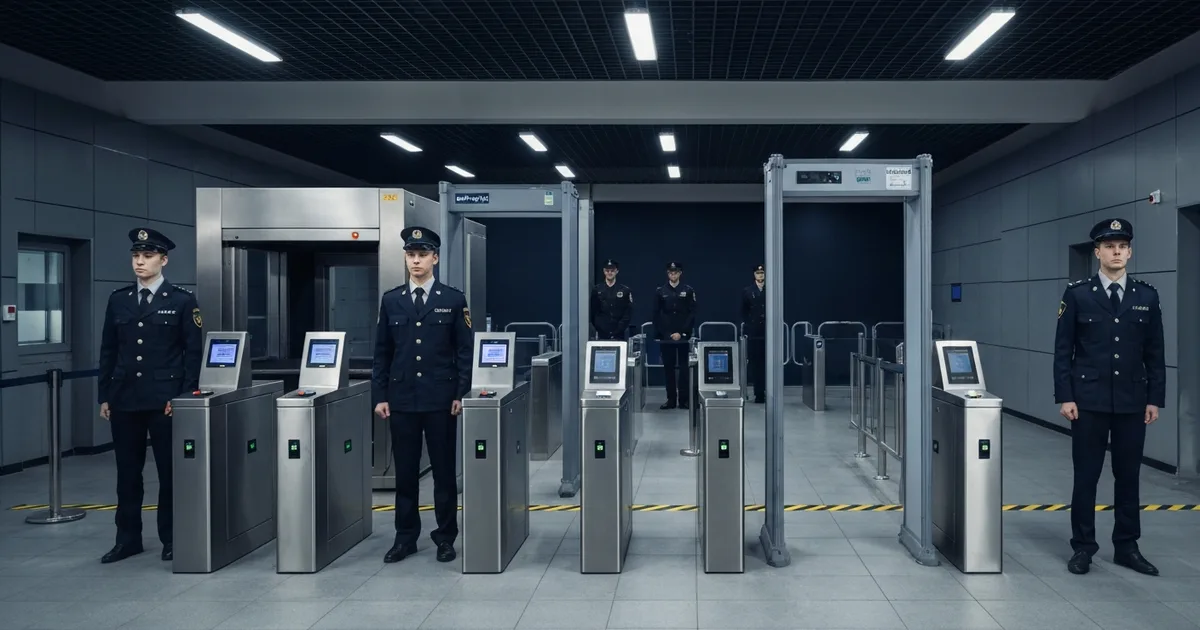
Screening Infrastructure for Critical Facilities: Design Standards and Engineering Requirements
Engineering and design standards for security screening infrastructure in government buildings, utilities, data centers, transit hubs, and critical infrastructure facilities — where the consequence of a security breach extends beyond the facility itself.
Screening infrastructure for critical facilities differs fundamentally from standard commercial or institutional security screening because the threat profile, consequence model, and operational continuity requirements are categorically different. A screening failure at a government facility, utility control center, water treatment plant, or transit hub can trigger cascading impacts that affect thousands of people beyond the facility perimeter. The engineering design for critical facility screening must address this elevated consequence environment through layered detection, redundant systems, and continuity-of-operations protocols that standard commercial screening does not require.
Critical Facility Categories and Threat Profiles
| Facility Type | Primary Threat Vectors | Screening Priority |
|---|---|---|
| Federal / state government buildings | Weapons, IEDs, hostile personnel | All personnel and packages; no exceptions |
| Power generation and utilities | Sabotage, insider threat, contraband tools | Contractor and vendor screening; vehicle inspection |
| Water treatment and distribution | Tampering, unauthorized access, chemical introduction | Perimeter access control; materials screening |
| Transit hubs (rail, metro, bus) | Unattended packages, weapons, explosives | Random screening, baggage inspection, surveillance |
| Data centers and telecom facilities | Device theft, unauthorized media, insider threat | Device screening; materials and media detection |
| Financial and payment infrastructure | Robbery, device compromise, physical access | All personnel; package inspection for deliveries |
Multi-Layer Screening Architecture for Critical Facilities
Layer 1: Perimeter
Vehicle barriers, perimeter fencing, CCTV coverage, and access road control that prevent unauthorized vehicle approach to the facility before personnel screening is required. Critical facilities require standoff distance engineering that most commercial facilities do not.
Layer 2: Entry Control
Mantrap vestibules, credential verification, biometric access control, and visitor management systems that authenticate identity before any person accesses the screening zone. Two-factor authentication for high-security areas with anti-tailgating interlocks on all access portals.
Layer 3: Inspection
Walk-through metal detection, X-ray baggage and package inspection, and explosive trace detection for critical facilities. Redundant inspection lanes to maintain throughput if one system requires maintenance. Continuous data logging with tamper-evident audit trails.
Layer 4: Interior Control
Zoned access control within the facility restricting personnel to their authorized areas. Interior CCTV coverage with analytics. Guard patrol schedules independent of electronic access control so that a system compromise does not eliminate all detection capability.
Continuity of Operations: What Happens When Screening Equipment Fails
Critical facility screening infrastructure must have documented continuity-of-operations procedures for equipment failure scenarios that standard commercial facilities do not require. A failed X-ray machine at a courthouse means a longer queue; a failed X-ray machine at a nuclear facility control room means either a security gap or a facility shutdown. Critical facility screening design must address three failure scenarios: single equipment failure, simultaneous multi-system failure, and power loss. Each requires a documented response procedure, backup equipment availability plan, and staff protocol that maintains security posture without requiring facility shutdown.
Equipment Specifications for Critical Facility Screening
| Equipment Type | Critical Facility Requirement | Standard Commercial Spec |
|---|---|---|
| X-ray baggage system | Dual-view, threat recognition algorithm, image archive 90+ days | Single-view, 30-day archive |
| Walk-through metal detector | Multi-zone, tamper-evident logging, UPS backup | Single-zone, standard power |
| Access control | Biometric + credential, anti-tailgate, full audit trail | Credential only, standard logging |
| CCTV coverage | 4K, redundant recording, 90-day retention, analytics | HD, 30-day retention |
| Guard force integration | 24/7 staffing, armed response capability, patrol verification | Business hours, unarmed, no patrol requirement |
Regulatory and Compliance Frameworks for Critical Facility Screening
- DHS National Infrastructure Protection Plan (NIPP)
- CISA Physical Security Guidance for Critical Infrastructure
- Screening Infrastructure Engineering Center — 2M Technology
- Courthouse Security Checkpoint Design
- Airport Security Checkpoint Infrastructure
Frequently Asked Questions: Critical Facility Screening Infrastructure
What makes screening infrastructure for critical facilities different from standard commercial screening?
Critical facility screening operates under a higher consequence model — a security failure can trigger cascading impacts beyond the facility itself. This requires multi-layer architecture, redundant equipment, continuity-of-operations protocols, and 90+ day audit trails that standard commercial facilities do not require. Equipment specifications for critical facilities include dual-view X-ray, biometric access control, anti-tailgating interlocks, and UPS backup power on all screening systems.
How should a critical facility screen contractors and vendors?
Contractors and vendors at critical facilities represent an elevated insider threat risk because they carry tools and materials that legitimate personnel do not. Best practice requires X-ray inspection of all tool bags and equipment brought into the facility, credential verification against a current vendor registry, escort by authorized facility personnel in restricted zones, and materials verification at both entry and exit to detect items that were not present on entry.
What is a mantrap vestibule and when is it required for critical facilities?
A mantrap vestibule is a controlled airlock entry where a person must complete credential verification in the outer chamber before the inner door opens. It prevents tailgating and ensures each entry attempt is individually authenticated. Mantrap vestibules are required for critical facility access points where a single unauthorized entry would represent a high-consequence security breach — including server rooms, control rooms, and vault areas within critical infrastructure.
Design Screening Infrastructure for Your Critical Facility
2M Technology engineers multi-layer security screening systems for government buildings, utilities, transit hubs, and critical infrastructure — with continuity-of-operations protocols and full audit trail compliance.