Screening Infrastructure Engineering Center
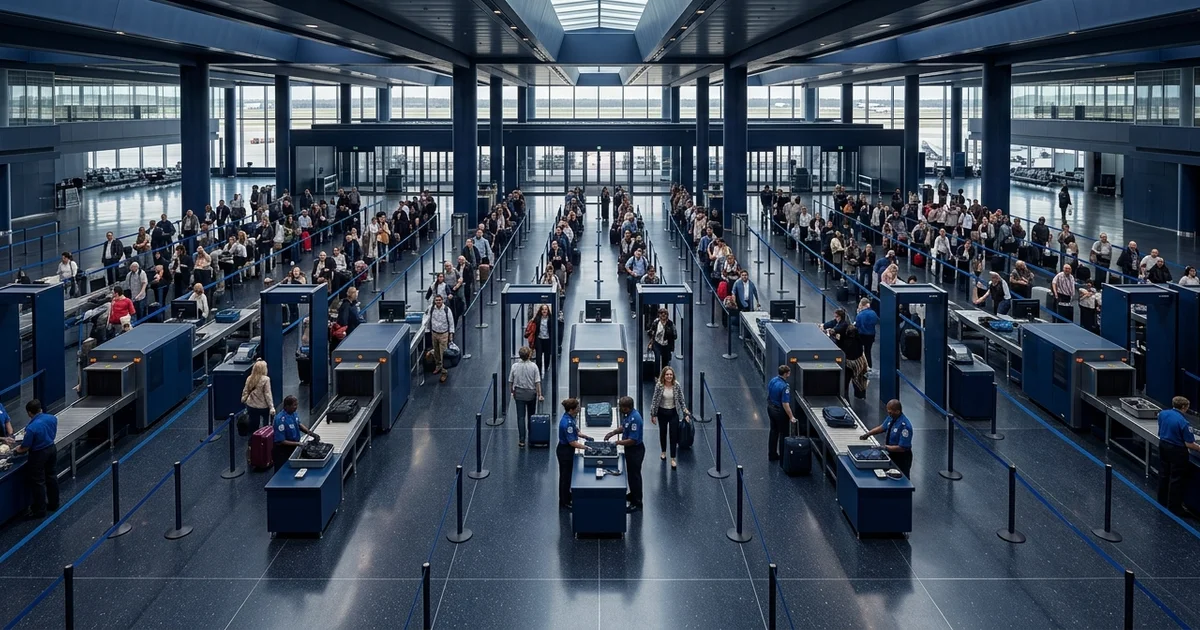
- Published: May 2026
- By: 2M Technology Engineering Team
- Security Infrastructure Specialists, Grand Prairie TX
- Part of the Screening Infrastructure Engineering Center
Screening infrastructure engineering is the applied discipline of designing, sizing, and commissioning security checkpoint systems for high-volume public facilities. This center consolidates the throughput models, deployment architectures, equipment specifications, and operational frameworks that determine whether a checkpoint passes or fails under real-world burst-arrival conditions. The most important insight in screening infrastructure engineering: nearly every checkpoint failure is an engineering problem, not an equipment problem. Tray starvation, undersized secondary areas, wrong conveyor speed, operator fatigue, single-lane deployments, and missing power redundancy — all are solved by engineering discipline applied before installation, not by equipment upgrades afterward. Industry standards are maintained by ASIS International, the DHS SAFETY Act program, and the TSA. See also: school screening, courthouse checkpoints, religious facility security, and the throughput calculator.
People per hour per standard X-ray lane (trained operators, standard bag volume)
Typical secondary inspection alarm rate — must be absorbed without lane stoppage at any volume
Minimum tray-to-person ratio required to prevent tray starvation at the conveyor inlet
Recommended total lane footprint: pre-screen staging + WTMD + X-ray + collection area
Screening Infrastructure Engineering: Standard Lane Topology
Every security screening lane consists of six functional zones. Failure to correctly size any single zone creates a bottleneck that limits throughput for the entire lane — regardless of how well-specified the other zones are.
Screening Infrastructure Engineering Pillars
Five disciplines that determine whether a screening infrastructure engineering deployment succeeds. Weakness in any single pillar produces checkpoint failure at scale.
Throughput Engineering
People-per-minute planning, queue optimization, checkpoint bottleneck analysis, staffing calculations, tray-return optimization.
- Lane capacity modeling
- Peak-load planning
- Burst-arrival analysis
Deployment Architecture
Facility-specific checkpoint layouts for schools, courthouses, stadiums, religious centers, hospitals, and industrial gatehouses.
- Entry flow topology
- Lane count planning
- Surge accommodation
Screening Operations
Secondary inspection workflow, escalation SOPs, operator fatigue reduction, line balancing, bag diversion procedures.
- Escalation trees
- Rotation scheduling
- Alarm-resolution SOP
Infrastructure Components
X-ray systems, WTMD, handhelds, access control integration, mobile screening, and remote monitoring infrastructure.
- X-ray tunnel sizing
- WTMD positioning
- Remote image review
Screening Infrastructure Engineering Guidance
Conveyor sizing, lane spacing, power and UPS requirements, network integration, and remote monitoring design.
- Power load planning
- UPS runtime specs
- Network integration
Checkpoint Operational Workflow
The decision flow every person moves through at a screening checkpoint. Each decision point that is not explicitly designed creates an operational gap that undermines throughput or security.
⚠ Secondary inspection must be sized to handle concurrent alarms without blocking the primary conveyor exit — the most commonly undersized element in commercial checkpoint design.
Throughput: The Core Metric in Screening Infrastructure Engineering
Screening Infrastructure Engineering Throughput Reference by Facility Type
Lane count planning varies dramatically by facility type. The same enrollment or headcount produces completely different throughput requirements depending on the entry window and arrival distribution pattern.
| Facility Type | Population | Entry Window | Peak Rate | Min Lanes | Staff per Lane | Installed Cost |
|---|---|---|---|---|---|---|
| Small K-12 School | 300-600 students | 20 min | 12-24/min | 2 lanes | 2 per lane | $70K-$110K |
| Large High School | 1,500-2,500 students | 15 min | 80-133/min | 5-7 lanes | 2-3 per lane | $220K-$420K |
| County Courthouse | 150-400 daily visitors | Steady state + surge | 10-30/min peak | 2-3 lanes | 2 per lane | $130K-$210K |
| Religious Facility (1,000) | 1,000 congregation | 15 min pre-service | 53-67/min | 3 lanes | 2 per lane | $100K-$160K |
| Arena (15,000 capacity) | 15,000 attendees | 90 min, 50% in last 30 | 167/min peak | 4-6 WTMD per gate | 2 per lane | $380K-$650K |
| Hospital Main Entry | 200-400 visitors/hr peak | 24/7 continuous | 3-7/min steady | 2-4 WTMD | 24/7 staffing model | $90K-$180K |
| Distribution Center (300 staff) | 300 employees | 10 min shift change | 20-25/min | 3-4 WTMD | 2 per lane | $120K-$200K |
Screening Infrastructure Engineering Deployment Environments
Each facility type has distinct throughput profiles, architectural constraints, and operational requirements. Generic screening deployments consistently underperform facility-specific engineered solutions.
Schools and Educational Facilities
Courthouses and Government Facilities
Religious Facilities Wide Open
Stadiums, Arenas and Event Venues
Healthcare Facilities
Warehouses and Distribution Centers
Screening Infrastructure Engineering Deployment Examples
How 2M Technology applies screening infrastructure engineering discipline to real facilities across Texas and nationwide. Every deployment begins with throughput modeling, not equipment selection.
2,100-Student Morning Entry System
A 2,100-student high school in the Dallas-Fort Worth area needed to clear its full enrollment within an 18-minute morning window. The previous 2-lane system created 35-minute outdoor queues. 2M Technology modeled burst-arrival throughput (1,680 students in 18 min = 93 students/min peak) and designed a 5-lane system with covered outdoor staging.
Result: Full enrollment clears in 16 minutes at 95th-percentile arrival rate. Zero outdoor queues under normal conditions. Outdoor queue depth stays under 40 students at peak.
4,500-Seat Worship Center with Holiday Surge Plan
A non-denominational megachurch with 4,500 regular Sunday attendance needed a screening system that handled both normal services and Christmas/Easter events at 9,000+ attendees. 2M Technology engineered a permanent 6-lane main entry plus a documented mobile augmentation plan deploying 4 additional lanes for high-attendance events.
Result: Normal Sunday services clear in under 12 minutes. Christmas Eve surge of 9,200 attendees cleared across 10 lanes in 28 minutes using mobile augmentation.
Mid-Size County Courthouse with Three-Stream Architecture
A north Texas county courthouse processing 200-350 daily visitors required a checkpoint that handled public visitors, attorney bypass, and evidence chain-of-custody inspection without the three streams interfering with each other. 2M Technology designed a 3-lane system with physical stream separation and a dedicated evidence inspection station with image export capability.
Result: Attorney bypass processes credentialed attorneys in under 45 seconds. Evidence inspection generates timestamped image records for court documentation. Jury assembly surge of 300 visitors handled with mobile lane augmentation.
250-Employee Warehouse with Shift-Change Screening
A Texas distribution center with 250 employees per shift needed both inbound employee screening (weapon prevention) and outbound exit screening (merchandise theft deterrent) without creating bottlenecks at shift change when all 250 employees transition within a 10-minute window. 2M Technology engineered a 4-lane bidirectional system with dedicated entry and exit lane directions and integrated access control.
Result: Full 250-person shift change cleared in 9 minutes inbound and 8 minutes outbound. Cargo theft incidents at the facility dropped 94% in the 12 months following deployment.
Screening Infrastructure Engineering Calculators
Specification-grade planning tools for throughput sizing and queue estimation.
X-Ray Throughput and Cost Calculator
Conveyor Size Selector
Queue Depth Estimator
Why Screening Infrastructure Engineering Deployments Fail
Over 80% of checkpoint failures trace to these six engineering problems. All are preventable at design time.
Tray Starvation
Insufficient trays at the inlet cause queue backup. Minimum 2:1 tray-to-passenger ratio at peak. Most commonly undersized element in commercial checkpoints.
Undersized Secondary Area
When secondary is too small, alarmed bags block the primary conveyor exit and halt the entire lane. Must absorb 3-5% alarm rates without upstream stoppages.
Wrong Conveyor Speed
High-speed conveyors increase throughput but reduce image dwell time, leading to missed detections. Optimal speed is a function of object density, threat profile, and operator training.
Operator Fatigue
Detection rates degrade measurably after 20-30 minutes of continuous operation. Rotation schedules must be built into the staffing model, not treated as optional.
Single-Lane for Burst Traffic
Peak-load lane counts must be calculated against burst arrival windows, not daily averages. The most common mistake: using steady-state math for burst-arrival facilities.
No Power Redundancy
X-ray systems draw 2-5 kW at startup. Without dedicated circuits and UPS protection, a power event creates an uncontrolled access window. UPS runtime must cover restart time.
Screening Infrastructure Engineering Specifications Reference
| Parameter | Specification | Engineering Notes |
|---|---|---|
| Lane throughput | 150-250 persons/hr | Plan to 150/hr for conservative sizing; varies with operator training and secondary rate |
| Lane total footprint | 18-26 linear feet | Pre-screen staging + WTMD + X-ray + post-screen collection |
| ADA lane width | 60 inches minimum clear | Mandatory for government facilities; recommended for all public checkpoints |
| Standard tunnel aperture | 600 x 400 mm | Carry-on baggage standard; larger tunnels for parcels and event-size bags |
| X-ray power draw | 2-5 kW (startup: 2x) | Dedicated 20A circuit required; do not share with HVAC or lighting |
| UPS runtime | 15-30 minutes | Must cover controlled shutdown plus generator start time |
| Secondary area | 6 x 8 ft minimum | Cannot impede primary conveyor exit flow at any alarm volume |
| Operator rotation | 20-30 min maximum | Detection rate degrades significantly beyond 30 min continuous; TSA-validated benchmark |
Screening Infrastructure Engineering Cost Reference
Budget benchmarks for complete deployments including equipment, installation, and basic integration. 2025-2026 installed cost ranges.
| Deployment Type | Equipment | Installed Cost |
|---|---|---|
| Single-lane school entry | X-ray + WTMD + handhelds | $35,000-$65,000 |
| Dual-lane courthouse | 2x X-ray + 2x WTMD + secondary + attorney bypass | $90,000-$160,000 |
| 4-lane event venue gate | 4x WTMD + 2x X-ray + staffing stations | $180,000-$320,000 |
| Religious facility (500-2,000) | 2-4 WTMD + 1-2 X-ray + mobile surge units | $50,000-$130,000 |
| Hospital main entry | 2-4 WTMD + X-ray + visitor management integration | $90,000-$180,000 |
| Warehouse full perimeter | 2-4 WTMD + X-ray + access control + cameras | $120,000-$240,000 |
Frequently Asked Questions: Screening Infrastructure Engineering
Direct answers to the most common engineering questions about security checkpoint design, throughput planning, and deployment sizing.
How many people per hour can one X-ray lane screen?
A single X-ray screening lane processes 150 to 250 people per hour under well-staffed conditions. Plan to 150/hr per lane when sizing peak entry periods to maintain buffer for alarms and queue variance. Conveyor speed, secondary alarm rate (3-5%), tray availability, and operator rotation all affect actual throughput. Use the Throughput Calculator with your specific parameters for accurate sizing.
How many X-ray lanes does a school need?
A school of 1,000 students entering over 20 minutes requires approximately 3 to 4 X-ray lanes. A school of 2,000 students in a 15-minute window requires 7+ lanes. The critical formula: (enrollment x 0.8) divided by (entry window in minutes x 2.5 students/min/lane). Single-lane deployments are appropriate only for schools under 300 students or entry windows exceeding 45 minutes.
What is the recommended footprint for a security screening lane?
A complete security screening lane requires 18 to 26 linear feet of floor space: pre-screen bag staging (4-6 ft), X-ray conveyor and tunnel (8-10 ft), WTMD (3 ft), and post-screen collection area (4-6 ft). Secondary inspection areas add 6 by 8 feet per lane pair, positioned to avoid blocking the primary conveyor exit. ATRS tray return systems require the longer end of the range.
What does a complete security checkpoint cost?
A single-lane school checkpoint costs $35,000-$65,000 installed. A dual-lane courthouse runs $90,000-$160,000. A 4-lane stadium gate ranges $180,000-$320,000. A religious facility deployment for 500-2,000 occupants falls in the $50,000-$130,000 range. These figures reflect 2025-2026 installed costs including equipment, labor, and standard integration. UPS, remote monitoring, and access control integration add cost.
Why do screening lines fail?
The six most common screening infrastructure engineering failures: (1) tray starvation — insufficient trays at the inlet; (2) undersized secondary inspection areas blocking the primary exit; (3) wrong conveyor speed for the threat profile; (4) operator fatigue without rotation schedules (detection degrades after 30 min continuous); (5) single-lane deployments for burst-arrival facilities; and (6) no power redundancy for X-ray systems drawing 2-5 kW.
Do churches and religious facilities need security screening?
Houses of worship increasingly deploy screening systems following a documented rise in targeted attacks. Religious facility security screening is one of the fastest-growing and least-served segments in the market — almost no vendor provides worship-environment-specific checkpoint design, culturally sensitive screening protocols, or NSGP grant support. 2M Technology deploys complete religious facility security screening systems for churches, mosques, synagogues, and temples. DHS NSGP grants (up to $450,000 per organization) are available for qualifying 501(c)(3) nonprofits. See the Religious Facility Security Screening guide.
Ready to Engineer Your Screening Infrastructure?
- 2M Technology
- 802 Greenview Drive, Suite 100, Grand Prairie, TX 75050
- •
- (214) 988-4302
- •
- sales@2mtechnology.net
- •
- Monday-Friday 8:00 AM – 5:00 PM CST
- •
- Texas Private Security License B15309